 Save
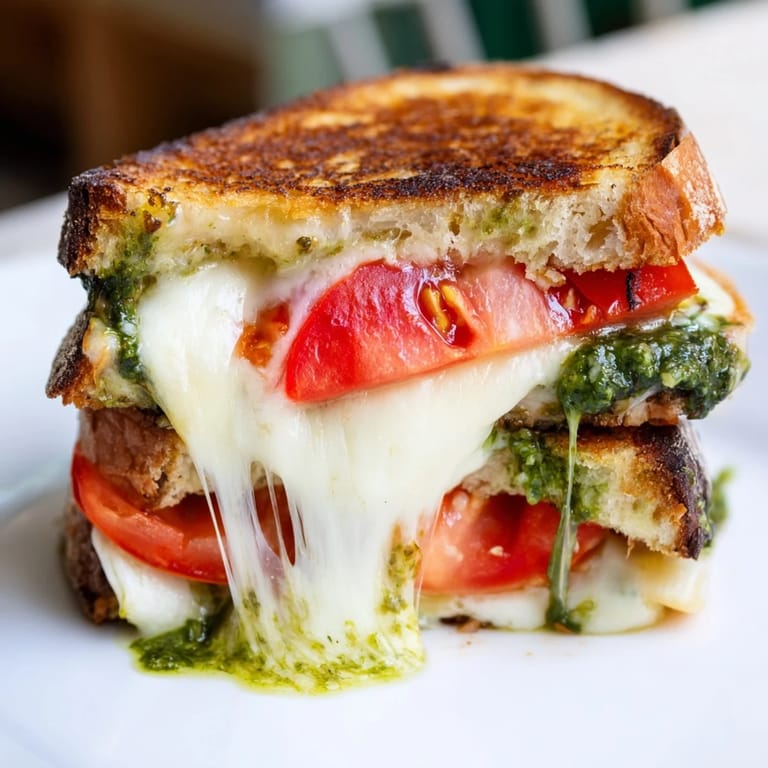
Save My neighbor brought over a jar of homemade pesto one summer afternoon, and I had nothing but sourdough and mozzarella in the fridge. I sliced a tomato from the windowsill, buttered the bread, and pressed the whole thing into a hot pan. The smell alone made her stay for lunch. We ate standing at the counter, cheese stretching between bites, and she asked for the recipe even though it was her pesto that made it work.
I made this for my sister during her last visit, and she ate both halves of her sandwich before I even sat down. She kept saying it tasted like summer, even though it was October and raining outside. I think it was the basil and tomato together, that bright freshness against all the butter and cheese. She took a photo before the second bite, which is how I knew it mattered.
Ingredients
- Sourdough bread: The slight tang and sturdy texture hold up to all the moisture from the tomato and pesto without getting soggy, and it crisps beautifully in butter.
- Fresh mozzarella: This is the kind that comes in a tub of water, soft and milky, it melts into creamy pools instead of turning rubbery like pre-shredded cheese.
- Ripe tomato: Use one that smells sweet and gives just a little when you press it, the juice adds brightness and keeps the sandwich from feeling too rich.
- Basil pesto: Whether you make it or buy it, good pesto should taste green and garlicky, not oily, and it becomes the soul of this sandwich.
- Unsalted butter: Softened butter spreads easily and toasts the bread evenly, giving you that golden crust without any burnt spots.
Tired of Takeout? 🥡
Get 10 meals you can make faster than delivery arrives. Seriously.
One email. No spam. Unsubscribe anytime.
Instructions
- Spread the pesto:
- Use the back of a spoon to spread 1 tablespoon of pesto on one side of each slice of bread, going all the way to the edges. This creates a barrier that keeps the bread from getting soggy and ensures every bite has that herby punch.
- Build the sandwiches:
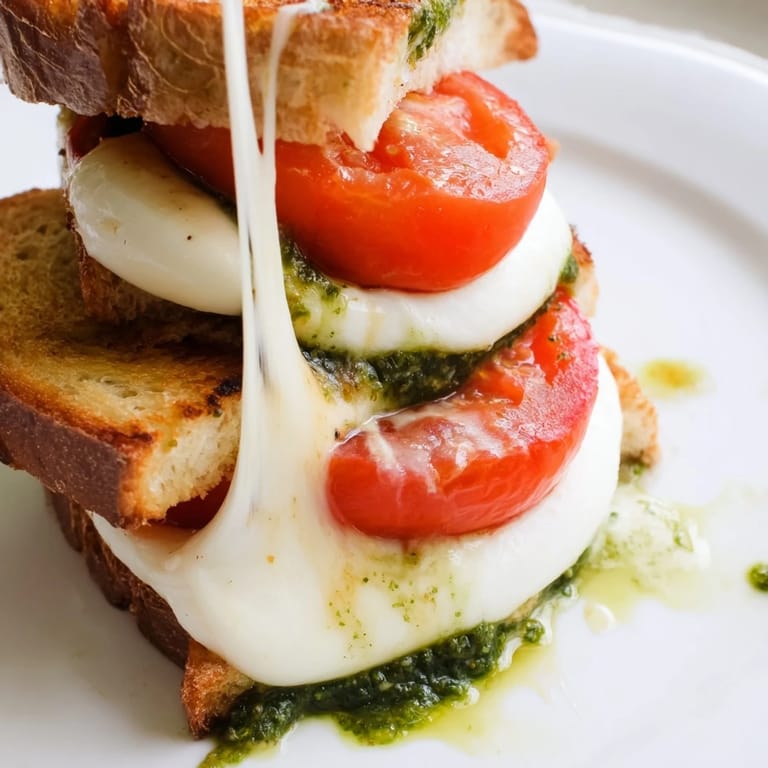
- Lay half the mozzarella and half the tomato slices on two of the bread slices, right on top of the pesto. Top with the remaining slices, pesto side down, pressing gently so everything holds together.
- Butter the outside:
- Spread softened butter on the top and bottom of each sandwich, covering the whole surface. This is what makes the bread turn golden and crispy instead of pale and sad.
- Heat the pan:
- Preheat your nonstick skillet or grill pan over medium heat for a minute or two. Medium heat is key, too hot and the bread burns before the cheese melts.
- Cook the sandwiches:
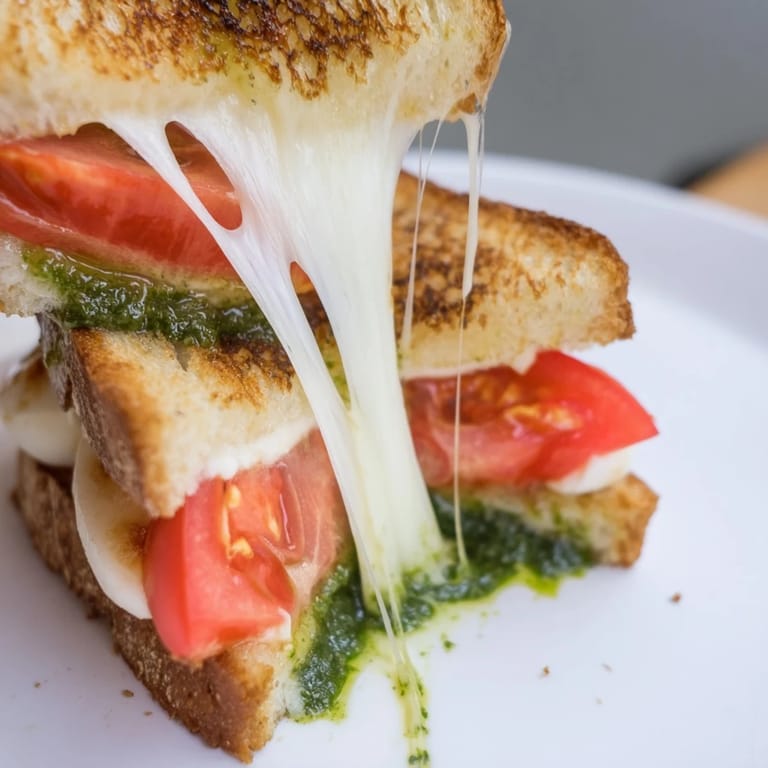
- Place both sandwiches in the pan and cook for 3 to 4 minutes, pressing gently with a spatula. Flip carefully when the bottom is golden brown, then cook the other side until the cheese is fully melted and starting to ooze at the edges.
- Rest and serve:
- Let the sandwiches rest for a minute after you take them out of the pan so the cheese sets just enough to not slide out everywhere. Slice in half with a sharp knife and serve while still warm.
 Save
Save The first time I served this to friends, one of them picked up the sandwich, took a bite, and then just closed his eyes for a second. He didn't say anything right away, just chewed slowly and smiled. Later he told me it reminded him of a trip to Italy he took years ago, which I hadn't intended but somehow the combination of flavors landed him right back there.
Choosing Your Bread
Sourdough is my favorite because of the way it crisps and the tangy flavor that balances the richness of the cheese. But I've made this with ciabatta, focaccia, and even a good thick-cut whole grain, and it works as long as the bread has some structure. Avoid anything too soft or pillowy, it will fall apart under the weight of the fillings and won't crisp properly in the pan.
Making It Your Own
I sometimes add a handful of baby spinach or arugula between the cheese and tomato, which adds a peppery bite and makes the sandwich feel a little more virtuous. A few thin slices of prosciutto turn it into something more substantial if you're feeding someone who thinks sandwiches need meat. If you have balsamic glaze in the cupboard, a drizzle on the tomatoes before you close the sandwich adds a sweet-tart edge that's really lovely.
Storing and Reheating
This sandwich is best eaten right away, while the bread is still crispy and the cheese is molten. If you have leftovers, wrap them tightly and keep them in the fridge, but know that reheating in the microwave will make the bread chewy. Instead, reheat in a dry skillet over low heat, pressing gently with a spatula, which brings back some of the crispness.
- You can prep the sandwiches up to an hour ahead and keep them in the fridge, then cook them just before serving.
- Leftover pesto keeps for a week in the fridge with a thin layer of olive oil on top to prevent browning.
- Fresh mozzarella is best used within a day or two of opening, after that it starts to lose its creamy texture.
 Save
Save This sandwich has become my go-to when I want something that feels special without any real effort. Every time I make it, someone asks how something so simple can taste this good, and I never have a better answer than good ingredients and a hot pan.
Recipe Questions
- → Can I use different types of cheese?
Yes, fresh mozzarella is ideal for melting, but you can substitute with provolone, burrata, or a combination of mozzarella and aged cheddar for different flavor profiles.
- → What bread works best?
Sourdough is recommended for its tangy flavor and sturdy structure, but ciabatta, focaccia, or thick-cut Italian bread also work wonderfully. Avoid thin bread that may get too soggy.
- → How do I prevent the cheese from leaking out?
Pat tomato slices dry with paper towels to remove excess moisture, and don't overload the sandwich. Pressing gently with a spatula while cooking helps keep ingredients intact.
- → Can I make this ahead of time?
Assemble sandwiches up to 2 hours ahead and store in the refrigerator. Cook just before serving for the best texture. Allowing cold sandwiches to sit at room temperature for 5 minutes helps them cook more evenly.
- → What temperature should the pan be?
Medium heat is ideal to allow the cheese to melt thoroughly before the bread burns. If using high heat, reduce to medium-low to prevent over-browning while cheese melts.