 Save
Save Last spring, I was stuck in that awkward phase between winter comfort food and summer salads, so I threw together whatever green things were in my crisper drawer and a homemade dressing that turned out to be exactly what I didn't know I was craving. The pasta stayed cool in the fridge, the herbs smelled like a garden, and suddenly I had something that felt both light and satisfying at the same time. My neighbor asked for the recipe that evening, and I realized I'd accidentally created something people actually wanted to eat more than once.
I served this at a potluck once when everyone else brought casseroles, and I watched people come back for thirds while standing in the kitchen talking about how surprised they were that a pasta salad could taste this good. That moment taught me that simple ingredients treated with a little care can absolutely hold their own.
Ingredients
- Short pasta (fusilli, penne, or farfalle): The shapes matter here because they catch the dressing and hold onto the little bits of vegetables—don't use spaghetti and wonder why it feels slippery.
- Fresh or frozen peas: Frozen ones are honestly better for this because they're picked at peak ripeness and they don't get mushy when you add them to the hot pasta.
- Sugar snap peas: These stay crisp and add a natural sweetness that balances the herbs beautifully.
- Cucumber: Slice it thin so it actually feels delicate instead of like you're eating watery chunks.
- Baby spinach: The tender kind that doesn't feel tough or bitter when raw—it wilts just slightly from the warm pasta and dressing.
- Spring onions: The white and light green parts give you a gentle onion flavor without the harsh bite you'd get from regular onions.
- Avocado: Add this at the very end or it'll turn into brown mush; ripe but still firm is what you're aiming for.
- Greek yogurt: This is what makes the dressing creamy without making it heavy—it's the secret ingredient that surprised me the first time I tried it.
- Fresh herbs (parsley, basil, chives, tarragon): Use the freshest ones you can find because these are the stars of the show; dried herbs will let you down here.
- Lemon juice: This keeps everything tasting bright and prevents the avocado from browning as quickly.
Tired of Takeout? 🥡
Get 10 meals you can make faster than delivery arrives. Seriously.
One email. No spam. Unsubscribe anytime.
Instructions
- Get your pasta water ready:
- Fill a large pot with salted water—it should taste like the sea—and bring it to a rolling boil so the pasta cooks evenly. Salt is your friend here because it's the only time the pasta itself gets seasoned.
- Cook the pasta and peas together:
- Throw the pasta in first and follow the package directions, but about two minutes before it's done, toss in both kinds of peas so they get warm but stay crisp. Drain everything and immediately run it under cold water while stirring gently so the cooking stops and you don't end up with mushy vegetables.
- Make the green goddess dressing:
- While the pasta cools, combine the yogurt, mayo, all those fresh herbs, lemon juice, and that single garlic clove in a blender and let it run until it's completely smooth and an almost unnaturally bright green color. Taste it as you go because herbs vary in strength and you might want a pinch more salt or lemon depending on what you're using.
- Build your salad:
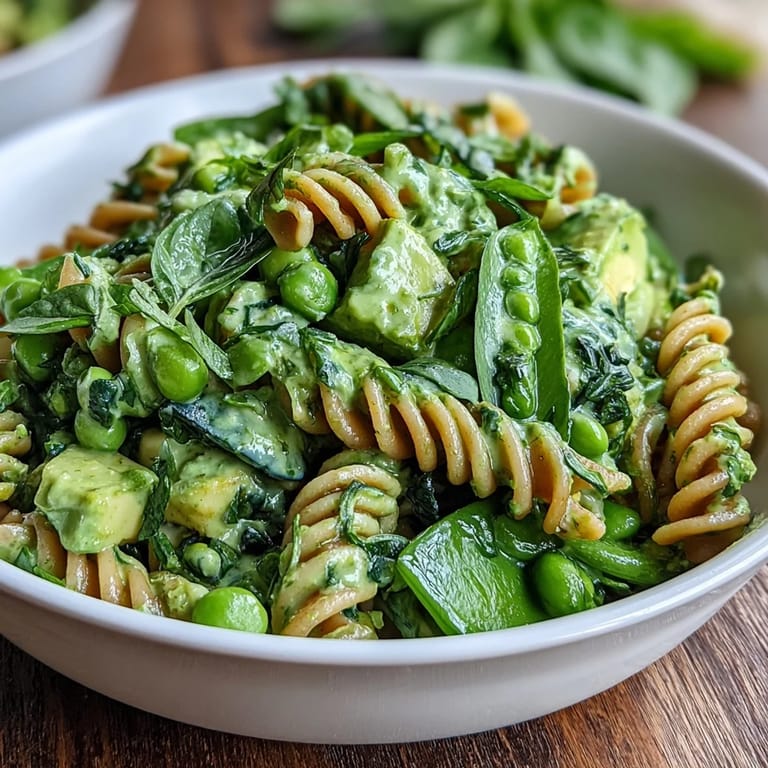
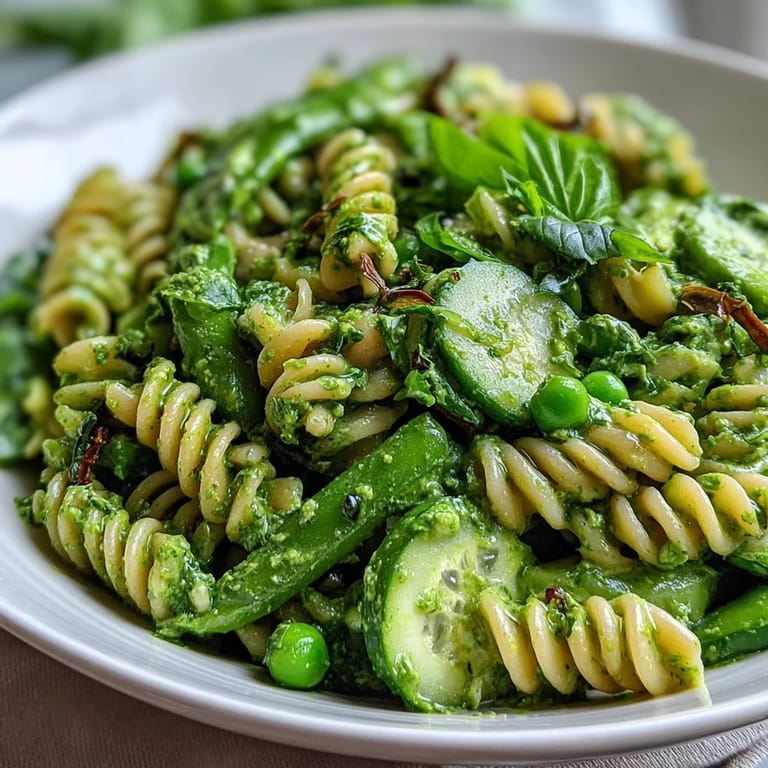
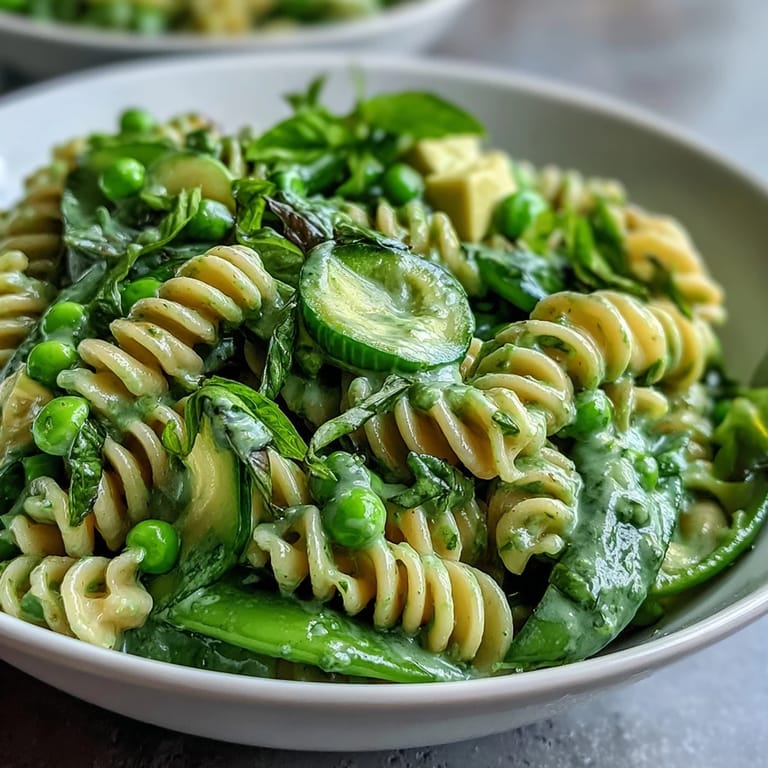
- In a big bowl, combine your cooled pasta and peas with the cucumber, spinach, spring onions, and avocado, mixing gently so you don't mash anything into pieces. Pour that gorgeous green dressing over everything and toss it all together like you're being careful but not precious about it.
- Finish and serve:
- Scatter some toasted pine nuts and extra fresh herbs on top right before people eat it so everything still feels bright and alive. You can serve this chilled or at room temperature, whichever feels right for the moment.
 Save
Save There's a moment when you first taste this and everything in your mouth happens at once—the cool pasta, the creamy dressing coating your tongue, the little burst of herb flavor—and you realize this is what eating seasonally actually means. It's not pretentious or complicated, it's just eating what tastes good right now.
Making It Your Own
This salad is genuinely flexible, which is part of why I keep coming back to it. If you don't have tarragon, skip it and let the basil shine; if your garden is overflowing with dill, use that instead; if you forgot to buy pine nuts, toasted sunflower seeds work beautifully too. The bones of this recipe are solid enough that you can play around with the details and it'll still taste like spring.
Adding Protein and Substance
Sometimes this needs to be more than a side dish, and that's when I add grilled chicken, crispy chickpeas, or even some white beans if that's what I have. It transforms from a supporting player at a barbecue into something that can stand alone as lunch or a light dinner, and the dressing is generous enough to coat everything and still taste balanced.
Storage and Make-Ahead Strategy
I've learned that keeping components separate until the last minute is actually the move here—cooked pasta in one container, veggies in another, dressing in a jar in the fridge. This way you can grab exactly what you need for however many people are actually showing up, and nothing gets soggy or sad sitting together overnight.
- Dress the salad just before serving so the spinach stays perky and everything tastes intentional.
- The dressing keeps for about three days in a sealed jar, which means you can make extra and use it on literally everything else you eat.
- If avocado browns on you, a squeeze of extra lemon juice will bring it back from the edge.
 Save
Save This is the kind of recipe that makes you feel like you're eating something intentional, even when you threw it together between other things. It's become my answer to that question of what to bring when you want people to actually enjoy the food.
Recipe Questions
- → What pasta works best for this dish?
Short pasta shapes like fusilli, penne, or farfalle hold the dressing well and complement the salad’s textures perfectly.
- → Can I use frozen peas instead of fresh?
Yes, frozen peas work well if fresh are unavailable. Just add them during the last two minutes of cooking to retain crispness.
- → How can I make the dressing creamier?
Using full-fat Greek yogurt and mayonnaise ensures a rich, creamy texture in the green goddess dressing.
- → Are there optional add-ins to enhance the dish?
You can add grilled chicken or chickpeas for protein, or swap in asparagus tips and radishes for extra spring flavors.
- → How should this pasta salad be served?
It’s best served chilled or at room temperature, allowing the flavors to meld and refresh your palate.