 Save
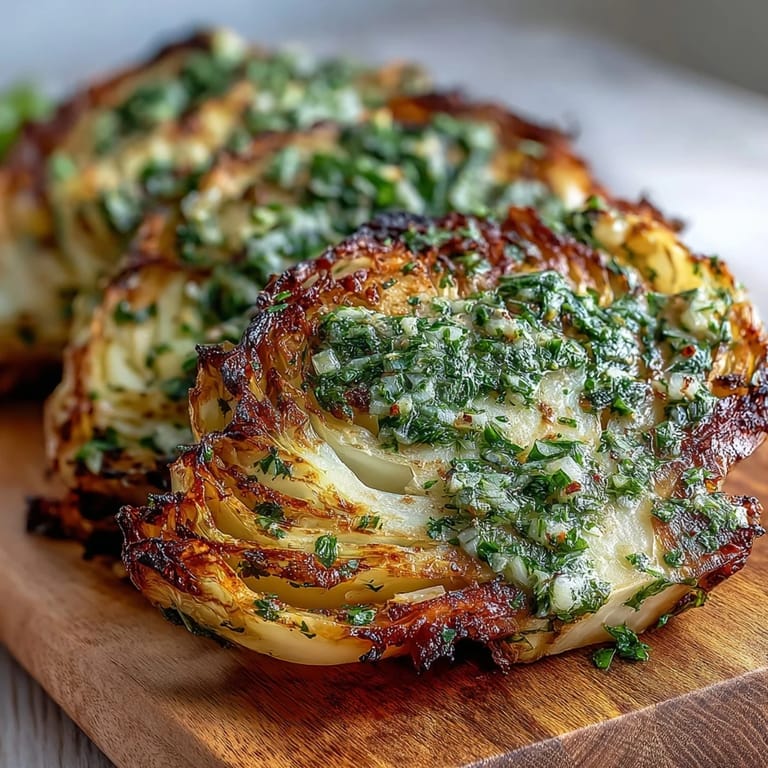
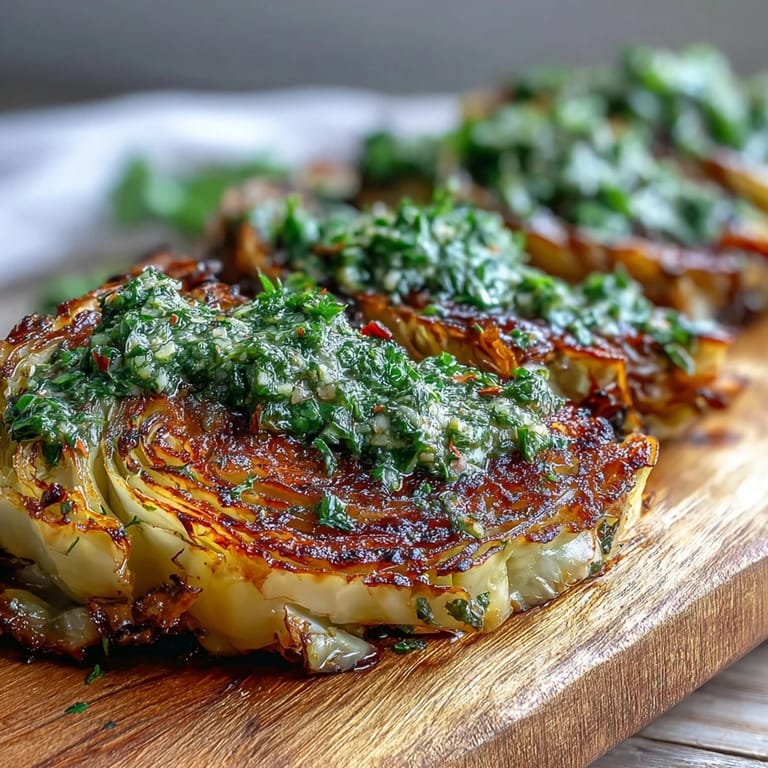
Save My neighbor brought over a roasted cabbage steak last summer, and I'll admit, I was skeptical until the first bite. The caramelized edges were crispy and sweet, nothing like boiled cabbage I remembered from childhood dinners. She drizzled this vibrant green sauce over it, and suddenly this humble vegetable tasted like something I'd order at a restaurant. I asked for her recipe that same evening, and she laughed, saying she'd invented it on a whim after finding too many jalapeños at the farmer's market.
I made these for a dinner party where one guest was newly vegetarian and quietly nervous about what would actually fill her plate. When she tried this, her whole face changed, and she asked for seconds while still eating her first one. That moment taught me that bold flavors and thoughtful cooking matter way more than whether something is trendy or traditional.
Ingredients
- 1 large green cabbage: Look for one that feels dense and heavy for its size, with tight leaves that have no soft spots or browning. The thickness of your steaks depends on how you slice, so pick a cabbage with a good diameter.
- 2 tbsp olive oil: Use a quality oil you'd actually taste; this is one of the few ingredients where it really shines through.
- 1 tsp sea salt: Fine sea salt dissolves better than kosher when mixing into the chimichurri, though either works on the steaks themselves.
- ½ tsp freshly ground black pepper: Fresh pepper makes a noticeable difference here, so grind it yourself if you can.
- 1 cup fresh flat-leaf parsley, finely chopped: The backbone of your sauce, so don't skip it or swap in dried; it won't be the same.
- ¼ cup fresh cilantro, finely chopped: This adds a brightness that rounds out the heat, but if cilantro tastes like soap to you, use more parsley instead.
- 2 jalapeños, seeded and finely chopped: Seeding them removes about 80% of the heat while keeping the flavor, so consider your crowd before skipping this step.
- 3 garlic cloves, minced: Mince them small so they distribute evenly through the oil, or they'll be little surprise heat bombs on your fork.
- ½ cup extra-virgin olive oil: This is where the sauce gets its silky body, so don't skimp or use a cheaper oil.
- 2 tbsp red wine vinegar: The acid keeps everything balanced and bright; white wine vinegar works too if that's what you have.
- 1 tsp dried oregano: A pinch of Mediterranean flavor that ties everything together.
- ½ tsp red pepper flakes (optional, for extra heat): Add these only if your crowd likes things spicy, and go easy at first.
- ½ tsp sea salt: Taste the chimichurri before serving and adjust, as salt is personal.
- ¼ tsp ground black pepper: Another small grind of pepper keeps the sauce from tasting flat.
Tired of Takeout? 🥡
Get 10 meals you can make faster than delivery arrives. Seriously.
One email. No spam. Unsubscribe anytime.
Instructions
- Heat your oven and prep the pan:
- Preheat to 425°F and line a baking sheet with parchment paper. This temperature is hot enough to get real caramelization without drying out the cabbage.
- Clean and slice the cabbage:
- Pull off any yellowed or damaged outer leaves, then cut the cabbage into 1-inch thick rounds like you're slicing a loaf of bread. You'll get about four solid steaks, and don't worry if the layers fall apart a bit around the edges; those become the crispy bits.
- Season and oil the steaks:
- Lay them flat on your parchment paper, brush both sides generously with olive oil, then sprinkle salt and pepper over everything. The oil is what creates those golden, caramelized edges, so don't be shy.
- Roast until golden:
- Place in the oven for 30 to 35 minutes, flipping halfway through. You'll know they're done when the edges are deeply browned and the cabbage is tender when you pierce it with a fork.
- Build your chimichurri:
- While the cabbage roasts, combine the parsley, cilantro, jalapeños, garlic, olive oil, red wine vinegar, oregano, red pepper flakes if using, salt, and pepper in a bowl. Stir it together and let it sit for at least 10 minutes; this resting time lets the flavors get to know each other and mellows the raw garlic.
- Bring it all together:
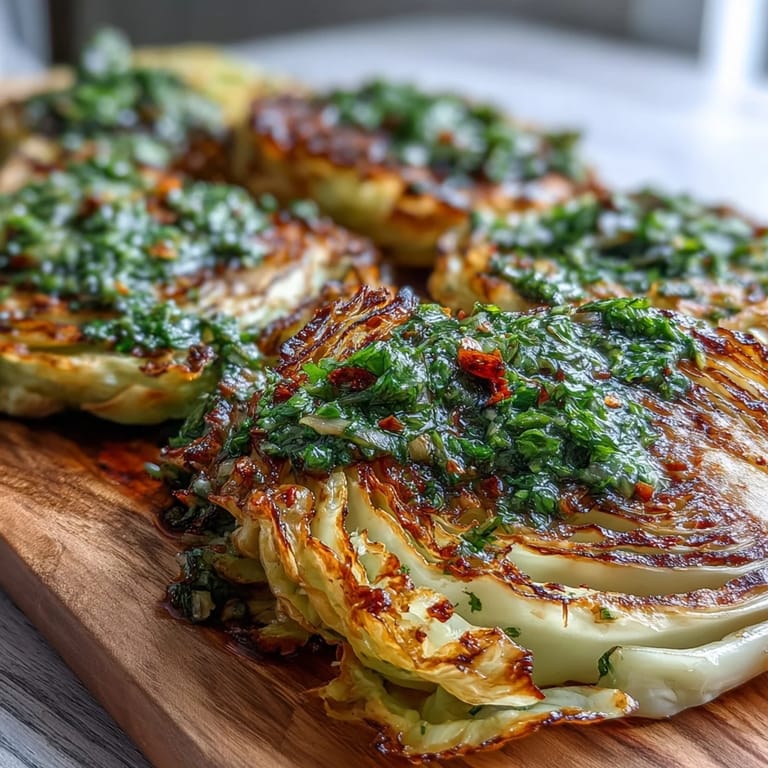
- Transfer your roasted cabbage steaks to plates, then spoon the chimichurri generously over each one. The sauce soaks into the warm cabbage and pools on the plate, so don't hold back.
- Serve and enjoy:
- Eat while the cabbage is still warm and the sauce is vibrant and fresh.
 Save
Save There's something quietly powerful about watching someone eat vegetables because they actually want to, not because they have to. This dish did that at my table, and I realized that when you treat vegetables with respect and give them real flavor, they stop being the side nobody asked for.
Choosing and Storing Cabbage
A good cabbage should feel heavy and compact, with leaves that snap back when you press them. Store it in the crisper drawer where it'll last up to two weeks, and don't wash it until you're ready to use it. If you're buying ahead for this recipe, pick one with a nice wide diameter so your steaks are thick enough to get those crispy edges without falling apart.
The Heat Level Game
The beauty of jalapeño chimichurri is that you control the spice without compromising flavor. Seeding the peppers removes most of the capsaicin, or you can use only one pepper instead of two. If someone at your table loves heat and another person is timid, put the chimichurri in a bowl on the side and let people dress their own steak, which also makes plating easier.
Making It Your Own
This recipe is forgiving and flexible in the best way. I've added a squeeze of lemon at the end, swapped basil for half the parsley, and even stirred in a spoonful of good quality mayo to make it creamier. The roasted cabbage itself is the star, so the chimichurri is your canvas for whatever sounds good in the moment.
- A splash of fresh lemon juice over the finished dish brightens everything and cuts through the richness of the oil.
- Leftover chimichurri keeps in the fridge for three days and is incredible on eggs, grain bowls, or grilled anything.
- If you want to make this ahead, roast the cabbage early in the day and gently reheat it at 350°F for about five minutes before topping with cold or room temperature chimichurri.
 Save
Save This dish proved to me that the simplest ingredients, treated with a little intention, can feel special enough for company or nourishing enough for a quiet weeknight. Make it once and it'll become a staple.
Recipe Questions
- → How do I cut cabbage into steaks without them falling apart?
Keep the core intact when slicing. Cut the cabbage into 1-inch thick rounds from the center, leaving the core to hold the layers together. The outer slices may fall apart but can still be roasted as loose leaves.
- → Can I make the chimichurri ahead of time?
Yes, the chimichurri can be prepared up to 3 days in advance and stored in an airtight container in the refrigerator. The flavors actually improve as they sit and meld together.
- → How can I reduce the spice level?
Use only one jalapeño instead of two, and remove all seeds and membranes. You can also skip the red pepper flakes entirely for a milder version that still has great flavor.
- → What should I serve with cabbage steaks?
Serve them as a main with quinoa, rice, or roasted potatoes. They also work beautifully as a side dish alongside grilled proteins, baked tofu, or tempeh for a complete meal.
- → Can I grill the cabbage instead of roasting?
Absolutely. Brush the cabbage steaks with oil and grill over medium-high heat for 5-7 minutes per side until charred and tender. The smoky flavor pairs wonderfully with the chimichurri.
- → Why are my cabbage steaks not getting crispy?
Make sure your oven is fully preheated to 425°F and don't overcrowd the baking sheet. Use enough oil to coat both sides and flip halfway through roasting to ensure even caramelization.