 Save
Save The first time I made manti, I was standing in a cramped Istanbul kitchen watching my friend's grandmother fold these tiny dumplings with the kind of practiced efficiency that comes from decades of repetition. She barely looked down as her fingers pinched and sealed each square, moving faster than seemed humanly possible. I tried to keep up and failed miserably, but what stuck with me wasn't the embarrassment—it was how the whole kitchen smelled: warm cheese, toasted butter, and something almost nutty from the paprika. That moment taught me that manti isn't just food; it's a conversation between your hands and the dough.
Years later, I made manti for a dinner party on a rainy spring evening when nobody wanted to go out. I remember being nervous about the timing—getting everything ready at once felt like juggling—but then something unexpected happened. As I pulled the drained dumplings from the pot, steam rising like a tiny cloud, my friend came into the kitchen and just grabbed one straight from the colander with his fingers. He burned himself slightly, laughed about it, and said it was worth it. That's when I knew I'd nailed the recipe.
Ingredients
- All-purpose flour: The foundation of delicate, tender dough that holds together without tearing when you pinch the corners.
- Salt: Just enough to season the dough and bring out the subtle flavors that come next.
- Large egg: Acts as the binder that makes the dough silky and elastic.
- Water: Add gradually—humidity in your kitchen will determine exactly how much you need.
- Turkish white cheese: Creamy and tangy without being too sharp; if you can't find it, feta works but use a little less since it's saltier.
- Ricotta cheese: Adds lightness to the filling so every bite feels delicate rather than dense.
- Fresh parsley: Finely chopped so it distributes evenly and adds a quiet herbal note.
- Black pepper: Just enough for warmth without overwhelming the cheese.
- Greek yogurt: Thick and tangy, it's the cool counterpoint to everything warm on the plate.
- Garlic: Minced fine so it melts into the yogurt rather than showing up as chunks.
- Unsalted butter: The vehicle for spice, melted until it turns slightly golden.
- Paprika: Sweet and gentle, blooming in hot butter to release all its warmth.
- Aleppo pepper: If you have it, use it—the fruity heat is nothing like regular chili flakes, but chili flakes work when you're in a pinch.
Tired of Takeout? 🥡
Get 10 meals you can make faster than delivery arrives. Seriously.
One email. No spam. Unsubscribe anytime.
Instructions
- Build your dough foundation:
- Mix flour and salt, create a well in the middle, and add egg and water. Knead until the dough becomes smooth and elastic—it should feel slightly springy when you press it. Cover and let it rest for 20 minutes so the gluten relaxes and the dough becomes easier to work with.
- Prepare the cheese filling:
- Combine crumbled cheese, ricotta, finely chopped parsley, and black pepper in a bowl. The mixture should feel creamy and hold together slightly; this is your filling ready to go.
- Make the yogurt sauce:
- Stir minced garlic and salt into Greek yogurt until completely smooth. Taste and adjust the salt if needed—this sauce should be cool, tangy, and ready to balance the warm spiced butter.
- Roll and cut the dough:
- Flour your work surface lightly and roll the rested dough until it's almost translucent, about 2 mm thick. Using a sharp knife or pastry cutter, cut 1.5-inch squares—you should get roughly 30 to 40 pieces depending on how thin you rolled.
- Fill and fold each manti:
- Place about half a teaspoon of filling in the center of each square, then pinch all four corners together to seal. The motion should be quick and confident; overthinking it leads to torn dough.
- Cook in boiling water:
- Bring salted water to a rolling boil and add manti in batches so they don't crowd the pot. They'll sink, then float after a few minutes—cook for another 2 to 3 minutes after floating, then lift them out with a slotted spoon.
- Brown the spiced butter:
- Melt butter in a small pan and immediately stir in paprika and Aleppo pepper. Let it toast for about 30 seconds until fragrant—you're infusing the butter with warmth, not cooking it to brown.
- Plate and serve:
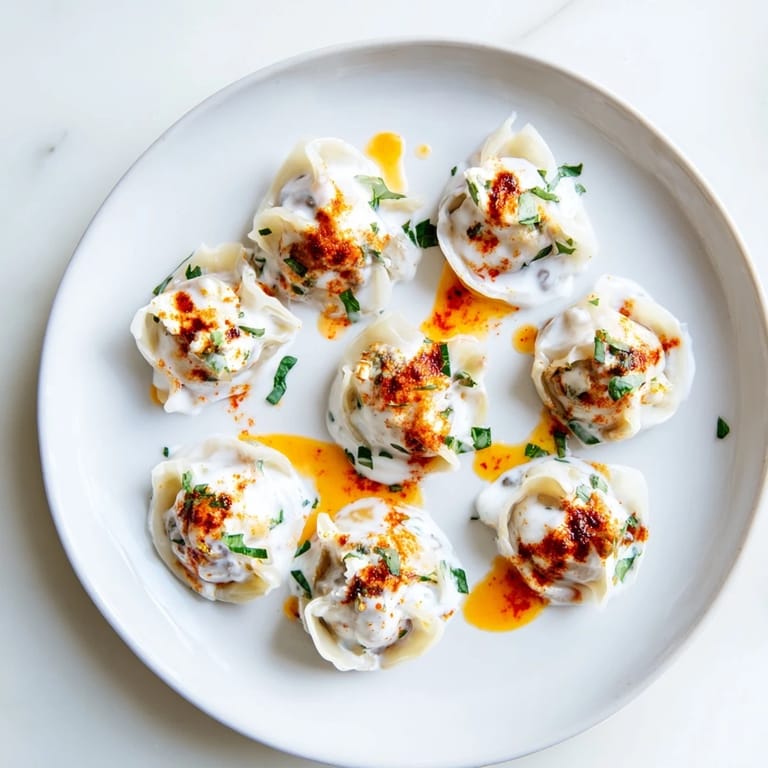
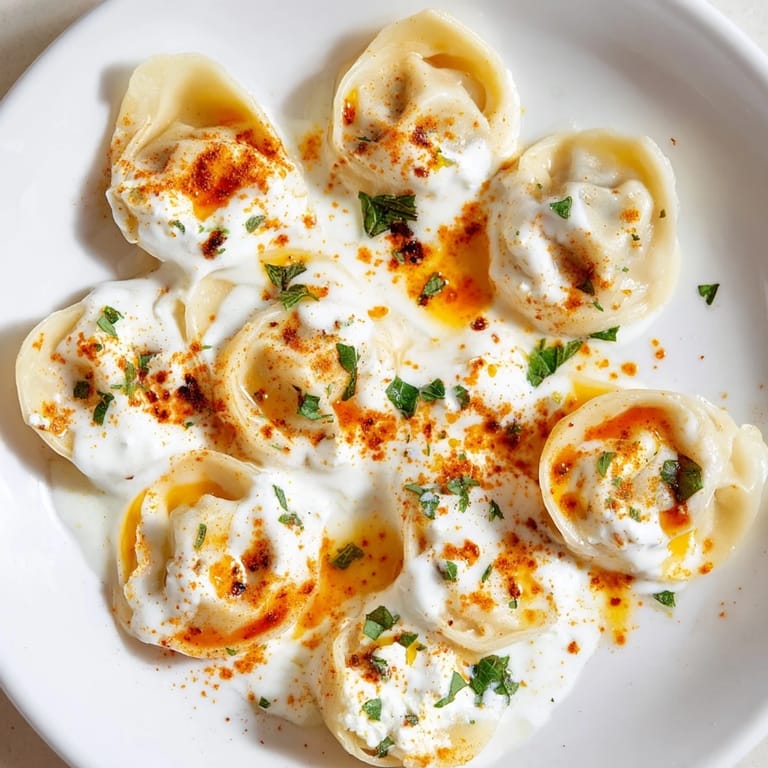
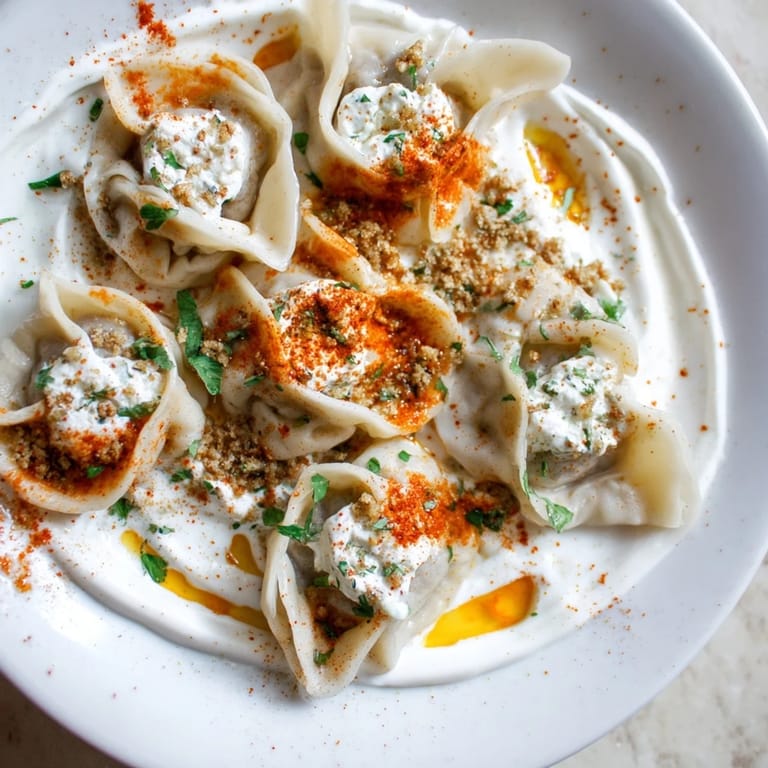
- Arrange manti on plates, spoon yogurt sauce generously over the top, then drizzle with the warm spiced butter. The contrast between warm and cool, creamy and sharp, is what makes this dish sing.
 Save
Save There's a moment right before you serve manti when everything comes together and feels like a small miracle. The steam from the yogurt mixes with the nutty smell of the spiced butter, and you know you've created something worth the effort—something that tastes like care and attention.
The Art of Pinching
Folding manti is as much about confidence as technique. The first few dumplings will feel awkward—your fingers will fumble, corners will tear, filling will escape—but by the tenth or fifteenth one, something clicks. You develop a rhythm, a feel for how much pressure to apply, and suddenly you're moving faster and the results look more consistent. The pinching motion isn't complicated; it's about being deliberate without being tense. I learned to fold them while standing, not bent over a table, which somehow made my hands steadier and the whole process less exhausting.
Cheese Selection and the Flavor Balance
The choice between Turkish white cheese and feta matters more than you'd think. Turkish white cheese is younger, creamier, and milder—it melts slightly into the dough without announcing itself. Feta is sharper and holds its shape more stubbornly, which means every bite contains a pronounced tang. Neither is wrong, but they create different experiences. I've made manti both ways and noticed that feta versions need the yogurt sauce even more because the salty cheese demands that cool counterpoint. If you go the feta route, use less of it and consider adding a touch of mint to the filling for balance.
Timing and the Serving Window
The hardest part of serving manti is accepting that they're best eaten immediately, while the dough is still tender and the yogurt is still cool against the warm butter. Manti waits for no one and the longer they sit, the more they absorb sauce and lose their delicate texture. This means coordinating everything so the dumplings hit the plate at the exact moment you're ready to eat. It's the kind of small challenge that makes you feel like you're really cooking rather than just following steps.
- Prep everything before the water boils so you can move quickly once the manti are done.
- Keep the yogurt sauce chilled until the last second so the temperature contrast stays sharp.
- Spoon the butter over each plate individually rather than trying to dress everything at once.
 Save
Save Making manti connects you to something bigger than a single meal. It's patient work that rewards attention and invites people to slow down and really taste what's in front of them.
Recipe Questions
- → What type of cheese is best for the filling?
Traditionally, Turkish white cheese or feta is used, combined with ricotta for a creamy texture and balanced flavor.
- → How thin should the dough be rolled out?
Roll the dough to about 2 mm thickness to ensure delicate yet sturdy dumplings that cook evenly.
- → What is the purpose of the spiced butter?
The spiced butter, infused with paprika and Aleppo pepper, adds a rich, smoky warmth that complements the cooling yogurt sauce.
- → Can I prepare the manti in advance?
Yes, the dumplings can be assembled ahead of time and refrigerated briefly before cooking to preserve freshness.
- → How do I know when the dumplings are cooked?
Cook the dumplings in boiling salted water until they float to the surface and become tender, usually 5–7 minutes.
- → Are there any suggested garnishes?
Fresh parsley or a sprinkle of sumac or dried mint adds vibrant aroma and a touch of color to the finished dish.