 Save
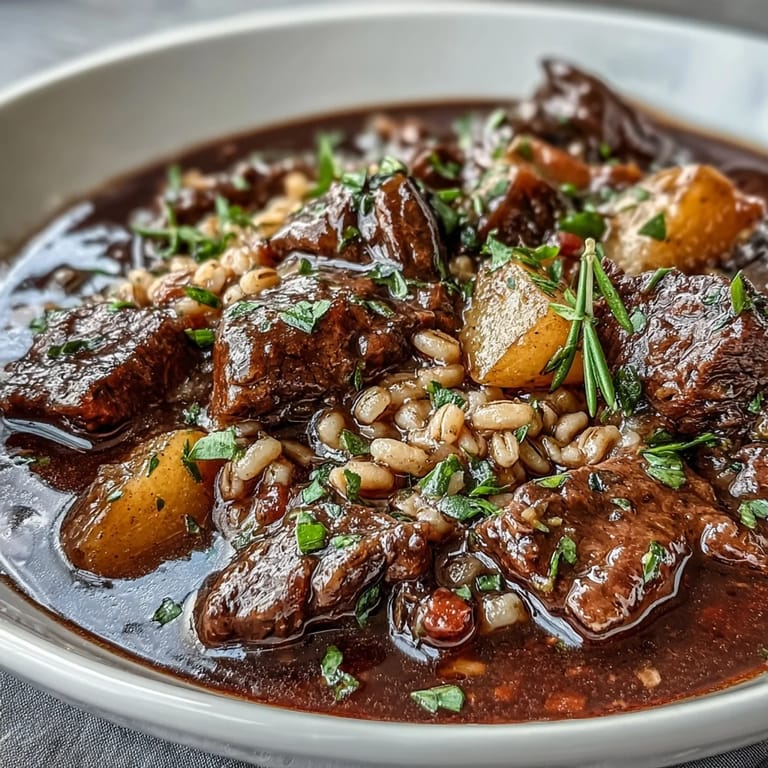
Save There's something about standing over a pot of simmering Guinness stew on a grey afternoon that makes everything feel right. My kitchen fills with the dark, malty smell of beer mingling with caramelized beef and earthy root vegetables, and suddenly I'm not thinking about the cold outside anymore. This stew came into my life during a particularly dreary November when a friend insisted I try making something properly Irish, and I haven't looked back since. The barley adds this unexpected nuttiness that rounds out the richness, and the whole thing tastes even better the next day when all those flavors have had time to get cozy with each other.
I made this for my partner on our first winter together, and the moment they tasted it, something shifted. They asked for thirds, then wanted the recipe, then wanted to make it together the following week. There's real power in a bowl of stew that says "I took time for you," even if that time is mostly just letting the oven do the work. Now it's become our unofficial comfort meal, the one we make when life feels a bit too much.
Ingredients
- Beef chuck (2 lbs): Chuck is your friend here because it has enough fat and connective tissue to become impossibly tender during the long simmer, not tough like leaner cuts would turn out.
- Pearl barley (3/4 cup): Rinse it first or it gets gluey, and it'll thicken your stew naturally as it cooks, soaking up all those flavors like a sponge.
- Guinness stout (440 ml): This isn't about getting drunk, it's about that roasted, slightly bitter complexity that regular broth could never give you on its own.
- Root vegetables (carrots, parsnips, rutabaga, potatoes): Mix and match here, but lean into things that won't disintegrate into mush, which is why potatoes go in but not, say, zucchini.
- Olive oil (2 tablespoons): You need enough to properly sear the beef so it develops that golden crust that tastes like flavor itself.
- Tomato paste (1 tablespoon): Don't skip this tiny amount, it adds a subtle sweetness and depth that rounds everything out beautifully.
- Thyme and rosemary (2 teaspoons and 1 teaspoon): Dried herbs work better than fresh here because they hold up to the long cooking without turning bitter or disappearing.
- Worcestershire sauce (1 tablespoon): This is the secret that makes people say "what is that little something that makes it taste so good."
Tired of Takeout? 🥡
Get 10 meals you can make faster than delivery arrives. Seriously.
One email. No spam. Unsubscribe anytime.
Instructions
- Get your pot ready and heat it properly:
- Use a large Dutch oven or any heavy-bottomed pot that can go from stovetop to oven-level heat. Medium-high heat is where you want to be, and give it a minute to actually get hot before adding oil.
- Brown the beef like you mean it:
- Pat the beef dry first, because wet meat steams instead of sears, which is the difference between a stew that tastes rich and one that tastes pale. Season it generously with salt and pepper, then work in batches so you're not crowding the pan.
- Build your flavor base with the vegetables:
- Once the beef is out, the fond (those browned bits stuck to the bottom) is your friend. Add the onion to that same pot and let it soften for a few minutes, then add garlic, and then all your root vegetables at once. The sauté isn't about cooking them through, it's about waking up their flavors.
- Wake up the tomato paste:
- Stir it in and let it cook for just one minute, which mellows its intensity and helps it distribute evenly instead of sitting in a corner of the pot.
- Bring everything together:
- Return the beef, add the barley (rinsed so it doesn't clump), then the Guinness, broth, water, and all your seasonings. The Worcestershire and bay leaves are subtle but essential. Give everything a good stir so nothing sticks to the bottom.
- Let time do the work:
- Bring it to a boil, then drop the heat to low, cover it, and let it simmer for 1.5 to 2 hours. Stir occasionally, not because it needs it constantly, but so you can peek in and check that nothing's sticking and the smell is becoming even more incredible.
- Taste and adjust before serving:
- Remove the bay leaves, then taste it. Does it need more salt? More pepper? A bit more of something? This is the moment to trust your own palate and fix it.
 Save
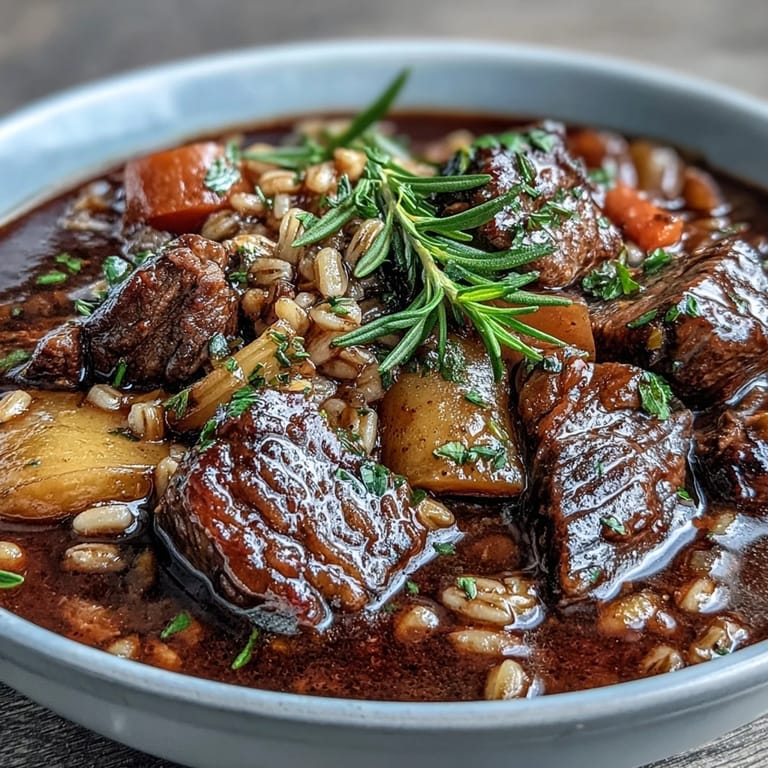
Save There's a moment, usually around the 90-minute mark, when you lift the lid and the steam clears and you see how rich and dark everything has become, and you know you've done something right. This stew became more than just dinner for me when I realized I was making it not because I had to, but because I wanted to give someone something warm and substantial and honest.
The Magic of Mashing
About halfway through my third time making this, I discovered that if you gently press some of the cooked potatoes against the side of the pot with the back of your spoon, they break down slightly and thicken the broth into something almost gravy-like. It's not required, but it's a small technique that changes the texture entirely. Some batches I do it, some I don't, depending on my mood and how thick I want things to be.
Guinness as an Ingredient, Not a Mistake
I was skeptical about using an entire can of Guinness at first, wondering if I was just making an excuse to drink stout while cooking. But the reality is that the alcohol cooks off, leaving behind only the complex, roasted flavors that make this stew taste nothing like beer and everything like something that took hours to develop. If you're uncomfortable with it or cooking for someone who is, substitute extra beef broth, though you'll lose that particular depth.
What Happens When You Make It Again Tomorrow
The stew is honestly better the next day, which is the kind of recipe gift I appreciate. The flavors settle into each other overnight, the barley continues softening, and reheating it brings back all that warmth without any of the effort. I've learned to always make more than I think I need because there's something about a bowl of this stew for lunch that fixes everything.
- Crusty bread is non-negotiable, both for soaking up the broth and for giving your hands something to do while you savor each spoonful.
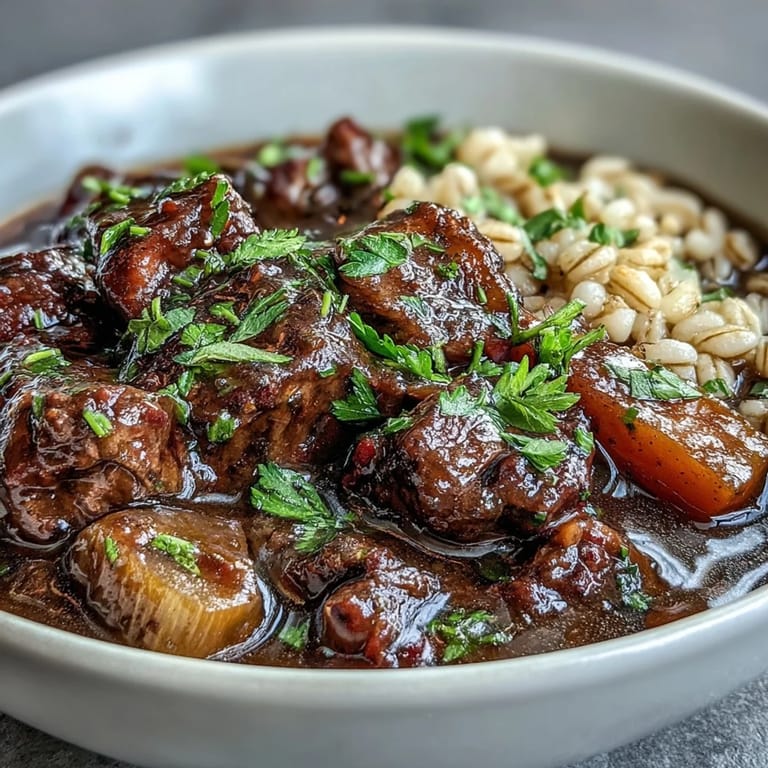
- Fresh parsley on top adds a brightness that cuts through the richness and makes it feel intentional, not just leftovers.
- If you're substituting vegetables, stick to things that hold their shape like sweet potato or celeriac, not anything that dissolves easily.
 Save
Save This stew has a way of turning an ordinary evening into something that feels deliberately chosen, deliberately warm. Make it, share it, and don't be surprised when people ask for the recipe.
Recipe Questions
- → What cut of beef works best for this stew?
Beef chuck cut into 1-inch cubes is ideal due to its tenderness and flavor when slow-cooked.
- → Can another stout replace Guinness in this dish?
Yes, other stouts can be used as a substitute. For a non-alcoholic version, replace with extra beef broth.
- → How do the root vegetables affect the stew's texture?
Root vegetables like carrots, parsnips, and rutabaga add sweetness and a hearty, tender texture to the stew.
- → Is it necessary to brown the beef before simmering?
Browning the beef enhances flavor and color, adding depth to the final dish but can be skipped if short on time.
- → How can I thicken the stew if it's too thin?
Mash some potatoes and vegetables against the pot's side before serving to naturally thicken the stew.
- → What herbs complement the flavors in this stew?
Dried thyme, rosemary, and bay leaves contribute aromatic, earthy notes that balance the rich broth.