 Save
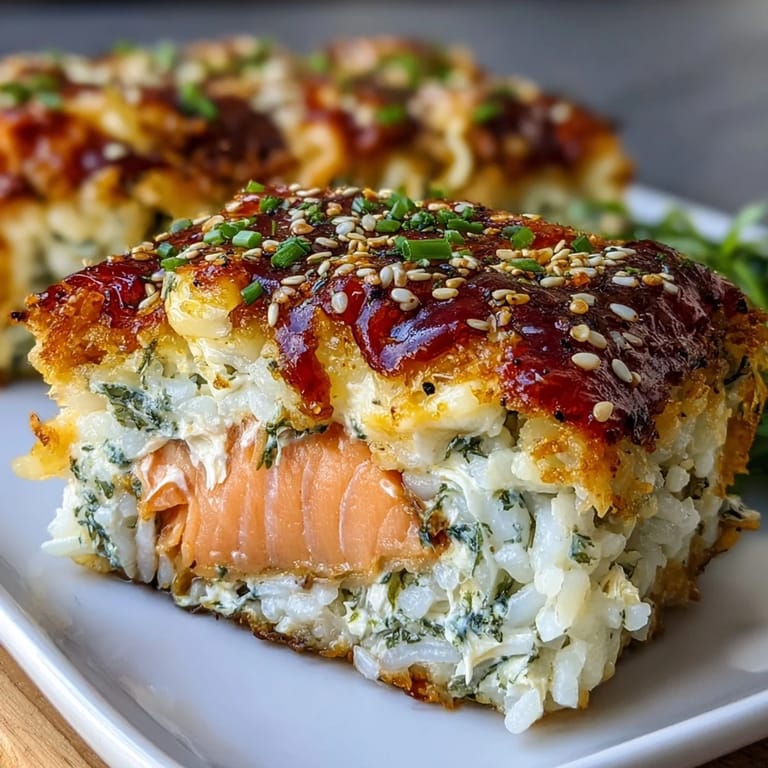
Save My kitchen smelled like vinegared rice and sriracha the afternoon my neighbor stopped by with a craving for sushi but no patience for rolling. We were both tired, honestly—the kind of tired where hand-rolling feels impossible but a casserole dish suddenly makes sense. That's when I realized salmon sushi didn't need to be fussy; it just needed to be warm, creamy, and shareable. This bake became our shortcut to that restaurant feeling without the precision, and somehow it tasted even better when spooned straight from the pan.
I made this for my sister's potluck without telling anyone what it was, and watching people's faces when they realized it was basically deconstructed sushi made everything worth it. She came back for seconds and thirds, then asked if she could take the whole pan home. That's when I knew this recipe had something special—it bridges the gap between fancy dinner party and genuinely easy weeknight meal.
Ingredients
- Sushi rice: This isn't just any rice—sushi rice has a slightly sticky texture that holds everything together and gives the bake its authentic foundation, so don't swap it for long-grain.
- Rice vinegar, sugar, and salt: These three transform plain rice into something bright and alive; the warm rice absorbs them better than cold rice ever could.
- Salmon fillet: Cook it yourself for the freshest taste, or use high-quality canned salmon in a pinch—just drain it well.
- Imitation crab sticks: Yes, they're processed, but they give you that authentic sushi-roll flavor without the price tag of real crab.
- Cream cheese: Softened, not cold, so it spreads smoothly and creates that luxurious, creamy texture everyone loves.
- Sriracha mayo: This is your flavor anchor—balance the heat to your preference by starting with 1 tablespoon Sriracha and tasting as you go.
- Furikake seasoning: Those little flakes of nori, sesame, and fish roe are the secret to making this taste restaurant-quality; don't skimp here.
- Sesame seeds and green onion: These finish the dish with texture and freshness that keep it from feeling heavy.
- Seaweed snack sheets: They're your wrapper substitute when serving, letting everyone customize how they eat it.
Tired of Takeout? 🥡
Get 10 meals you can make faster than delivery arrives. Seriously.
One email. No spam. Unsubscribe anytime.
Instructions
- Cook and season the rice:
- Follow your rice cooker or use a saucepan—the goal is fluffy, tender grains. Microwave the vinegar mixture just long enough to dissolve the sugar, then fold it gently into the warm rice so each grain gets coated without turning mushy.
- Prepare your baking dish:
- A light greasing prevents sticking and makes cleanup easier. Whether you choose 9x9 or 9x13 depends on how thick you like your bake—smaller pan means deeper, denser layers.
- Cook the salmon:
- An air fryer gets it done fastest and keeps the kitchen cooler, but the oven works just as well. You'll know it's done when it flakes easily and has lost its translucent shine.
- Mix the seafood filling:
- Shred the crab finely so it distributes evenly, then fold in the cooled salmon, softened cream cheese, and Sriracha mayo until completely smooth. This mixture should spread like a thick paste, not crumble.
- Layer and press:
- Spread the rice evenly and press gently—you want it compact enough to hold together when scooped but not so packed it becomes dense. Sprinkle furikake right onto the rice while it's still warm so it sticks.
- Add the topping:
- Spread the salmon mixture smoothly over the rice layer, using a spatula to create an even surface. Gentle pressure helps it adhere without squishing the rice underneath.
- Bake until golden:
- Watch for the edges to turn golden and the surface to look slightly set—you're heating through, not cooking anything further. The whole thing should smell incredible by minute 12.
- Finish with flair:
- Drizzle extra Sriracha mayo in a light zigzag, then shower it all with furikake, sesame seeds, and bright green onions while it's still warm so everything clings to the cream cheese.
- Serve wrapped and warm:
- Tearing off a piece of seaweed snack and scooping warm bake into it creates that hand-roll experience—it's as much fun to eat as it is satisfying.
 Save
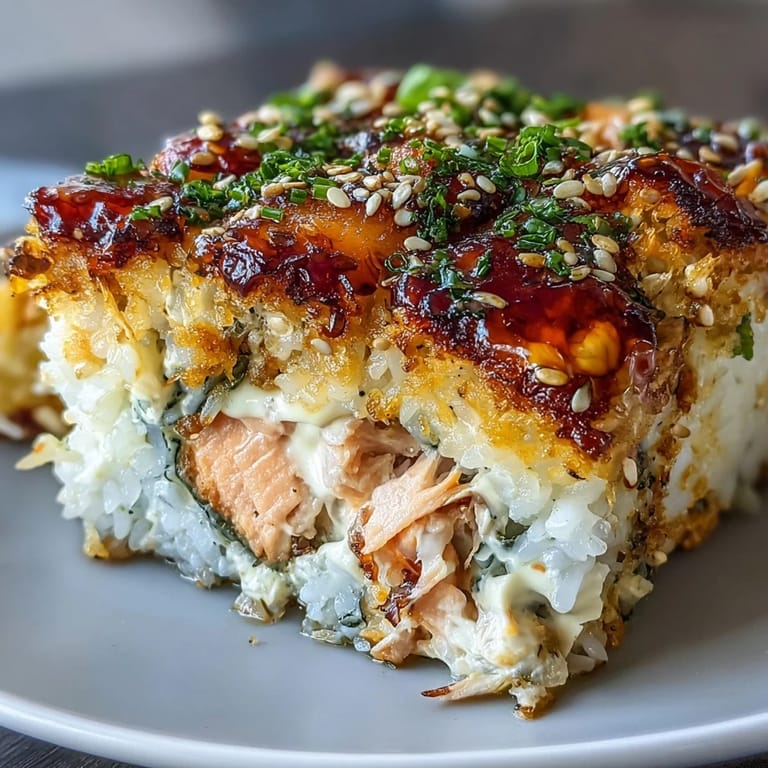
Save My dad, who usually watches me cook like I'm performing culinary theater, actually got up and helped himself to thirds without asking permission first. That's when I realized this recipe had crossed from 'nice dinner' into 'comfort food that brings people together' territory. It proved that shortcuts in the kitchen aren't lazy—they're smart.
The Magic of Layering
Every layer in this bake serves a purpose, and order matters more than you'd think. The rice sits on the bottom, absorbing and protecting from the heat of the pan, while the seafood mixture floats on top where it can get slightly caramelized and golden. The furikake, sesame, and herbs go on last because they're delicate and flavor-forward—they lose impact if they bake into oblivion instead of staying crispy and bright on top.
Why This Works When Rolling Doesn't
Traditional sushi requires muscle memory and practice, but a bake lets gravity and gentle heat do the work for you. Everyone gets the same ratio of rice to filling in every bite, which means no sad rolls with empty centers. The baking process also softens everything slightly, creating a cohesive, comfortable meal that tastes like sushi but feels like a casserole—which somehow makes it taste even better.
Storage, Reheating, and Make-Ahead Magic
This dish actually improves after sitting overnight as the flavors marry and deepen. Refrigerate in the baking dish covered with foil for up to two days, then reheat gently in a 300°F oven for about 8 minutes until warmed through. You can also prep everything the morning of and bake it fresh right before dinner—just keep the components separate until assembly.
- Let leftovers cool completely before covering to prevent condensation from making the rice soggy.
- Reheating in the oven keeps everything's texture intact better than a microwave ever could.
- If you're making this for a crowd, double the recipe in a full-size baking dish and extend the baking time by just 5 minutes.
 Save
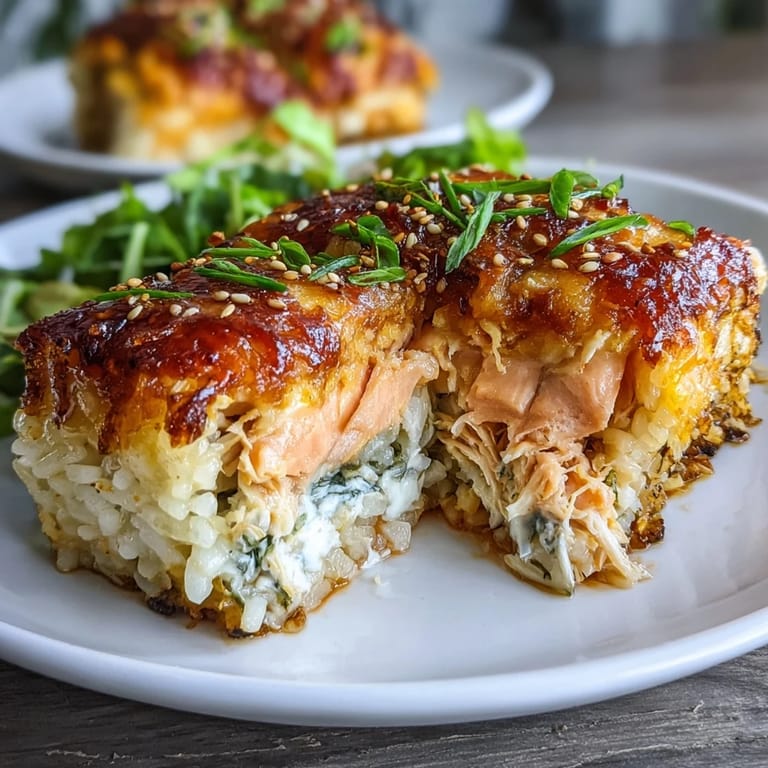
Save This recipe taught me that sometimes the best shortcuts lead you to something that tastes more thoughtful than the original. You're not cutting corners—you're cutting through unnecessary fuss to get to what actually matters: delicious, shareable food that makes people happy.
Recipe Questions
- → How do I cook the sushi rice properly?
Cook sushi rice according to package instructions. Season with a mixture of rice vinegar, sugar, and salt heated briefly in the microwave for optimal flavor.
- → Can I substitute imitation crab with real crab?
Yes, using real crab will enhance the dish's authenticity and flavor, though imitation crab keeps it budget-friendly and accessible.
- → What is the best way to cook the salmon for this dish?
Salmon can be baked at 375°F for 15-17 minutes or air fried at 400°F for 10-12 minutes until fully cooked and flaky.
- → How spicy is the casserole, and can it be adjusted?
The spice level comes from the Sriracha mayo; adjust by adding more or less Sriracha, or omit for a milder taste.
- → What are suitable serving suggestions?
Serve warm, scooped with seaweed snack sheets for wrapping. It pairs well with crisp white wine or a light Japanese beer.
- → How long can leftovers be stored?
Store leftovers refrigerated for up to 2 days and reheat gently before serving to maintain texture and flavor.