 Save
Save The morning sun was streaming through my kitchen windows when I first attempted this spread, arms crossed with three different processors going at once and eggplant roasting in the oven. My roommate wandered in, bleary-eyed and confused, asking why I was cooking a full Mediterranean feast before noon on a Tuesday. I just shrugged and said sometimes a Tuesday calls for something beautiful and shared. We ended up eating it for lunch too, and then again for dinner.
Last summer I set this board out for a birthday brunch and watched my cousin, who claims to hate eggplant, unknowingly devour half the baba ganoush. When I told her what it was, she paused for exactly three seconds before reaching back in with another piece of pita. That is the kind of conversion this spread inspires.
Ingredients
- Chickpeas: The foundation of great hummus, so drain them really well and give them a quick rinse
- Tahini: This sesame paste transforms bean dip into something luxurious and velvety
- Eggplant: Roasting until completely collapsed gives baba ganoush its signature smoky depth
- Greek yogurt: Full fat makes the tzatziki feel indulgent rather than just healthy
- Cucumber: Grating and squeezing out excess water keeps the tzatziki from becoming watery
- Cherry tomatoes: Their sweetness balances all the salty elements perfectly
- Feta cheese: Get the good stuff packed in brine, it makes all the difference
- Mixed nuts: Pistachios add a lovely crunch and pop of color among all the red and green
- Fresh herbs: Do not skip the garnish, that hit of green makes everything taste fresher
Tired of Takeout? 🥡
Get 10 meals you can make faster than delivery arrives. Seriously.
One email. No spam. Unsubscribe anytime.
Instructions
- Make the hummus:
- Blend chickpeas, tahini, lemon juice, garlic, and salt until completely smooth, adding water a spoonful at a time until it reaches that perfect creamy consistency.
- Prepare the tzatziki:
- Mix Greek yogurt with grated well-drained cucumber, minced garlic, olive oil, fresh dill, and salt, then let it sit in the fridge for at least an hour so the flavors can really get to know each other.
- Roast the eggplant:
- Cook the whole eggplant at 400°F until the skin is wrinkled and the flesh collapses when you press it, then scoop out the interior and blend with tahini, olive oil, lemon juice, and salt until silky.
- Arrange your board:
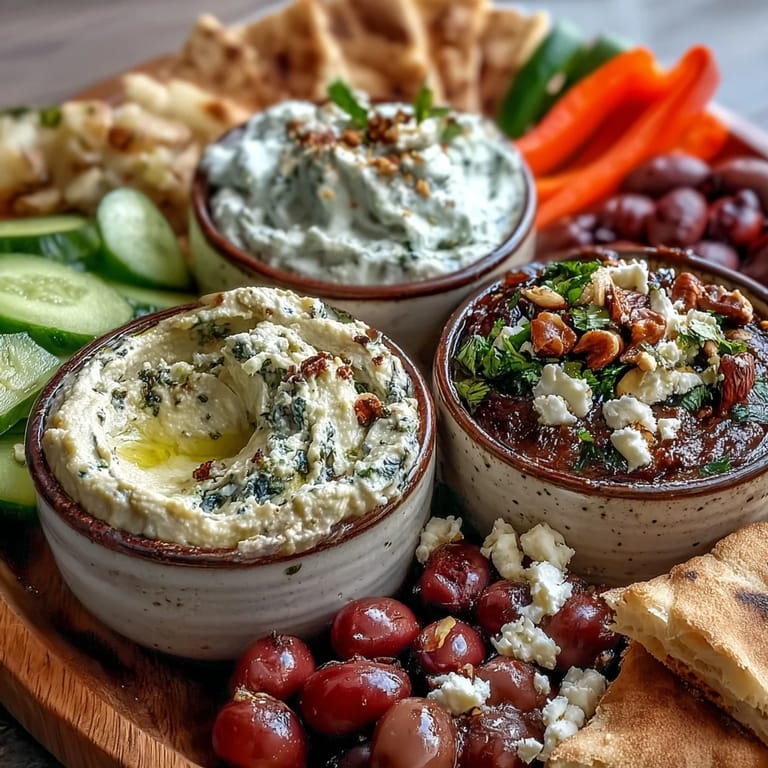
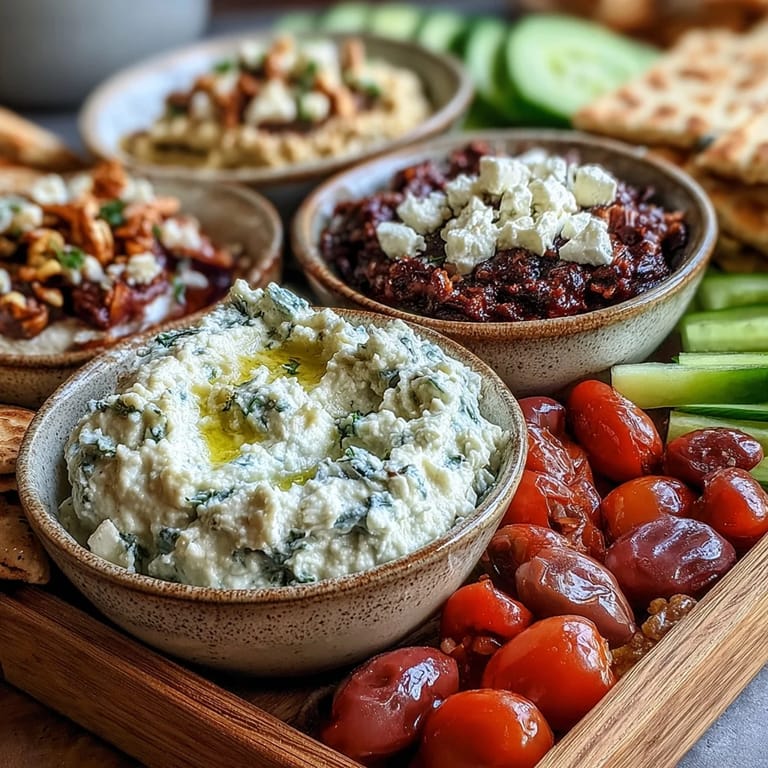
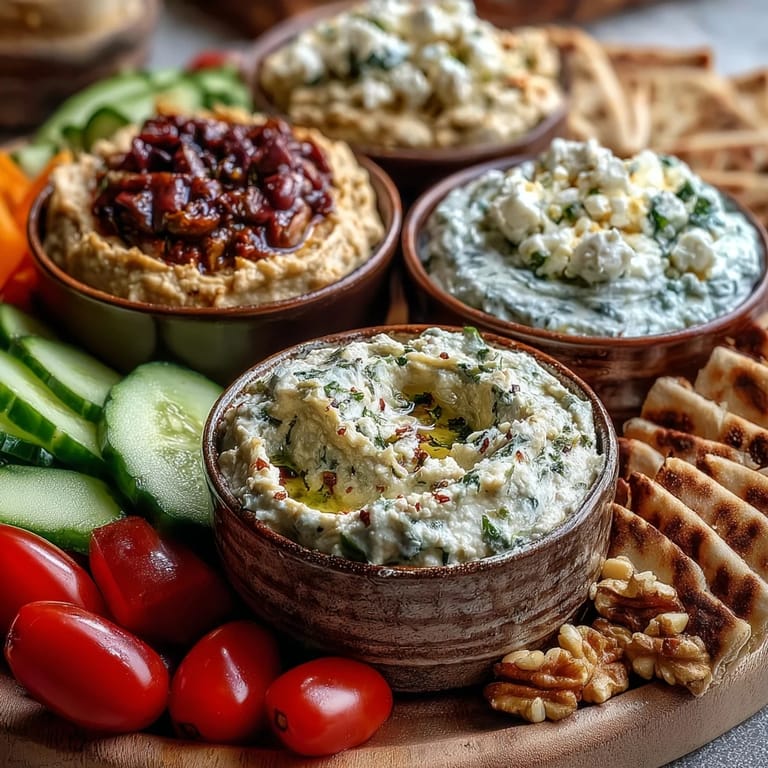
- Spoon each dip into its own small bowl and place them strategically around your platter, leaving room between them for all the colorful accompaniments.
- Add the fresh elements:
- Arrange cucumber rounds, halved tomatoes, and bell pepper strips in neat little clusters, letting them cascade naturally around the dips.
- Scatter the finishing touches:
- Sprinkle olives, crumbled feta, and mixed nuts into the empty spaces, then tuck pita triangles and flatbread pieces around the edges.
- Finish with flair:
- Drizzle everything generously with olive oil and shower with fresh herbs before serving immediately.
 Save
Save My friend Sarah took one look at this spread and said she could never make something so impressive herself. An hour later she was arranging her own board with such pride, realizing that the beauty comes from the assembly rather than complicated techniques. Now she hosts board brunches every month.
Making It Your Own
Once you have the basic structure down, these boards become a canvas for whatever looks beautiful at the market. I have swapped in roasted red peppers when eggplants felt out of season, added marinated artichokes when I needed something extra, and even thrown on some fresh figs when they appeared at the farmers market. The dips anchor everything, but the accompaniments can shift with the seasons or your mood.
Board Arrangement Secrets
The most beautiful boards follow a simple principle: group colors together but create little islands of variety. Do not scatter everything randomly. Cluster all the tomatoes in one section, let the olives form their own small mound, give the feta its own corner. This creates those gorgeous pockets of color that make people want to photograph before they even start eating. Trust me, the presentation really does make the food taste better.
Timing and Prep Ahead
The absolute best thing about this brunch board is how forgiving it is about timing. All three dips actually improve after a night in the refrigerator, their flavors melding and deepening. The vegetables can be sliced and stored in containers with damp paper towels, the herbs washed and dried. This means you can do almost everything the day before and simply assemble when guests arrive, leaving you free to actually enjoy your own party.
- Set out your dips twenty minutes before serving to take the chill off
- Keep some extra peta bread warming in the oven for a constant supply
- Have small spoons available for guests who want to mix and match flavors
 Save
Save There is something deeply satisfying about feeding people from a single beautiful platter, watching them reach and dip and discover new combinations together. Food tastes better when it is shared this way.
Recipe Questions
- → Can I prepare the dips ahead of time?
Yes, all three dips – hummus, tzatziki, and baba ganoush – can be prepared a day or two in advance and stored in airtight containers in the refrigerator. This allows flavors to meld and saves time on the day of serving.
- → What are good substitutes for the flatbreads?
Alongside pita and various flatbreads, you could offer gluten-free crackers, breadsticks, or even thick slices of toasted sourdough or crusty baguette. Fresh vegetable sticks like carrots or celery also make great dippers.
- → How can I make this board suitable for vegans?
To adapt this for a vegan diet, omit the feta cheese or substitute it with a plant-based alternative. Ensure your flatbreads are dairy-free, and confirm that the tzatziki uses a plant-based yogurt or a different dairy-free dip.
- → What other items can be added to a Mediterranean board?
For extra variety, consider adding marinated artichoke hearts, sun-dried tomatoes, roasted red peppers, dolmades (stuffed grape leaves), or even some grilled halloumi cheese for a heartier option.
- → What's the best way to assemble the board for presentation?
Start by placing the dip bowls strategically. Then, arrange larger items like flatbreads and vegetables, creating distinct sections. Fill in gaps with smaller items like olives, feta, and nuts. Finish with a drizzle of olive oil and fresh herbs for a vibrant look.