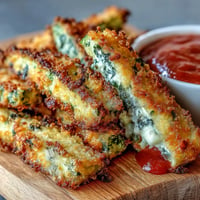
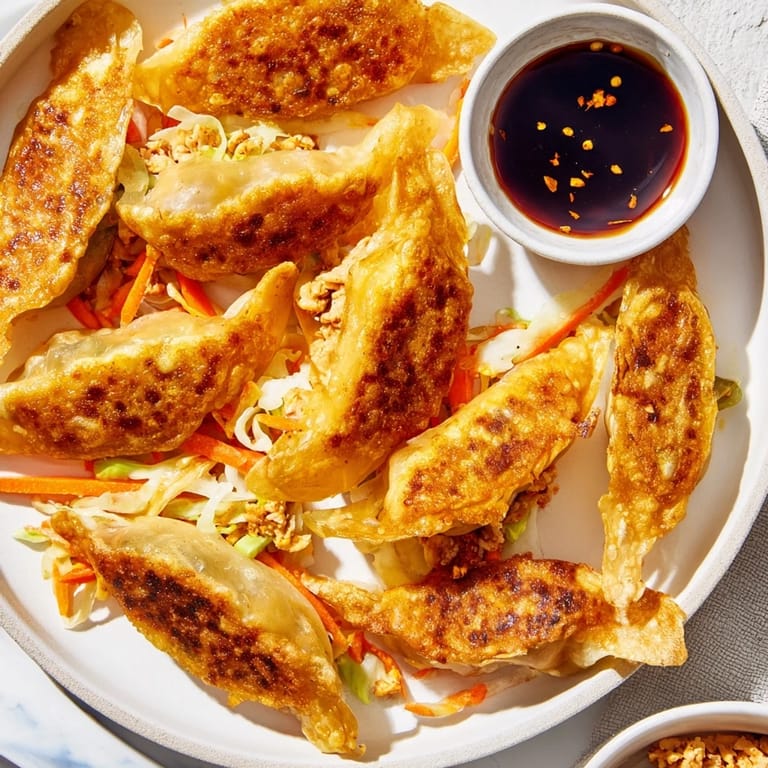
 Save
Save There's something irresistible about the sound of rice paper hitting hot oil, that sudden sizzle that fills your kitchen with warmth and promise. I discovered these dumplings during a chaotic weeknight when I needed something impressive but didn't have time for complicated folding techniques. What started as a quick fix became my go-to move whenever I want to feel like I've actually mastered something in the kitchen. The rice paper crisps up golden and delicate in minutes, trapping a savory filling that releases its fragrance the moment you bite through. Now I make them constantly, always tweaking the filling to match whatever's in my fridge.
I'll never forget the first time I served these to my partner after a rough day, watching his face light up when he bit into one and the golden wrapper shattered between his teeth. He asked for the recipe immediately, which meant I had to finally admit I'd been making them up as I went along. Since then, we've made them together on lazy Sunday afternoons, and somehow they taste even better when someone else is handling the filling while you're working the pan. It became our thing, our shorthand for 'tonight we're doing something a little bit special.'
Ingredients
- Ground chicken or pork (200 g): The backbone of the filling, bringing richness and texture; use pork if you want more flavor depth or chicken for something lighter.
- Firm tofu, crumbled (200 g): The plant-based swap that somehow works just as well, giving you a satisfying bite without the meat.
- Carrot, julienned (1 small): Adds sweetness and bright color that shows through the translucent wrapper like a little gift.
- Cabbage, finely shredded (1 cup): This is your secret weapon for texture and moisture, keeping the filling tender rather than dense.
- Spring onions, thinly sliced (2): Fresh and aromatic, they cut through the richness and add a whisper of onion flavor that doesn't overpower.
- Garlic, minced (2 cloves): Ground into the filling where it gets mellow and sweet, not harsh or aggressive.
- Ginger, grated (1 tbsp): The warmth that makes people say 'I can't quite put my finger on what I'm tasting,' which is exactly the point.
- Soy sauce (2 tbsp for filling, 3 tbsp for sauce): Use tamari if gluten matters to you; it gives the filling its savory backbone and the sauce its tangy depth.
- Sesame oil (1 tbsp for filling, 1 tsp for sauce): Just enough to remind you there's something sophisticated happening here.
- Sugar (1 tsp): A tiny amount that rounds out the flavors and keeps everything balanced.
- Black pepper (1/2 tsp): Ground fresh if you can, it makes a quiet but important difference.
- Rice paper wrappers, 22 cm diameter (16 wrappers): The vessel that becomes crispy gold, worth buying from an Asian grocer where they're fresher and actually affordable.
- Vegetable oil (2 tbsp): For pan-frying, keep it neutral so the filling stays the star.
- Warm water: For softening the wrappers, not hot water or they tear, not room temperature or they stay too stiff.
- Rice vinegar (1 tbsp): Bright and clean, it keeps the dipping sauce from being one-note.
- Honey or maple syrup (1 tsp): A touch of sweetness that makes the sauce cling to the dumplings.
- Garlic clove, finely grated (1 small): Raw in the sauce, sharp and alive, balancing all the other flavors.
- Chili flakes (1/2 tsp, optional): Only if you want a whisper of heat that sneaks up on you.
Tired of Takeout? 🥡
Get 10 meals you can make faster than delivery arrives. Seriously.
One email. No spam. Unsubscribe anytime.
Instructions
- Build your filling:
- Combine the meat or crumbled tofu with carrot, cabbage, spring onions, garlic, and ginger in a large bowl, then add soy sauce, sesame oil, sugar, and pepper. Mix everything until it's evenly distributed and looks almost wet; this is what keeps the dumplings tender inside.
- Prepare your water station:
- Fill a shallow dish with warm water and set up a clean, damp kitchen towel next to it where your wrapped dumplings will rest. You're creating an assembly line, which makes the whole process feel less fussy.
- Soften and fill each wrapper:
- Dip one rice paper wrapper into the warm water for 6 to 8 seconds—you want it pliable but still holding its shape, not droopy. Lay it on the damp towel and place 2 tablespoons of filling in the center, then fold the bottom edge up and over the filling, fold in the sides, and roll tightly.
- Pan-fry until golden:
- Heat oil in a non-stick skillet over medium heat and place dumplings seam-side down, letting them cook undisturbed for 2 to 3 minutes until the bottom turns golden and crispy. Flip carefully and cook the other side another 2 to 3 minutes, working in batches so they have room to crisp properly.
- Make the sauce:
- Whisk together soy sauce, rice vinegar, sesame oil, honey or maple syrup, grated garlic, and chili flakes in a small bowl. Taste it and adjust the balance—if it's too salty, add a tiny bit of honey; if it needs more spark, a squeeze of lime or splash of rice vinegar wakes it up.
- Serve while they're still crackling:
- Arrange the hot dumplings on a plate with the sauce nearby for dipping, and enjoy them immediately while that crispy exterior is at its peak.
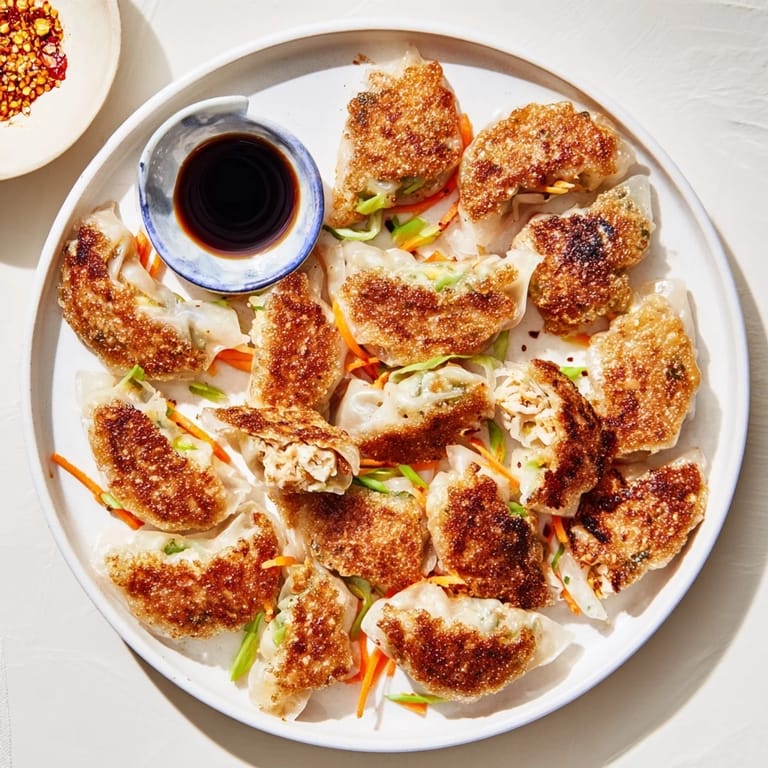 Save
Save There was this one evening when a friend came over unexpectedly and I threw together a batch of these, and she actually closed her eyes when she bit into one. That moment stuck with me because it reminded me that food isn't really about technique or fancy ingredients—it's about caring enough to make something warm and crispy for someone you like. These dumplings became proof that you don't need complicated recipes to create something memorable.
The Art of the Perfect Wrapper
Rice paper has this delicate personality that takes a moment to understand. When it's too dry it's brittle, when it's too wet it's impossible to handle, and somewhere in that narrow window is where the magic happens. I've learned to dip my fingers in the warm water first so the paper doesn't stick to my dry hands, and I always have that damp towel nearby as my safety net. The wrapper itself becomes part of the eating experience—crispy, slightly translucent, with just enough chew underneath the shatter.
Playing with Fillings
What I love most about this recipe is how forgiving it is, how it invites you to use whatever is sitting in your vegetable drawer. I've added chopped mushrooms on days when I wanted something earthier, slipped in bell peppers for color and crunch, even experimented with adding a touch of five-spice powder when I was feeling adventurous. The ratio stays the same but the flavors shift, and somehow it always works because the rice paper and that caramelized bottom are flexible enough to let other things shine. It's the kind of recipe that gets better as you make it and start trusting your instincts about what belongs inside.
Dipping Sauce Strategy
The sauce deserves its own attention because it's not just an afterthought—it's where the brightness and spark come from. That garlic should be raw so it stays alive and sharp, the rice vinegar keeps things from being too sweet or heavy, and the sesame oil ties everything back to the filling. I've started making extra sauce because people always use more than they think they will, dipping and double-dipping until the bowl is almost empty. The chili flakes are optional but they add a slow-building heat that makes people reach for another dumpling before they're ready.
- Make the sauce fresh each time instead of storing it, because the raw garlic gets harsh after a day or two in the fridge.
- If you're serving to people who avoid heat, leave the chili flakes out of the main batch and let brave ones sprinkle their own.
- A squeeze of fresh lime can stand in for some of the rice vinegar if you want to shift the flavor a different direction.
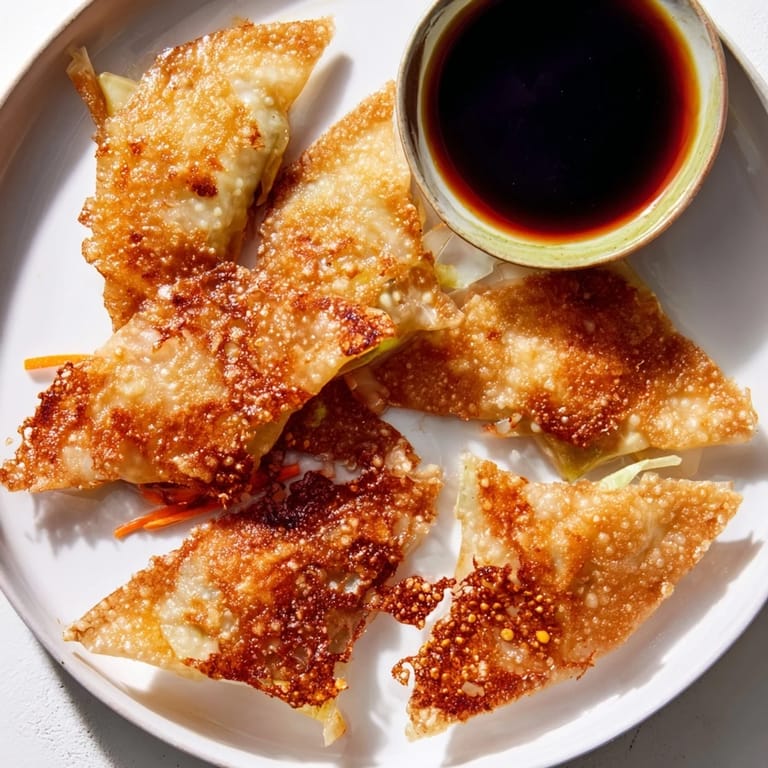 Save
Save These dumplings have become my answer to 'what should we make tonight' on the nights when we want something that tastes like we tried but didn't stress. They're proof that simple ingredients and a hot pan are enough to create something that feels a little bit special, every single time.
Recipe Questions
- → How do I soften the rice paper without tearing?
Dip each wrapper in warm water for 6–8 seconds until pliable but not too soft, then place on a damp towel to prevent sticking.
- → Can I make these dumplings vegetarian or vegan?
Yes, substitute ground meat with firm tofu and adjust the sauce by using maple syrup instead of honey for a vegan-friendly option.
- → What’s the best way to achieve a crispy texture?
Pan-fry the dumplings in vegetable oil over medium heat until both sides turn golden brown and crispy.
- → How should I store leftover dumplings?
Store them in an airtight container in the refrigerator and reheat in a skillet to retain crispiness before serving.
- → Can I change the dipping sauce flavors?
Absolutely, you can adjust the sweetness, acidity, or spice by varying honey/maple syrup, vinegar, or chili flakes to your preference.