 Save
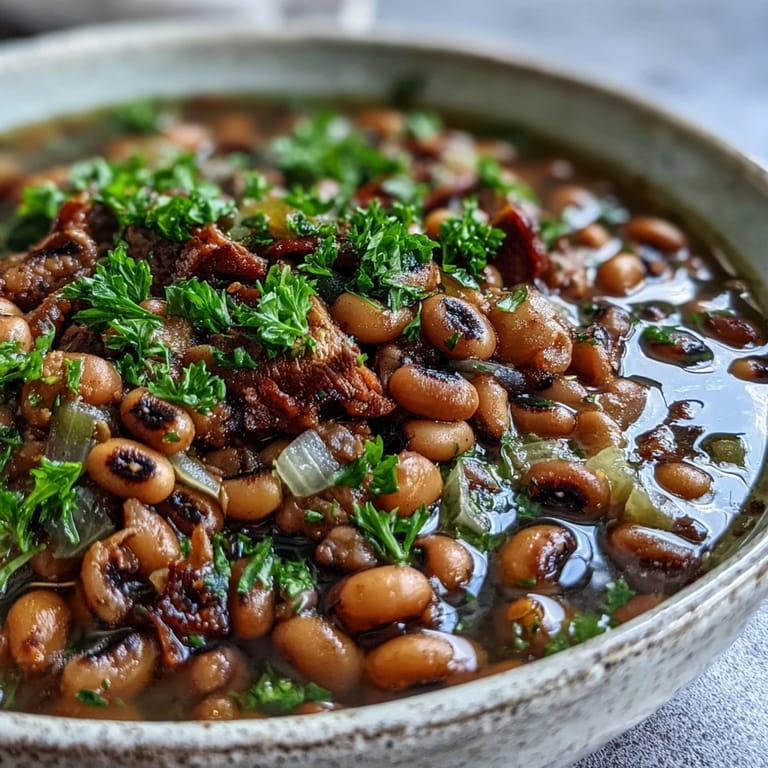
Save My grandmother used to say that black-eyed peas on New Year's Day weren't just dinner—they were insurance. She'd stir that pot with a wooden spoon worn smooth from decades of use, humming softly while the house filled with the smell of smoked pork and Creole spices. One year, I watched her add a pinch more seasoning than usual, taste it straight from the spoon with a satisfied nod, and announce that this batch would bring extra luck. I've made it dozens of times since, and honestly, I'm not sure if the prosperity came from the peas or from simply sitting down together to eat something that took real time to prepare.
I made this for a group of friends one January who'd never had black-eyed peas before, and watching their faces when they tasted that first spoonful—the way the creole spices hit first, then the earthiness of the peas, then that lingering smokiness from the pork—that's when I realized this dish is a bridge. It connects people to something older than themselves, whether they know the tradition or not.
Ingredients
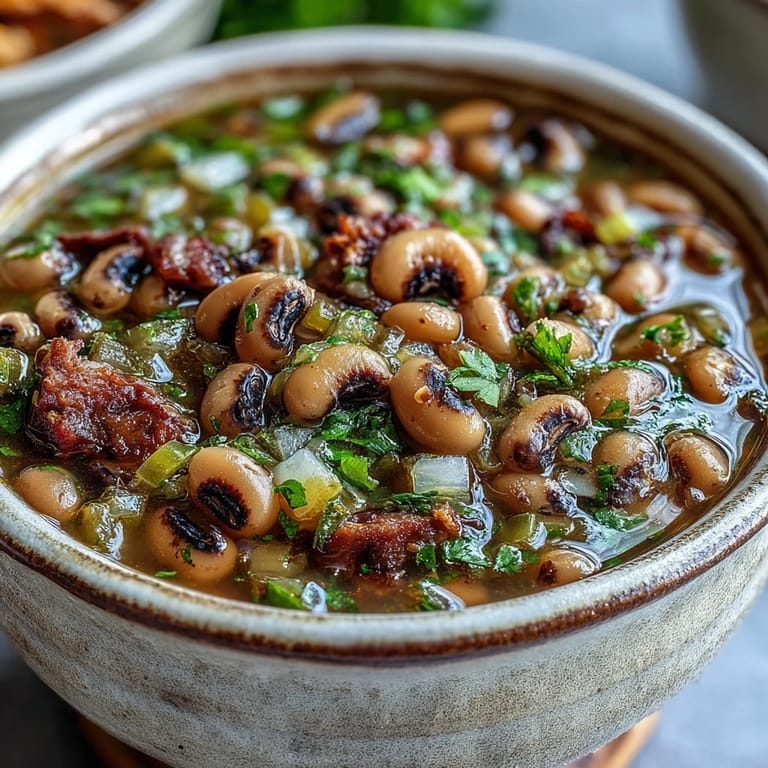
- Black-eyed peas (1 pound, dried): These little beans hold their shape beautifully when cooked low and slow, which is exactly why they're the star here—they soak up all the savory broth without falling apart into mush.
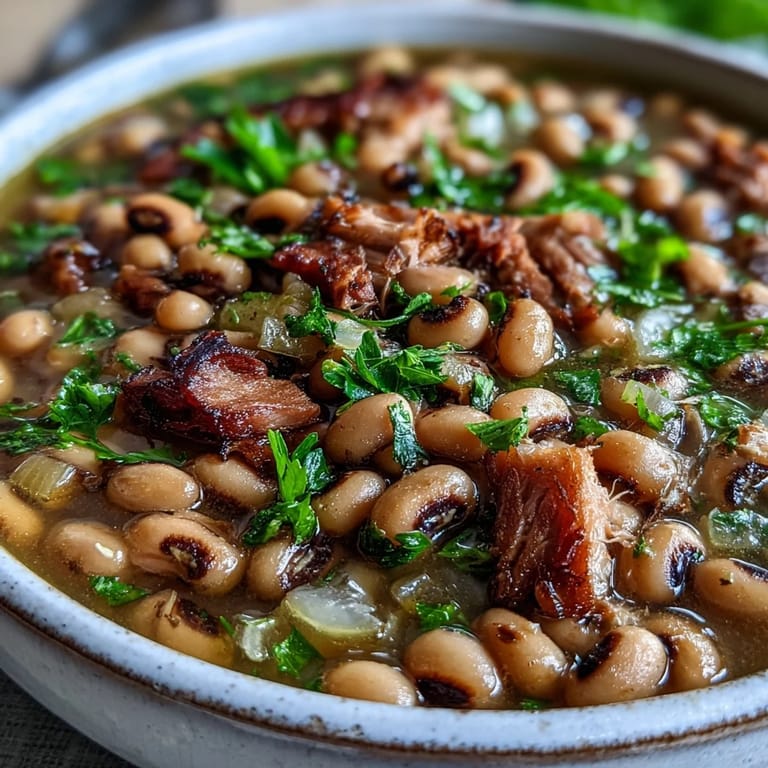
- Smoked pork neck bones or ham hocks (1½ pounds): This is where the magic lives; the bone marrow and collagen transform plain water into liquid gold, so don't skip this or substitute it with regular pork.
- Onion, celery, and bell pepper (the holy trinity): These three together create an aromatic base that carries the weight of the entire dish, building flavor from the very first sauté.
- Garlic (4 cloves, minced): Add it after the vegetables soften so it doesn't burn and turn bitter, and you'll get that gentle sweetness instead of harshness.
- Water or low-sodium chicken broth (7 cups): I've learned that broth adds depth, but water lets the pork shine—choose based on whether you want a lighter or richer final bowl.
- Creole seasoning (1½ teaspoons): This blend does the heavy lifting flavor-wise, so taste as you go and adjust if you prefer less heat or more depth.
- Bay leaf, thyme, smoked paprika, and black pepper: These create layers—the bay adds backbone, thyme brings earthiness, smoked paprika echoes the pork, and pepper finishes everything with a gentle bite.
- Salt (1 teaspoon, to taste): Add it at the end when you can actually taste the finished dish, never at the beginning.
- Fresh parsley and hot sauce (for garnish): The parsley adds a fresh green note that cuts through the richness, while hot sauce is there for anyone who wants to turn up the heat.
Tired of Takeout? 🥡
Get 10 meals you can make faster than delivery arrives. Seriously.
One email. No spam. Unsubscribe anytime.
Instructions
- Prep your peas the night before (or take the quick route):
- Soak dried black-eyed peas overnight in plenty of water, then drain and rinse just before cooking. If you're short on time, cover them with boiling water for one hour instead—it softens them enough without sacrificing texture. Either way, this step ensures they cook evenly and don't split open.
- Build your flavor foundation:
- Heat a splash of oil in your Dutch oven over medium heat and add the chopped onion, celery, and bell pepper. Sauté for about five minutes, stirring occasionally, until the vegetables soften and the onion turns translucent—you'll know it's right when the kitchen starts smelling like a proper Southern kitchen.
- Wake up the aromatics:
- Add the minced garlic and cook for just one minute, stirring constantly so it doesn't brown. That fragrance that hits you—that's your signal to move forward before it gets bitter.
- Combine everything and bring to a boil:
- Stir in the drained black-eyed peas, smoked pork neck bones, your water or broth, and all the seasonings: Creole seasoning, bay leaf, thyme, smoked paprika, and black pepper. Let it come to a rolling boil, which should take about five to ten minutes—don't walk away during this part because you want to skim off any foam that rises to the surface.
- Let time do the work:
- Reduce the heat to low, cover the pot, and let everything simmer gently for about an hour and a half, stirring every twenty minutes or so. The peas will gradually soften, the pork will become so tender it falls from the bone, and the whole pot will smell like something worth waiting for.
- Shred the pork and finish strong:
- Remove the pork bones from the pot and let them cool just enough to handle. Shred any meat clinging to the bones and return it to the pot, then discard the bones and any excess fat. This is also when you remove the bay leaf—find it by fishing around with a spoon, because biting into it later is never fun.
- Season to taste and serve:
- Add salt carefully, tasting as you go, because the broth and pork have already contributed salt and you don't want to oversalt the whole batch. Ladle into bowls, top with fresh parsley if you have it, and set out hot sauce for anyone who wants to turn up the heat.
 Save
Save There was a New Year's Eve when my cousin arrived at dinner exhausted from a terrible week, and by the time she'd finished her second bowl, she was laughing and telling stories like herself again. I think there's something about slow-cooked food that signals safety to people—it says someone cared enough to spend time on you. That's when I stopped thinking of this as just a lucky dish and started seeing it as a love language.
The Soul of Soaking
Soaking your peas isn't just about reducing cooking time; it's about respecting the ingredient. I learned this the hard way when I skipped the soak once, thinking the extra hour of simmering would make up for it. The peas cooked unevenly, some splitting open while others stayed stubbornly hard, and the entire pot felt chaotic. Now I soak them religiously, either overnight or with the quick boil method, because those few extra minutes of hydration let every pea cook at the same pace and absorb flavors evenly.
Why Low and Slow Wins
The temptation is to turn up the heat and finish this dish in an hour, but that's where most people go wrong. A hard boil turns the peas into a broken mess and makes the pork tough instead of tender. Low heat is patience incarnate—it lets the collagen from the bones dissolve slowly into the broth, it allows the spices to mellow and marry together, and it gives you peas that are creamy inside with skin intact. I've never regretted cooking this low and slow; I've always regretted the times I got impatient.
Serving and Storing Your Good Luck
Serve this over rice if you want to stretch it further, or alongside cornbread if you want the full traditional experience. The broth is too good to waste, so make sure there's enough in each bowl—some people eat it like a stew, spoon by spoon. This dish tastes even better the next day after the flavors have melded overnight, and it freezes beautifully for up to three months, which means you can make it once and eat luck all winter long.
- If you need a vegetarian version, skip the pork but add a tablespoon of liquid smoke and a teaspoon of smoked paprika for that essential depth.
- Leftovers reheat gently on the stovetop with a splash of water—never the microwave, which can make them grainy.
- Fresh parsley is optional but transforms the whole experience with its brightness against all that richness.
 Save
Save This dish is proof that the best food doesn't come from rushing or complexity—it comes from time, simple ingredients, and the willingness to sit with people while something good simmers quietly on the stove. Make it once, and you'll understand why people have been making it for generations.
Recipe Questions
- → Why are black-eyed peas eaten on New Years?
Black-eyed peas symbolize coins and prosperity in Southern tradition. Eating them on New Years Day is believed to bring good luck and financial fortune for the coming year. This custom dates back to the Civil War era when the peas were considered lucky survival food.
- → Do I need to soak the peas overnight?
Overnight soaking is ideal for even cooking and better texture. However, you can use the quick soak method: cover peas with boiling water, let sit for 1 hour, then drain and proceed with the instructions. This reduces total cooking time while still ensuring tender results.
- → What can I substitute for smoked pork neck bones?
Smoked ham hocks, smoked turkey wings, or a smoked ham shank work beautifully as alternatives. For a vegetarian version, use extra smoked paprika, liquid smoke, and vegetable broth to maintain that savory depth of flavor.
- → How should I serve this dish?
Traditional Southern serving includes hot sauce and fresh parsley garnish. Most commonly served over fluffy white rice or alongside warm buttered cornbread. Pair with collard greens for a complete New Years prosperity meal representing wealth and health.
- → Can I freeze leftovers?
Yes, this dish freezes exceptionally well for up to 3 months. Cool completely, then store in airtight containers or freezer bags. Thaw overnight in the refrigerator and reheat gently on the stovetop, adding a splash of broth or water if needed.
- → How do I know when the peas are done cooking?
The peas should be very tender and creamy throughout, not mushy. Taste test several beans to ensure they're fully cooked with no chalky texture. The liquid should also thicken slightly from the starch released during the long simmer.