 Save
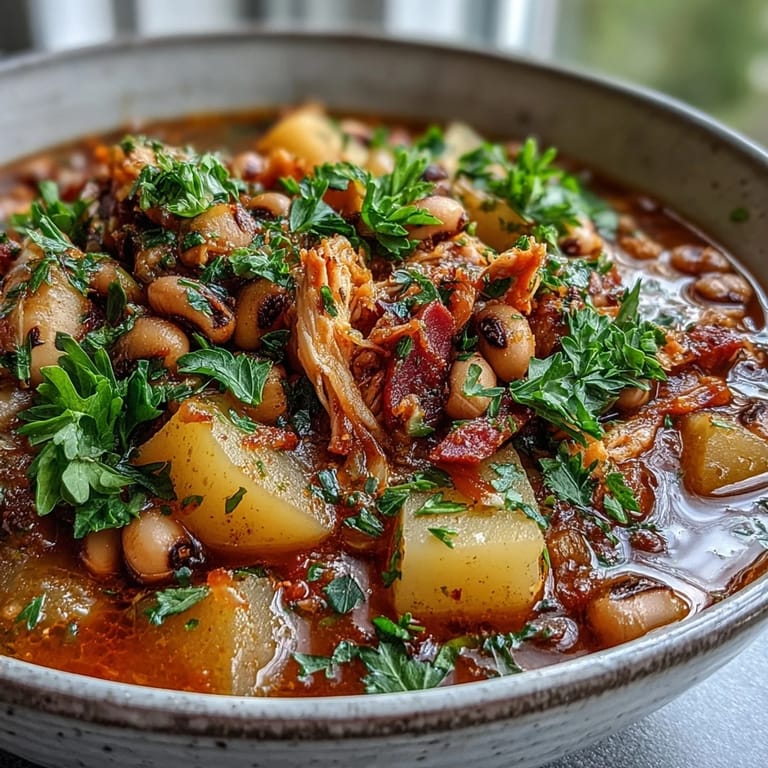
Save My grandmother used to say that a proper black-eyed pea stew was how you turned a humble ham hock into something that made people linger at the table long after dinner was done. I didn't understand that magic until I was standing in her kitchen on a cold January afternoon, watching the broth darken and thicken as the peas softened into creamy submission. The whole house smelled like smoke and earth and something deeply comforting, and I realized then that this wasn't just a meal—it was a quiet celebration of simple, good things.
Years ago, I made this for a potluck on a whim, nervous because everyone else seemed to bring trendy things. When I lifted the lid at the table, the smell hit first—and suddenly three people were asking for the recipe before anyone had even tasted it. That's when I learned that comfort food doesn't need to be complicated to be unforgettable.
Ingredients
- Smoked ham hocks: These are the soul of the stew, packed with collagen and fat that renders into the broth and gives it body and warmth.
- Dried black-eyed peas: Soaking them overnight removes the compounds that cause digestive upset and helps them cook evenly, though canned works fine if you're short on time.
- Onion, carrots, and celery: This holy trinity is your flavor foundation—don't skip the sauté step, as it deepens their sweetness.
- Potatoes: They add substance and earthiness while breaking down slightly to thicken the broth naturally.
- Garlic: Minced fresh is essential here; it blooms in the hot oil and becomes mellow and sweet rather than sharp.
- Diced tomatoes: The acidity brightens everything and prevents the stew from feeling heavy or one-note.
- Broth: Low-sodium is key so you can control the salt yourself and taste as you go.
- Bay leaves and thyme: These classic herbs anchor the stew in that familiar, nostalgic Southern flavor.
- Smoked paprika and cayenne: A whisper of smoke and a gentle heat that builds slowly rather than shouts.
Tired of Takeout? 🥡
Get 10 meals you can make faster than delivery arrives. Seriously.
One email. No spam. Unsubscribe anytime.
Instructions
- Soak the peas (or skip if using canned):
- If you have time, cover dried peas with cold water and let them sit overnight at room temperature. They'll plump up and cook more evenly, though soaking isn't absolutely necessary.
- Build your flavor base:
- Heat a splash of oil in your Dutch oven and add the onion, carrots, and celery, stirring often until they soften and release their sweetness. You'll see them start to stick slightly to the bottom—that's good, that's flavor.
- Wake up the garlic:
- Add minced garlic and let it sizzle for just a minute, long enough to smell it transform from raw to mellow. This tiny moment matters more than you'd think.
- Combine everything:
- Add the ham hocks, drained peas, potatoes, tomatoes with their juice, broth, bay leaves, thyme, paprika, black pepper, and cayenne. Stir gently to combine, letting everything settle into the liquid.
- Bring to a simmer and be patient:
- Get the pot to a boil first, then turn the heat down low and cover it. Let it bubble gently for about 2 hours, stirring now and then. The peas will slowly soften, the ham will become tender, and the broth will deepen in color and flavor.
- Shred the ham and return it:
- Once everything is tender, carefully lift out the ham hocks. Let them cool just enough to handle, then shred the meat, discarding the skin, bone, and any excess fat. Return the meat to the pot and stir it back in.
- Taste and adjust:
- Add salt to taste—you'll likely need more than you think. If you want a thicker stew, simmer uncovered for 10 to 15 minutes more to let some liquid evaporate.
- Finish and serve:
- Remove the bay leaves, ladle into bowls, and top with fresh parsley if you have it. Set out hot sauce on the side for anyone who wants extra heat.
 Save
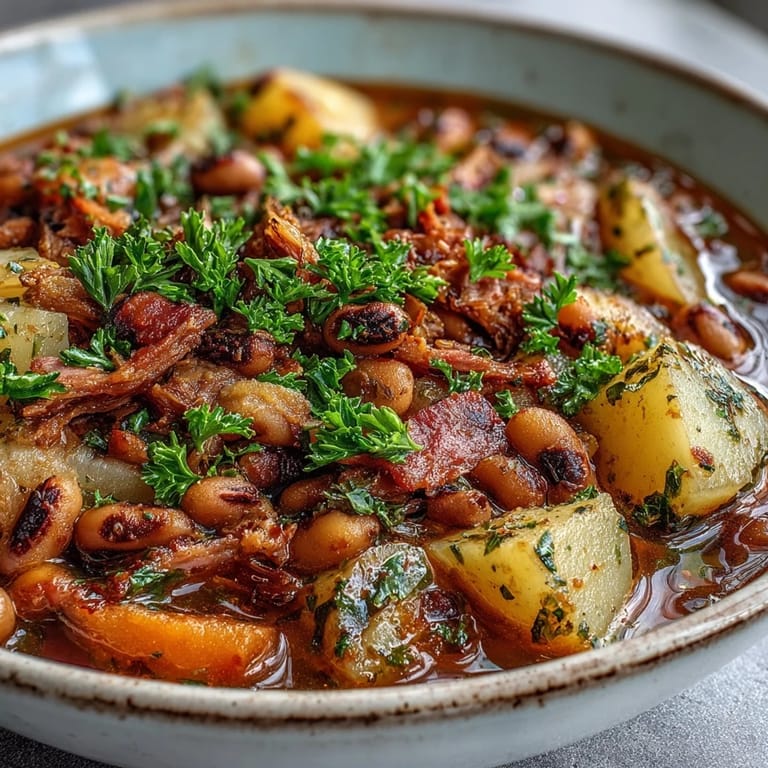
Save I'll never forget feeding this stew to my neighbor who had just moved in, and hearing her say it tasted like home even though she'd never had it before. That's the thing about really good comfort food—it speaks a language everyone understands.
When to Make This
This is a January stew, a February stew, any month when you need something that wraps around you like a blanket. It's equally at home at a casual weeknight dinner or a gathering where you want people to feel welcomed and cared for. The long cooking time is actually a gift—it means you can prep, set it simmering, and tend to other things while the kitchen smells increasingly amazing.
How to Serve It Best
Cornbread is the traditional pairing, and for good reason—its slight sweetness and tender crumb soak up the broth beautifully. Steamed rice works equally well if you want something lighter, or skip both and just serve the stew in deep bowls with crusty bread on the side. Hot sauce, hot vinegar, or a squeeze of lemon juice on top adds brightness and a little edge.
Storage and Leftovers
This stew improves dramatically the next day as all the flavors settle into each other and the broth becomes even richer. Store it in the refrigerator for up to 3 days, and reheat gently on the stove with a splash of broth if it's thickened too much.
- The flavors actually deepen overnight, so don't hesitate to make it a day ahead for entertaining.
- You can also freeze it in portions for up to 2 months—just thaw overnight in the refrigerator before reheating.
- If you're making it for meal prep, store the parsley garnish separately and add it fresh each time you reheat.
 Save
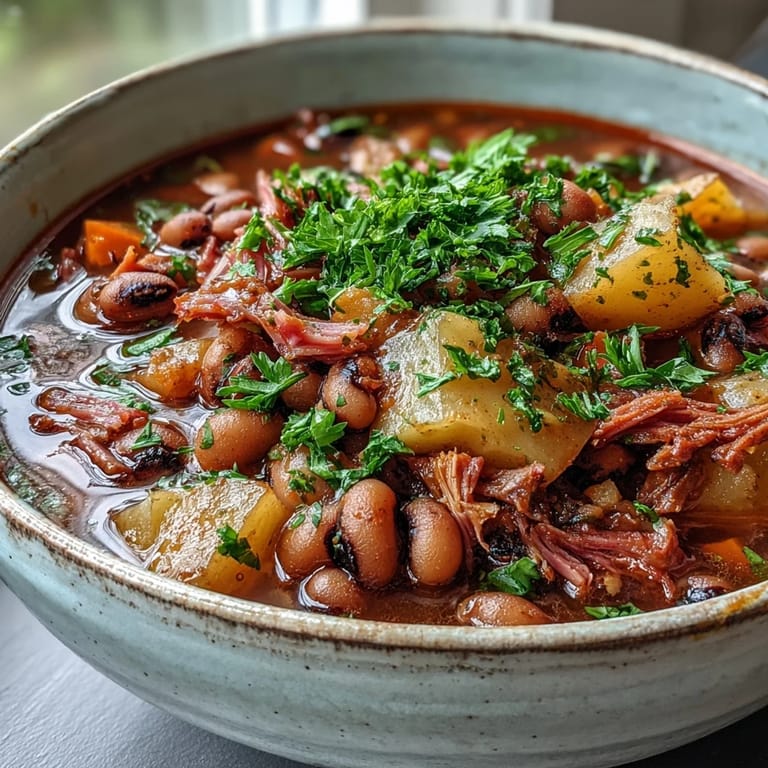
Save Make this stew when you want to feel like you're feeding people something that matters. It's honest, it's nourishing, and it somehow makes everyone at the table feel a little more like family.
Recipe Questions
- → Do I need to soak the black-eyed peas?
Yes, if using dried black-eyed peas, soak them overnight in plenty of water. This ensures even cooking and tender results. Alternatively, use canned peas to skip this step.
- → Can I make this vegetarian?
Absolutely. Simply omit the ham hocks and enhance the smoky flavor with additional smoked paprika or a few drops of liquid smoke. Use vegetable broth instead of chicken broth.
- → How long does this stew keep?
Leftovers improve in flavor and store well refrigerated for up to 3 days. The flavors continue to develop, making it even better the next day.
- → What should I serve with this?
Cornbread is a classic pairing that soaks up the flavorful broth. You can also serve it over steamed rice for a more filling meal.
- → Can I use a different cut of meat?
Smoked turkey legs or pork shoulder work well as substitutes for ham hocks. Adjust cooking time slightly depending on the cut you choose.
- → How can I thicken the stew?
Simmer uncovered for 10-15 minutes at the end to reduce and thicken. You can also mash a portion of the peas against the side of the pot.