 Save
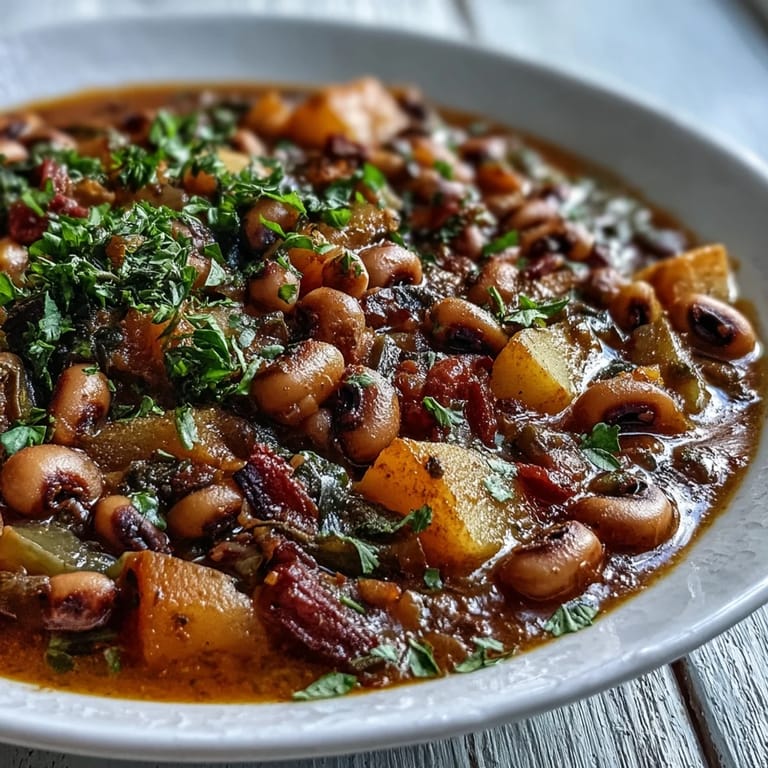
Save There's something about a pot of black-eyed peas simmering on the stove that makes a kitchen feel like home, even on days when everything else feels hectic. I discovered this stew on a crisp autumn afternoon when I was determined to make something warming without fussing over complicated techniques. The moment those sweet onions hit the hot oil, I knew I was onto something special—simple, honest, and exactly what the day needed.
I made this for a friend who'd just moved into her first apartment, and watching her face light up as she tasted it reminded me why cooking for people matters. She called me the next day saying she'd made it again, and that single bowl had somehow become her comfort food. That's when I realized this stew wasn't just another recipe—it was the kind of dish that sticks with you.
Ingredients
- Extra virgin olive oil: Use the good stuff here—it's the foundation that will carry all those vegetable flavors, and skimping shows.
- Sweet onion: A large one matters because it sweetens the entire pot as it caramelizes, balancing the earthiness of the peas.
- Carrots and celery: These are your aromatic backbone, building flavor while keeping things light and healthy.
- Potatoes: They thicken the stew naturally and add substance without any cream or flour.
- Diced tomatoes: Fresh or canned works beautifully—canned is actually my go-to because the juice adds acidity that brightens everything.
- Garlic cloves: Three isn't a typo; it's the amount that makes you remember why garlic exists.
- Black-eyed peas: Canned saves time and works just as well as cooked from scratch, though draining and rinsing matters.
- Vegetable broth: Quality broth makes the difference between good and unforgettable—taste it first if you can.
- Bay leaf, thyme, smoked paprika: This trio is what transforms simple vegetables into something you crave.
- Fresh parsley: It's not just garnish; it brings a bright, grassy finish that wakes up every spoonful.
Tired of Takeout? 🥡
Get 10 meals you can make faster than delivery arrives. Seriously.
One email. No spam. Unsubscribe anytime.
Instructions
- Heat your oil and soften the onions:
- Get a large pot hot over medium heat, then add your olive oil and let it warm for just a moment. Add the diced sweet onion and listen for that gentle sizzle—it means everything is starting right.
- Build your flavor base with carrots and celery:
- Once the onion turns translucent and soft (about 3–4 minutes), add your carrots and celery. Stir them around and let them cook for another 4 minutes, which gives them time to release their natural sweetness.
- Add potatoes and garlic:
- Toss in your diced potatoes and cook for 2 minutes to let them start softening. Then add your minced garlic and give everything a good stir—you'll smell it immediately, and that fragrance tells you it's working.
- Build the broth:
- Pour in your diced tomatoes with all their juices, then add the vegetable broth. Add your bay leaf, thyme, smoked paprika, black pepper, and salt—this is where the magic flavor truly starts.
- Let it simmer gently:
- Bring the pot to a gentle boil, then turn down the heat and let it bubble softly for 15 minutes. The potatoes and carrots should be nearly tender by then, and the kitchen will smell incredible.
- Add the black-eyed peas and finish cooking:
- Stir in your drained black-eyed peas and simmer for another 10 minutes until everything is soft and the flavors have had time to get to know each other. You'll notice the broth becomes richer and more unified.
- Taste and finish:
- Remove the bay leaf, give it a taste, and adjust the salt and pepper if needed. Stir in your fresh parsley right before serving so it stays bright and alive.
 Save
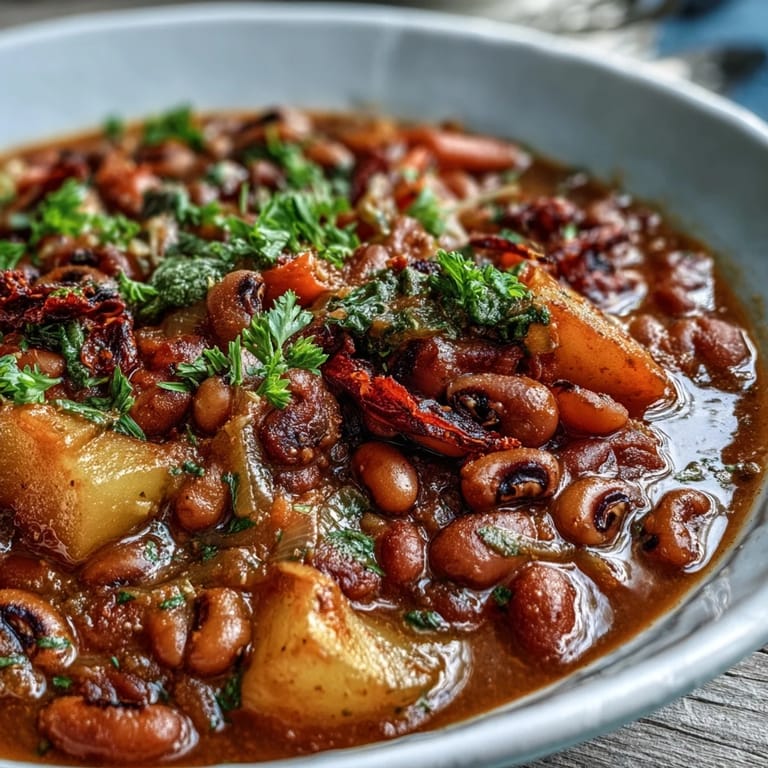
Save There's a moment in cooking when you stop watching the clock and just become part of what's happening on the stove. This stew gave me that feeling, and now whenever I make it, I'm transported back to that first afternoon when I realized how much joy a single pot could bring to an ordinary day.
When to Serve This Stew
This is the kind of dish that works for everything from casual weeknight dinners to bringing to someone who needs comfort. I've served it at late-summer gatherings, on chilly autumn evenings, and even during the depths of winter when everyone needs something nourishing and warm. It's also forgiving enough to sit on the stove for a bit if people are running late, which is always a plus.
How to Make It Your Own
One evening I added a dash of liquid smoke and felt like I'd invented something entirely new, even though I'd only tweaked it slightly. The beautiful part about this stew is that it's sturdy enough to handle additions and variations without falling apart. You can add kale or spinach in the last few minutes for extra greens, stir in some diced bell peppers if you want brightness, or even crack a bit of red pepper flakes if you're in a spicy mood.
Serving Suggestions and Storage
Ladle this into bowls and serve with crusty bread for soaking up every last drop of broth, or pour it over rice if you want something more filling. Leftovers actually taste better the next day when the flavors have deepened, and it stores beautifully in the fridge for up to four days. I often make a double batch just so I have it waiting for tired evenings when cooking feels like too much.
- Crusty bread, cornbread, or garlic bread transforms a simple bowl into something special.
- Leftover stew can be frozen for up to three months, and it thaws beautifully without losing any of its warmth or character.
- A squeeze of fresh lemon juice right before eating brightens everything if the stew ever feels a bit heavy.
 Save
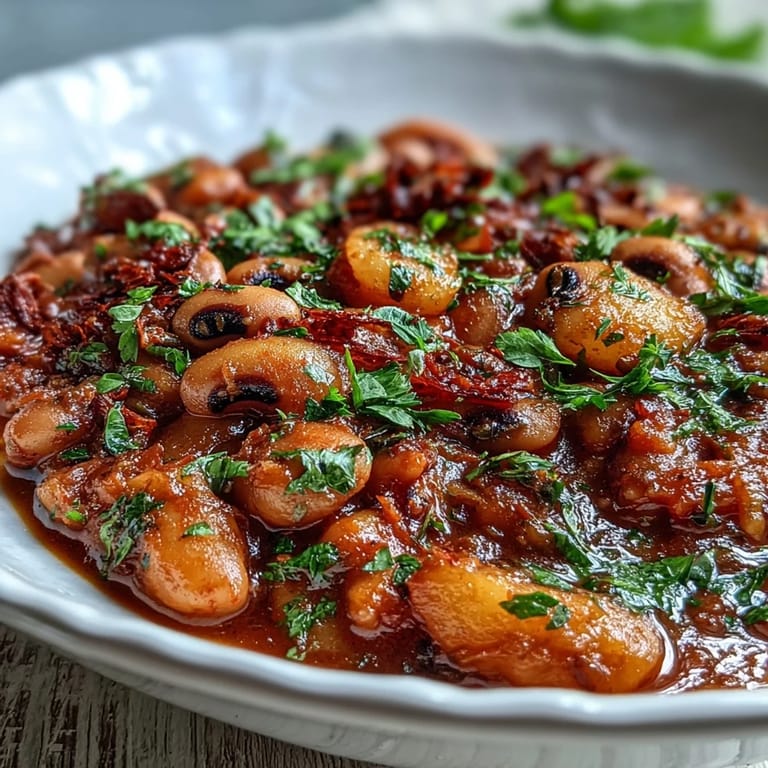
Save This stew has become one of those recipes I return to again and again, not because it's fancy or complicated, but because it tastes like care and feels like coming home. Make it, serve it to someone you love, and watch how a simple pot of peas and vegetables becomes something memorable.
Recipe Questions
- → Can I use dried black-eyed peas instead of canned?
Yes, soak 1 cup dried black-eyed peas overnight, then cook them separately for about 45 minutes until tender before adding to the stew. Adjust the simmering time accordingly.
- → How long will this stew keep in the refrigerator?
The stew will keep well for 4-5 days when stored in an airtight container in the refrigerator. The flavors often improve after a day or two as they continue to meld together.
- → Can I freeze this black-eyed pea stew?
Absolutely. Let the stew cool completely, then transfer to freezer-safe containers. It will keep for up to 3 months. Thaw overnight in the refrigerator before reheating gently on the stovetop.
- → What can I serve with this stew?
Crusty bread, cornbread, or cooked rice make excellent accompaniments. For added protein, consider topping with a dollop of Greek yogurt or serving alongside a simple green salad.
- → How can I make this stew more protein-rich?
Add chopped kale or spinach during the last 5 minutes of simmering, or stir in a cup of cooked quinoa or lentils. You could also top with toasted pumpkin seeds or hemp hearts before serving.
- → Can I make this in a slow cooker?
Sauté the onion, carrots, celery, and garlic first, then transfer everything to your slow cooker. Cook on low for 6-7 hours or high for 3-4 hours until the vegetables are tender. Stir in the fresh parsley just before serving.