 Save
Save I found those delicate porcelain teacups at an estate sale on a grey afternoon, and I couldn't stop thinking about what to serve in them. Staring at my charcuterie board one evening, I noticed how the salami caught the light when folded just right, and suddenly I imagined it transformed into something borrowed from a Victorian garden party. The idea of building edible roses from cured meat felt wonderfully ridiculous and absolutely necessary all at once.
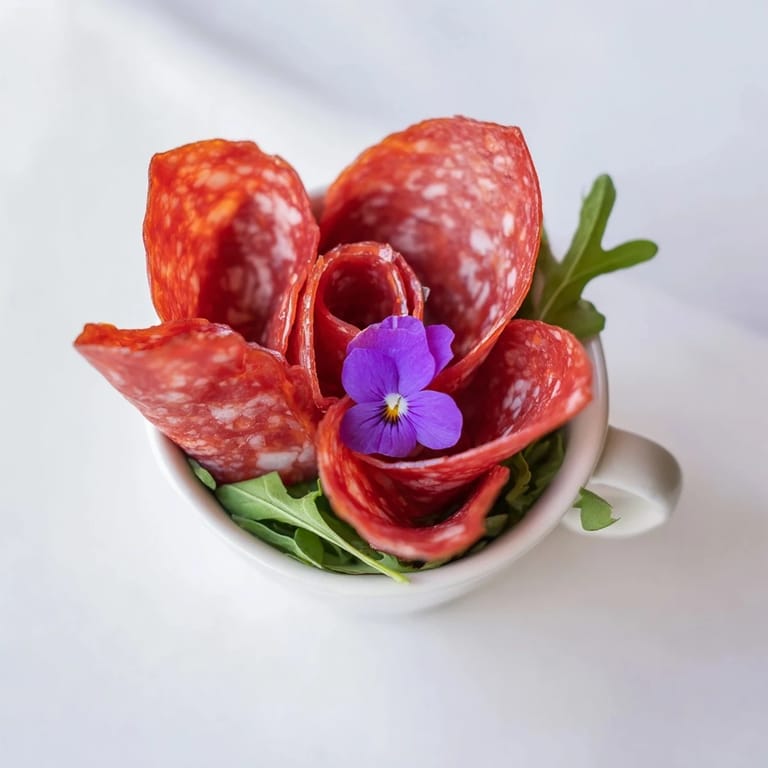
I made these for my sister's book club gathering, tucked them into those teacups with tiny arugula leaves, and watched everyone pause mid-conversation when the serving board came out. Someone laughed and said they felt too beautiful to eat, but that lasted about thirty seconds before three roses disappeared from their cups. That's when I knew this wasn't just a cute plating trick—it was the kind of thing people remember and ask you to make again.
Ingredients
- Salami, 18 large thin slices: The thinner you can find them, the more gracefully they'll roll into petals without tearing; ask the deli counter to slice them nearly transparent if you can.
- Pepperoni, 18 large thin slices: The pepperoni's deeper color creates visual contrast against the salami and gives you two distinct roses for variety.
- Porcelain teacups, 6 small: These humble vessels transform the whole presentation from appetizer board to something almost whimsical and unexpected.
- Fresh basil leaves or baby arugula, optional: A delicate green base softens the cup's rim and lets the rose sit cradled rather than perched.
- Edible flowers such as pansies or violets, optional: A single blossom tucked into each rose echoes the garden theme and adds genuine elegance without overthinking it.
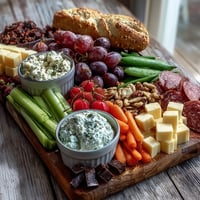
- Assorted crackers, mild cheeses, grapes or berries, optional: These surrounding elements create a luxe board and give guests more to graze on while they admire the roses.
Tired of Takeout? 🥡
Get 10 meals you can make faster than delivery arrives. Seriously.
One email. No spam. Unsubscribe anytime.
Instructions
- Lay out your foundation:
- Arrange six salami slices in a slightly overlapping line on your work surface, each slice covering roughly a third of the one before it. You're creating a long, staggered ribbon that's ready to spiral upward.
- Roll into a spiral:
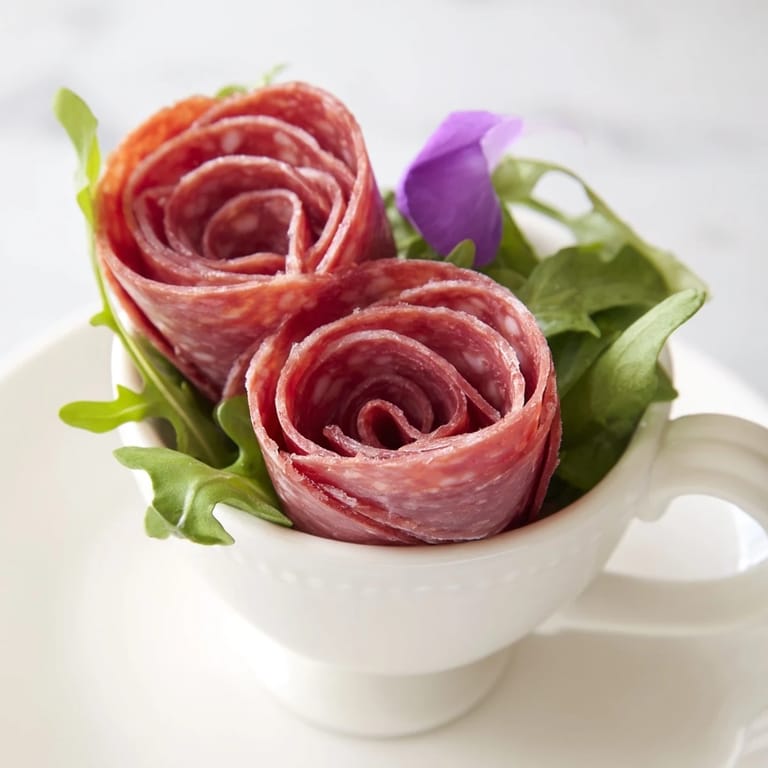
- Starting at one end, gently roll the entire line of salami toward you into a tight coil, then stand it upright on its flat base. The spiral will naturally look like a rose waiting to bloom.
- Coax out the petals:
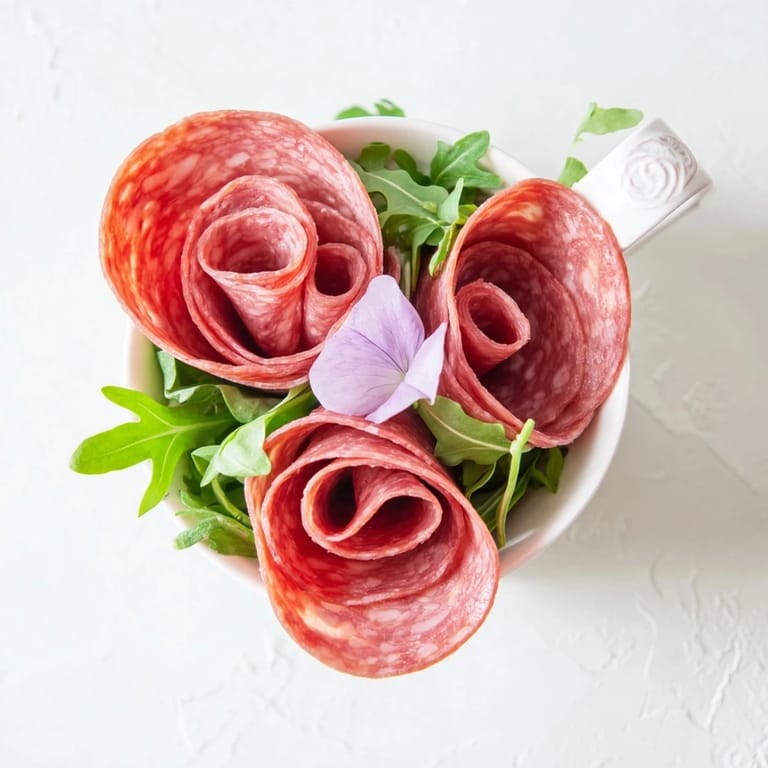
- Gently and slowly loosen the outer layers of the spiral with your fingers, teasing each petal outward until the whole thing resembles an open rose. This is where patience pays off—delicate movements keep everything intact.
- Repeat with pepperoni:
- Follow the exact same technique with six slices of pepperoni to create a second rose, then repeat both steps once more until you have three salami roses and three pepperoni roses total.
- Prepare the teacups:
- If you'd like, tuck a basil leaf or small handful of baby arugula into the bottom of each cup to create a soft, green cushion for the rose to sit in.
- Nestle the roses:
- Carefully place each finished rose into a teacup, turning and adjusting the outer petals so they look full, natural, and as if they're opening toward light. This is the moment where your careful work becomes art.
- Add the finishing touch:
- If using edible flowers, tuck one gently into the side of each rose where a real bloom might hide a tiny insect, adding one last layer of charm.
- Arrange and serve:
- Set the teacups on a wooden or marble board, scatter crackers, cheese, and fruit around them, and watch people's faces when they realize what they're looking at.
 Save
Save There's a peculiar magic in realizing that something so striking came from ingredients you already buy for sandwiches, and that the only real skill required was a little patience and the willingness to see salami as something other than what it's supposed to be. It's the kind of discovery that stays with you—a reminder that sometimes the most elegant moments in the kitchen come from playfulness rather than perfection.
The Art of Meat as Canvas
Once you master the rose, you'll start seeing potential in every cured meat at the deli counter. Prosciutto creates almost impossibly delicate roses because it tears so easily, which somehow makes them feel more precious and worth the careful handling. Coppa's marbling looks stunning when it spirals, and pancetta can work if you're comfortable with something a bit chunkier and more textured. The meat you choose changes the entire personality of the dish, so experiment and see which one speaks to you.
Beyond the Teacup
While these roses are born to live in porcelain, they're equally at home on a wooden cutting board, nestled on a bed of greens, or even balanced atop individual crostini for a more casual presentation. I've tucked them into champagne coupes, arranged them on slate, and once placed them directly on a white linen napkin folded into a square. The teacup is lovely because it elevates them, but there's no rule against improvisation—use whatever vessel makes you happy and fits the moment you're creating.
Making It Your Own
The beauty of this recipe is that it invites personalization without requiring it. You might brush your meat lightly with olive oil and fresh cracked pepper before rolling, adding a subtle richness that whispers rather than shouts. Consider the edible flowers growing in your garden or available at a good market—violets and pansies are traditional, but nasturtiums add a peppery note that feels almost botanical against the salt of the meat. The board around your roses can shift with what's in season and what brings you joy in the moment.
- A tiny brush dipped in really good olive oil can add shine and subtle flavor without making the meat slip during rolling.
- Tuck your teacups into the refrigerator an hour before serving so the roses stay firm and pristine and the whole presentation feels cool and composed.
- Remember that the accompaniments—the crackers, cheese, fruit—are just as much a part of the story as the roses themselves, so choose them with care and arrangement with intention.
 Save
Save This recipe taught me that the most impressive dishes often come from seeing familiar things in an unfamiliar way and having the courage to fold that vision into reality. Serve these roses with joy and watch people connect with food in a way that goes beyond flavor into delight.
Recipe Questions
- → How do you create the rose shapes from salami and pepperoni?
Arrange thin slices in a slightly overlapping line, then gently roll into a spiral. Stand upright and loosen petals for a natural rose appearance.
- → Can other cured meats be used for this presentation?
Yes, alternatives like prosciutto or coppa can be substituted to vary flavors while maintaining the rose shape technique.
- → What is the purpose of lining the teacups with basil or arugula?
Fresh basil or baby arugula provides a green base that enhances flavor contrast and adds visual freshness to the presentation.
- → Are edible flowers necessary for this appetizer?
No, edible flowers are optional but add a decorative, colorful touch that complements the Victorian-inspired theme.
- → How should this appetizer be served and stored?
Serve slightly chilled and prepare up to two hours in advance, refrigerating until ready to serve to maintain freshness.
- → What accompaniments pair well with this dish?
Assorted mild cheeses, crackers, and fresh fruits like grapes or berries complement the savory meat roses wonderfully.