 Save
Save I'll never forget the December evening when my friend challenged me to create something no one had seen before at our holiday gathering. As I stood in my kitchen surrounded by a dozen different cheeses, each with its own story and flavor, I realized I could turn this into something magical—a cheese board that tells a story across twelve distinct moments, one for each day of the festive season. That night, the Twelve Days of Cheese Board was born, and it became the centerpiece that had everyone gathered around, discovering new flavor combinations with every bite.
I still remember the moment when my neighbor took her first bite of the Roquefort and pear pairing, closed her eyes, and said, 'This is what Christmas tastes like.' That's when I knew this board wasn't just about cheese and crackers anymore—it had become a conversation starter, a moment of genuine connection wrapped up in twelve small, delicious sections.
Ingredients
- Brie (50 g): This creamy, buttery cheese is your softest player on the board—it practically melts on your tongue and pairs beautifully with anything slightly sweet. Buy it a day or two before serving so it reaches perfect room temperature softness.
- Aged Cheddar (50 g): The sharp, complex notes here cut through richness and pair wonderfully with fig jam. Don't shy away from really aged versions; they add character to the board.
- Manchego (50 g): This Spanish sheep's milk cheese has a nutty, slightly sweet undertone that makes it feel special without being intimidating. It's the bridge cheese that works with almost everything.
- Roquefort or Blue Cheese (50 g): The bold, funky voice on your board—pair it with something fruity and creamy to balance its intensity. A little goes a long way here.
- Goat Cheese (50 g): Tangy and bright, this one sings when paired with fresh herbs and grapes. It's the cheese that makes people say, 'Oh, I didn't expect that.'
- Gruyère (50 g): Nutty and slightly caramel-like, this cheese is the one that makes you want to pair it with something acidic or spicy to wake up its flavors. Try it with whole grain mustard for magic.
- Camembert (50 g): Similar to Brie but earthier and more complex, Camembert brings sophistication. Pair it with something crisp and sweet to let its full personality shine.
- Gouda (50 g): Smooth and slightly caramel-colored, this cheese is the comfort player that plays well with darker pairings like chocolate and dried fruit.
- Comté (50 g): One of my favorite discoveries over the years—this French cheese has butterscotch notes and pairs beautifully with grapes and nuts. It's worth seeking out a quality version.
- Pecorino (50 g): Sharp, salty, and crystalline, this Italian cheese needs something sweet and creamy to balance it. Pair with honey and pear for a revelation.
- Havarti (50 g): Buttery and slightly sweet on its own, this Danish cheese is the bridge between hard and soft cheeses. It makes almost any pairing work.
- Smoked Cheese (50 g, such as Smoked Provolone): This is your wildcard—the smoky depth adds an unexpected dimension. Pair it with something dark and rich, like dark chocolate, to embrace its bold character.
- Artisanal Bread or Assorted Crackers (12 slices): Choose varieties that won't overwhelm—water crackers, seeded crisps, or thinly sliced rustic bread work beautifully. You need a neutral canvas for the cheese to shine.
- Honey (2 tbsp): Raw honey if you can find it; it adds floral notes that elevate creamy cheeses like Brie and Pecorino.
- Fig Jam (2 tbsp): The sweet-savory complexity here works magic with aged cheeses. A little truly goes a long way.
- Whole Grain Mustard (2 tbsp): The texture and slight heat complement sharp cheeses and balance richness beautifully.
- Seedless Grapes (24): These provide textural contrast and natural sweetness. Chill them slightly before serving for an extra refreshing bite.
- Dried Apricots (12): Chewy, concentrated sweetness that pairs unexpectedly well with smoked cheeses and Gouda.
- Walnut Halves (12): Earthy and slightly bitter, walnuts ground the sweeter pairings and add satisfying crunch.
- Toasted Almonds (12): Toast them yourself if possible—that extra step brings out their subtle sweetness and makes them taste more special.
- Apple Slices (12): Cut these as close to serving time as possible and keep them in a little lemon juice to prevent browning. The crisp sweetness is perfect with soft and hard cheeses alike.
- Fresh Pear Slices (12): Pears are the secret weapon for cheese boards—their delicate sweetness and soft texture feel luxurious. Again, prepare close to serving time.
- Dark Chocolate (12 pieces): Choose quality chocolate (70% cacao or higher)—it should be sophisticated, not candy-like. The bitterness is the perfect counterpoint to creamy and smoked cheeses.
- Cornichons (12): These tiny pickles add acidic brightness that cuts through richness. They're the palate cleanser on your board.
- Fresh Herbs (thyme, rosemary): Use these to garnish and add visual drama. The aroma adds another sensory layer to the experience.
Tired of Takeout? 🥡
Get 10 meals you can make faster than delivery arrives. Seriously.
One email. No spam. Unsubscribe anytime.
Instructions
- Envision Your Canvas:
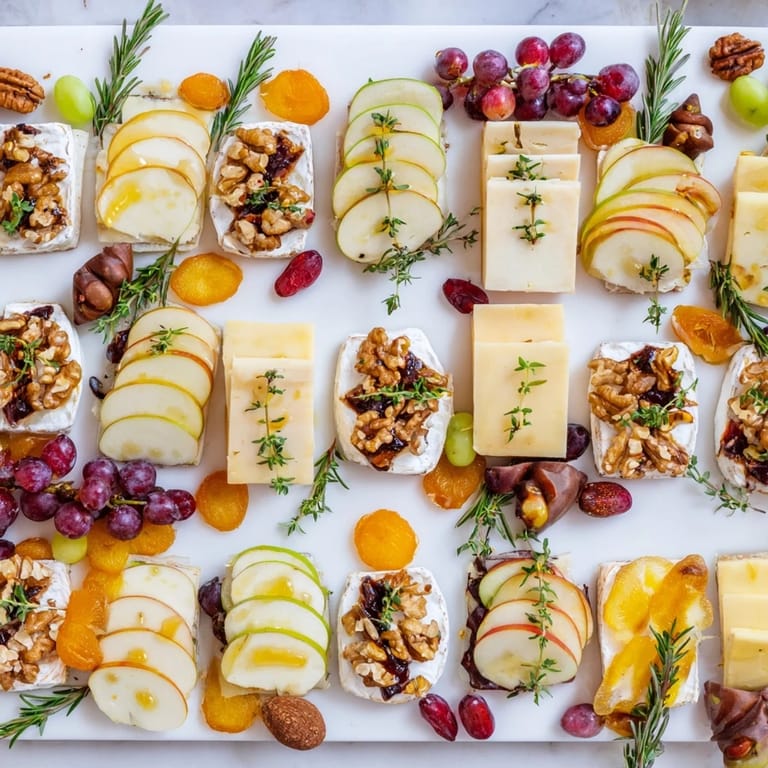
- Lay out your large serving board and take a moment to really see it. This is where the magic happens. Using small bowls, ramekins, or simply creating visual sections with your eyes, mentally divide the board into twelve distinct territories. If you want to be more structured, place small bowls or use small cheese knives to mark boundaries. The board becomes like a flavor map waiting to be explored.
- Arrange Your Cheeses:
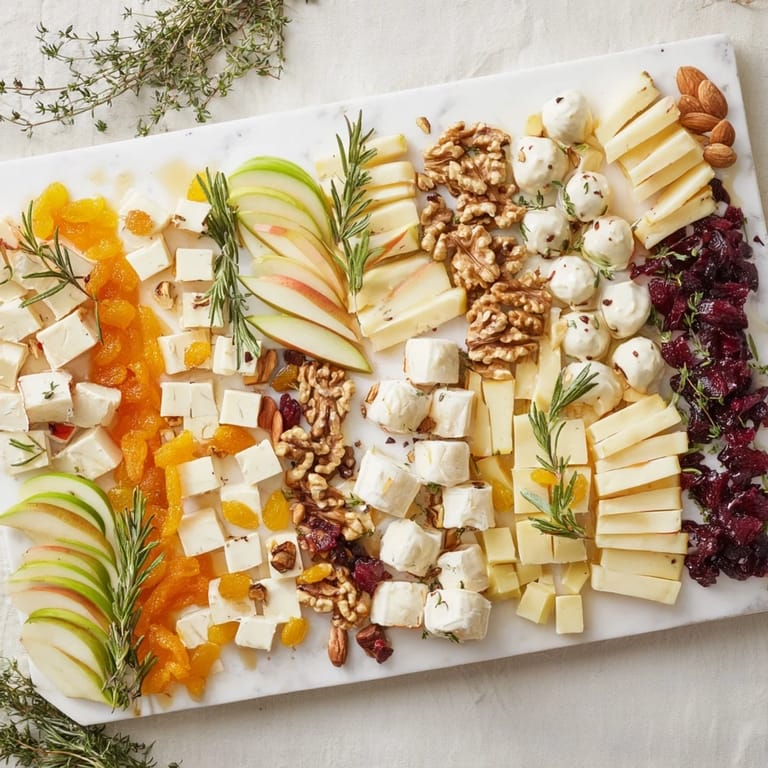
- Place one cheese in each section, cutting each into bite-sized pieces that are easy for guests to pick up. Think about visual balance—arrange harder cheeses in smaller, more sculptural pieces and softer ones in slightly larger, more relaxed shapes. Leave a little breathing room in each section so the other elements can have their moment.
- Create the Brie and Honey Moment:
- In the first section, nestle creamy Brie with a small drizzle of honey and a crisp apple slice. This pairing is about contrast—the buttery cheese, the floral sweetness, and the bright crunch of apple creating a flavor harmony that feels luxurious.
- Build the Aged Cheddar Story:
- Pair sharp, complex aged Cheddar with fig jam and a walnut half. The jam's sweetness mellows the cheddar's bite, while the walnut adds earthiness. This is the section that makes people pause and really taste.
- Honor the Manchego with Tradition:
- If you have quince paste, use it here—it's the traditional Spanish pairing that feels special. If not, fig jam works beautifully too. Add a toasted almond and you have a pairing that feels both comforting and refined.
- Balance the Bold Roquefort:
- Place the blue cheese alongside a pear slice and a walnut. The creaminess of the pear softens the blue cheese's assertiveness, while the walnut grounds it. This section separates the adventurous eaters from those still finding their way.
- Celebrate Goat Cheese Brightly:
- Pair tangy goat cheese with a sprig of fresh thyme and two or three seedless grapes. The herbs add earthiness, the grapes add sweetness—together they let the goat cheese shine without overwhelming it.
- Assemble the Gruyère Station:
- Pair nutty Gruyère with a dab of whole grain mustard and a cornichon. The mustard's bite and the pickle's acidity make this the most savory, sophisticated section on your board. It's the one people return to.
- Compose the Camembert Corner:
- Pair earthy Camembert with a crisp apple slice and a toasted almond. The softness of the cheese and the firmness of the apple create an interesting textural conversation.
- Darken the Gouda Pairing:
- Here's where you embrace richness—pair Gouda with a dried apricot and a small piece of dark chocolate. The caramel notes in the cheese play beautifully with both the apricot's chewiness and the chocolate's bitterness.
- Nutmeg the Comté:
- Pair buttery Comté with a grape and a walnut half. This combination feels effortlessly elegant—the grape adds sweetness, the walnut adds earthiness, and the Comté's butterscotch notes tie everything together.
- Sweeten the Pecorino:
- Pair sharp, salty Pecorino with a pear slice and a small drizzle of honey. The pear and honey work together to soften the cheese's saltiness, creating balance and surprise on the palate.
- Brighten the Havarti:
- Pair buttery Havarti with fig jam and a toasted almond. This is the section that feels intuitive and easy—all the elements genuinely love being together.
- Embrace the Smoked Cheese Drama:
- Pair smoked cheese with a cornichon and a piece of dark chocolate. This is your wild card section—the smoke, the acidity, and the chocolate bitterness create an unexpected flavor journey that feels almost bold.
- Circle with Crackers and Bread:
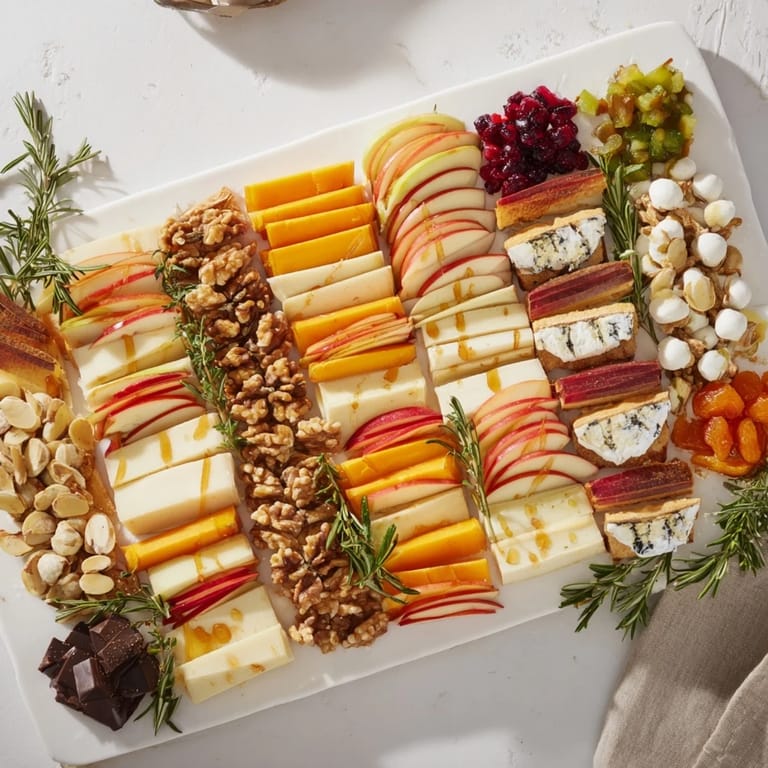
- Arrange your crackers and bread slices around the entire board, ensuring there's at least one piece for each section. Think about the arrangement—it should feel abundant but not chaotic, inviting but not overwhelming.
- Garnish with Green Life:
- Scatter fresh thyme sprigs and small rosemary sprigs across the board. Tuck them between sections, not just on top. The herbs add color, aroma, and a sense of occasion.
- Present at the Moment of Truth:
- Set the board out at room temperature about thirty minutes before serving. This allows all the cheeses to reach their optimal flavor and texture. Room temperature is where cheese becomes truly eloquent—cold cheese is locked up, but warmed slightly, it opens up and reveals all its complexity.
 Save
Save I think the most beautiful moment came when my young niece, who swears she 'doesn't like fancy cheese,' tried each section methodically, taking notes about her favorites. By the end, she'd discovered that she actually loves Manchego, that dark chocolate with smoked cheese shouldn't work but does, and that fig jam makes everything better. That board became a bridge between generations, a way for her to discover something new about her own taste.
The Art of the Pairing
There's a philosophy to pairing cheese with accompaniments, and it took me years to understand it. The goal isn't to make each pairing the most delicious thing you've ever tasted—though they often are. The goal is to make each element present itself in a new light. Soft cheese needs something crisp. Bold cheese needs something sweet. Sharp cheese needs something acidic. It's like a conversation where each participant brings out the best in the others. When you understand this, you can look at any cheese and instinctively know what it wants next to it.
Turning It Into an Experience
What I've learned from making this board multiple times is that presentation matters more than perfection. Your guests aren't grading you on technical execution—they're experiencing a moment. They're tasting twelve different stories, having twelve small revelations about flavors they'd never considered together. The board becomes an invitation to slow down, to taste mindfully, to have conversations that start with 'Did you try this one?' and end with stories. That's the real recipe here.
Making It Your Own
The beauty of the Twelve Days is that it's infinitely adaptable. Not everyone can find every cheese I've listed—and that's perfectly fine. The principle is what matters: variety, thoughtful pairing, and a sense of adventure. Some of my favorite versions have included local cheeses, unexpected substitutions, and pairings that came from happy accidents in my pantry.
- If you can't find Roquefort, use any blue cheese you trust—Stilton, Gorgonzola, or even a milder blue.
- Quince paste is traditional with Manchego but expensive—fig jam, apple butter, or even a drizzle of honey work beautifully.
- The fruits are a suggestion, not gospel—whatever is in season and looks good becomes your pairing. Summer berries, winter pomegranate seeds, spring strawberries all find their place.
 Save
Save Every time someone tells me they made their own Twelve Days board, I feel like I've passed along something meaningful—not just a recipe, but an approach to hospitality that says 'I'm glad you're here, and I want you to discover something new.' That's what it's really about.
Recipe Questions
- → What cheeses are featured on the board?
The board includes Brie, Aged Cheddar, Manchego, Roquefort, Goat Cheese, Gruyère, Camembert, Gouda, Comté, Pecorino, Havarti, and Smoked Cheese.
- → How are the cheeses paired?
Each cheese is paired with unique accompaniments such as honey, fig jam, nuts, dried fruits, fresh fruits, mustard, chocolate, and pickles to enhance flavor balance.
- → What type of bread or crackers should be served?
Artisanal bread slices or assorted crackers work well, with gluten-free options available to suit dietary needs.
- → How should the cheese board be presented?
Arrange cheeses in twelve separate sections on a large board, using small bowls if desired, and garnish with fresh herbs like thyme and rosemary for a festive touch.
- → Can this cheese board accommodate dietary restrictions?
Yes, vegetarian cheeses can be selected, and plant-based cheeses can replace dairy for vegan preferences. Be mindful of allergens such as nuts, gluten, and soy.
- → Are there recommended beverage pairings?
Light reds, sparkling wine, or cider complement the diverse flavors and enhance the overall tasting experience.