 Save
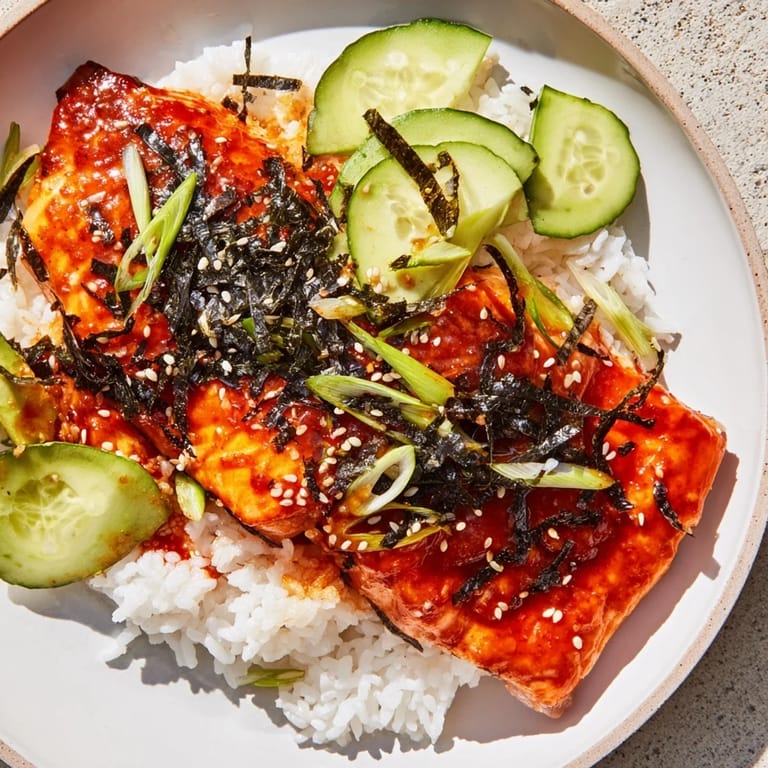
Save I discovered this bowl on a quiet Tuesday evening when I was craving something bright and comforting but didn't want to spend hours in the kitchen. The sticky orange-gochujang glaze came together almost by accident—I had leftover gochujang, fresh oranges on the counter, and a hunch that the sweet and spicy combination would transform simple salmon into something restaurant-worthy. That first bite, with the caramelized glaze catching the light, felt like a small victory I hadn't expected to find in my own kitchen.
I made this for a friend who had just moved to the city, and I remember how her whole face lit up when she saw the bowl—colorful, fresh, and somehow both elegant and casual. She asked for the recipe before she even finished eating, and that's when I knew this was the kind of dish worth returning to again and again.
Ingredients
- Salmon fillets (about 150 g each): Look for wild-caught if you can; the flavor is richer and the texture more delicate when baked gently.
- Gochujang: This Korean chili paste is the soul of the glaze—find it in the Asian aisle or online, and don't skip it.
- Freshly squeezed orange juice: Bottled juice won't give you that bright, living quality; fresh makes all the difference.
- Soy sauce: Use a quality brand; it rounds out the heat and adds umami depth to the glaze.
- Honey: It balances the spice with gentle sweetness and helps the glaze stick beautifully to the salmon.
- Rice vinegar: A splash cuts through the richness and keeps everything feeling fresh.
- Toasted sesame oil: A little goes a long way; it adds warmth and nuttiness that ties everything together.
- Fresh ginger and garlic: These are non-negotiable—mincing them fine lets them distribute evenly through the glaze.
- Short-grain rice: Warm, fluffy rice is the foundation; it absorbs the glaze beautifully and feels almost creamy.
- Cucumber, avocado, nori, sesame seeds, and scallions: These toppings add texture, freshness, and visual pop—don't treat them as optional.
Tired of Takeout? 🥡
Get 10 meals you can make faster than delivery arrives. Seriously.
One email. No spam. Unsubscribe anytime.
Instructions
- Warm your oven and prepare the stage:
- Preheat to 200°C and line your baking tray with parchment paper—this prevents sticking and makes cleanup effortless.
- Season the salmon with intention:
- Pat your fillets dry, then sprinkle both sides evenly with salt and pepper, letting the seasoning sit for a moment before baking.
- Whisk the magic glaze:
- In a small bowl, combine gochujang, orange juice, soy sauce, honey, rice vinegar, sesame oil, ginger, and garlic, stirring until you have a smooth, glossy sauce with no lumps.
- Glaze and bake the salmon:
- Brush half the glaze onto the salmon and bake for 12–14 minutes—you'll know it's ready when it flakes gently with a fork and the edges look opaque. The kitchen will smell incredible.
- Prepare your toppings while salmon cooks:
- Slice your cucumber thin, cut the avocado into neat pieces, cut nori into strips, and have everything ready to go.
- Add the finishing glaze (optional but highly encouraged):
- Brush the remaining glaze over the cooked salmon and broil for just 1–2 minutes until it becomes sticky and caramelized—this step elevates the whole dish.
- Assemble with care:
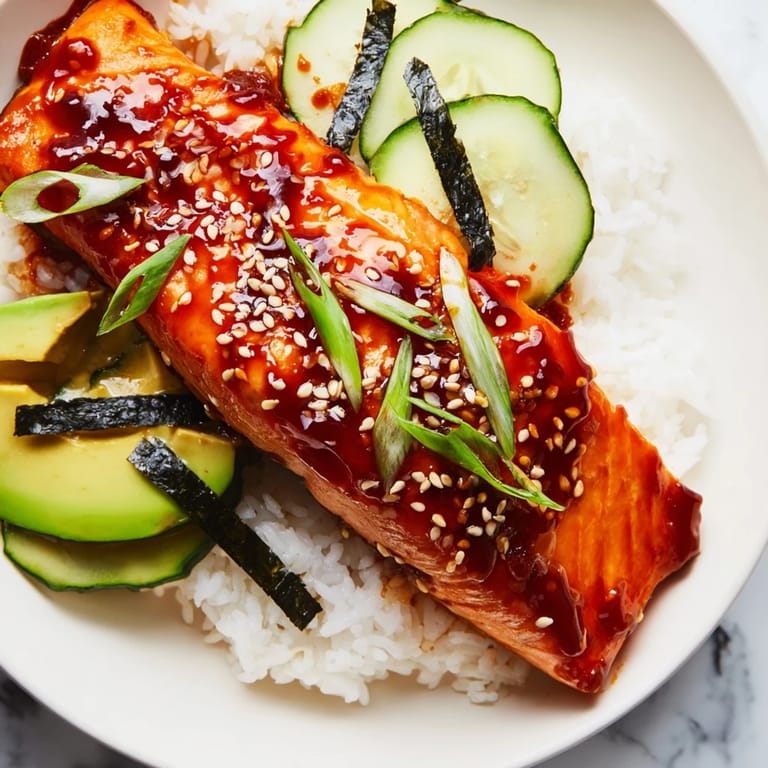
- Divide warm rice between bowls, top each with a salmon fillet, then arrange cucumber, avocado, nori, sesame seeds, and scallions around it in a pattern that makes you happy.
- Serve immediately:
- Everything is best eaten right away while the rice is warm, the avocado is perfect, and the glaze is still glistening.
 Save
Save There's something almost meditative about assembling these bowls—the act of arranging each component, knowing that color and texture matter as much as taste. My kitchen felt quieter that evening, and the food felt like a small gesture of care toward myself.
The Magic of the Orange-Gochujang Combination
The first time I tasted this glaze, I was surprised by how orange juice could soften the heat of gochujang rather than amplify it. The citrus brings brightness and a subtle sweetness that plays against the umami of soy sauce and the warmth of sesame oil. It's a combination that feels modern and adventurous without being difficult—just a few everyday ingredients working in harmony.
Building Your Perfect Bowl
This dish is flexible enough to adapt to what you have on hand, but structured enough that each component serves a purpose. The rice anchors everything, the salmon is your protein and star, and the fresh toppings—cucumber for crunch, avocado for creaminess, nori for umami depth—round out the experience. Every bite should have a little of everything, textures and flavors overlapping in a way that feels intentional.
Variations and Swaps That Work
I've made this recipe with crispy tofu for friends who don't eat fish, and it's equally satisfying—the glaze clings beautifully and the contrast between sticky sauce and tender tofu is honestly just as good. You can also add pickled ginger, shredded carrots, edamame, or even a soft-boiled egg; the framework is sturdy enough to hold whatever you want to layer in.
- Swap salmon for firm white fish like halibut or cod, or use tofu pressed and cut into thick rectangles.
- Add pickled ginger, shredded carrots, steamed edamame, or a soft-boiled egg for more depth and texture.
- Pair this bowl with a crisp white wine like Sauvignon Blanc or a light, refreshing beer.
 Save
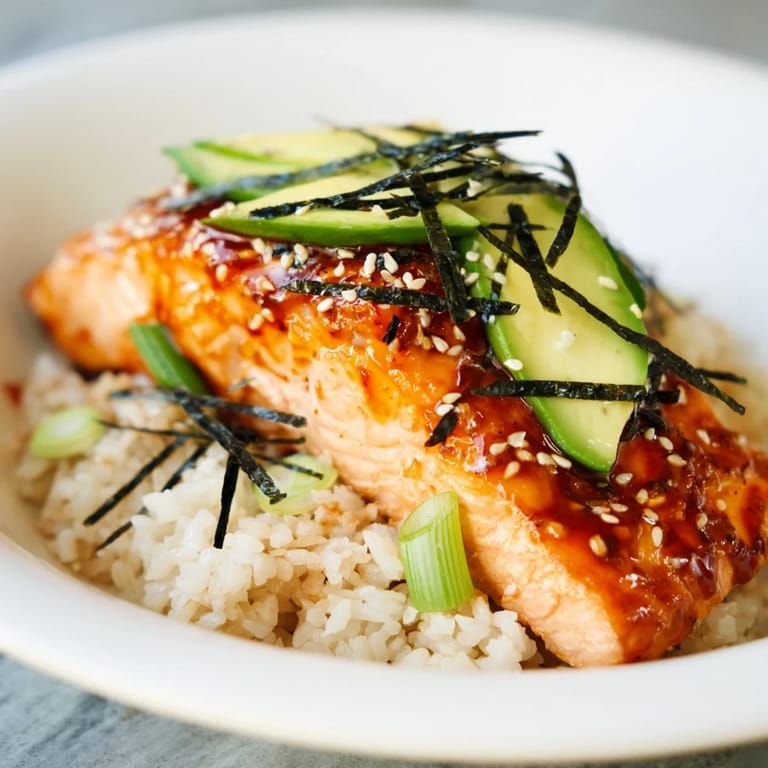
Save This bowl has become a go-to when I want to feel like I've cooked something that matters without sacrificing simplicity or flavor. It reminds me that some of the best meals are the ones we create for ourselves, quietly and without fanfare.
Recipe Questions
- → What is gochujang and how does it affect the dish?
Gochujang is a Korean chili paste that delivers a rich, spicy-sweet umami flavor, adding depth and heat to the orange glaze.
- → How can I ensure the salmon stays tender and flaky?
Bake the salmon at 200°C (400°F) until just cooked through, about 12–14 minutes, to keep it moist and flaky.
- → Can I substitute any ingredients for dietary preferences?
Yes, tofu can replace salmon for a vegetarian option, and picking gluten-free soy sauce ensures compatibility with gluten-free diets.
- → What sides complement the sticky orange gochujang salmon bowl?
Fresh vegetables like sliced cucumbers, avocado, nori, and pickled ginger add crunch and freshness, balancing the glaze’s richness.
- → Is there a recommended wine pairing with this dish?
A crisp, citrusy white wine such as Sauvignon Blanc pairs well, enhancing the bright and bold flavors of the glaze and toppings.