 Save
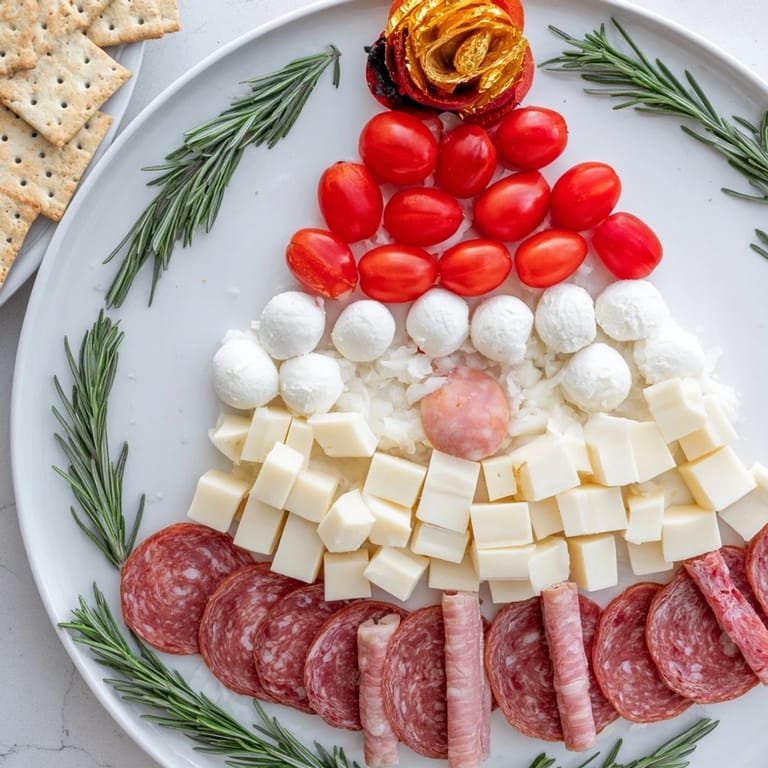
Save I'll never forget the year my niece's eyes lit up when she walked into the kitchen and saw Santa staring back at her from our charcuterie board. It was just a regular Tuesday evening, but I'd decided to turn our holiday appetizer into something playful—white cheeses piled high like a fluffy beard, cured meats arranged into a bright red hat. That simple board became the conversation starter of the entire party, and suddenly everyone was taking photos, laughing, and asking how I'd come up with it. Since then, it's become our family's signature festive touch, the kind of thing guests actually remember long after the holidays fade.
I remember standing in the kitchen an hour before guests arrived, wondering if a cheese board could actually capture Santa's spirit. As I started layering those soft white cheeses into what would become his beard, I realized I was smiling—actually enjoying the creative side of entertaining. When people started arriving and immediately crowded around the board, asking questions and getting excited about it, I understood that food isn't always about perfection. Sometimes it's about joy, surprise, and a little bit of whimsy.
Ingredients
- Brie cheese, sliced (200 g): This soft, creamy cheese creates that cloud-like beard texture. I learned to slice it when it's cold and firm, then let it sit at room temperature for a few minutes before arranging—it's much easier to work with that way.
- Goat cheese, crumbled (200 g): The tanginess adds depth and the crumbles fill in gaps naturally. I always buy it a day ahead and let it sit in the fridge; it stays fresher and crumbles more easily.
- White cheddar, cubed (150 g): This keeps its shape beautifully and adds that satisfying bite. Look for a nice sharp variety to balance the milder cheeses around it.
- Mozzarella balls, halved (150 g): Bocconcini are my secret weapon—they're elegant, creamy, and so much nicer than shredded mozzarella for a board like this.
- Cream cheese, shaped into small balls (100 g, optional): A discovery I made by accident one year. They add unexpected creaminess and look like little snow drifts tucked into the beard.
- Assorted white crackers (200 g): Rice crackers, water crackers, even thin breadsticks work. I mix textures for interest—it makes the whole board feel more thoughtful.
- Sliced Genoa salami (150 g): The backbone of the hat. Look for thinner slices that layer beautifully and drape naturally.
- Prosciutto, rolled (100 g): These delicate rolls add elegance and a silky texture. They feel fancy but are so simple to arrange.
- Pepperoni slices (100 g): The bright, spicy element that makes the hat pop. I've learned that slightly room-temperature pepperoni curls and arranges more naturally than cold, stiff slices.
- Roasted red bell peppers, sliced into strips (2 large): I always buy the jarred ones—they're already soft and flavorful, and one less thing to do when you're working against the clock.
- Cherry tomatoes or mini red peppers (1 cup): These bright orbs scattered across the hat are what really bring it to life. They catch the light and make the whole board look festive.
- Fresh rosemary sprigs: For decoration and that instant holiday smell. I've found that laying them strategically along the edges creates a natural frame that guides the eye.
- Black olive (1): That perfect final touch—Santa's pom-pom. It's the detail that makes people smile.
Tired of Takeout? 🥡
Get 10 meals you can make faster than delivery arrives. Seriously.
One email. No spam. Unsubscribe anytime.
Instructions
- Set your stage:
- Start with your large board or platter on a clear, clean counter. Take a moment to visualize where Santa will sit. I like to mentally outline a triangle at the top for the hat and a rounded, generous shape at the bottom for the beard. Some people use pencil marks underneath the board—whatever helps you stay true to the vision.
- Build the beard with intention:
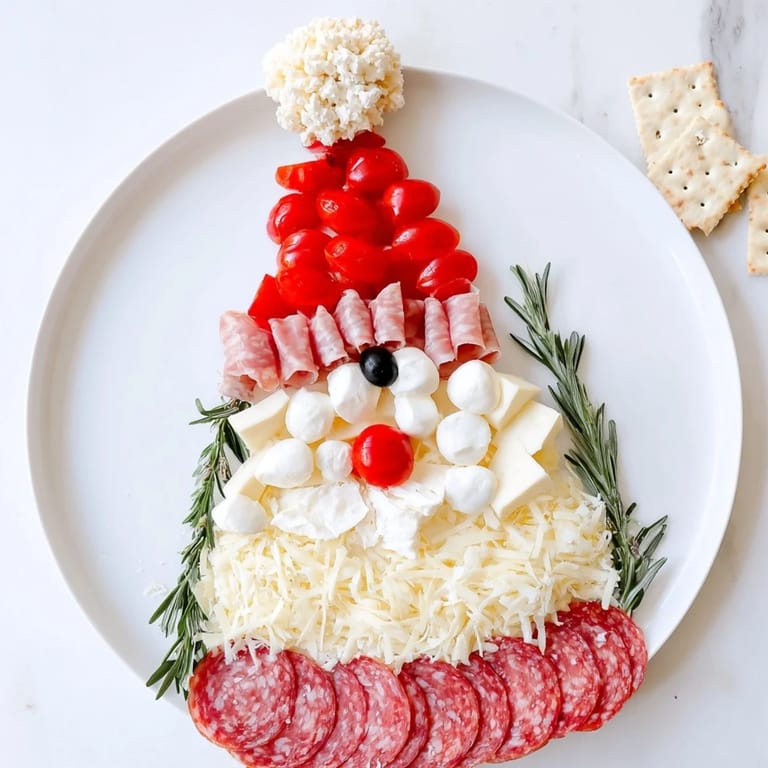
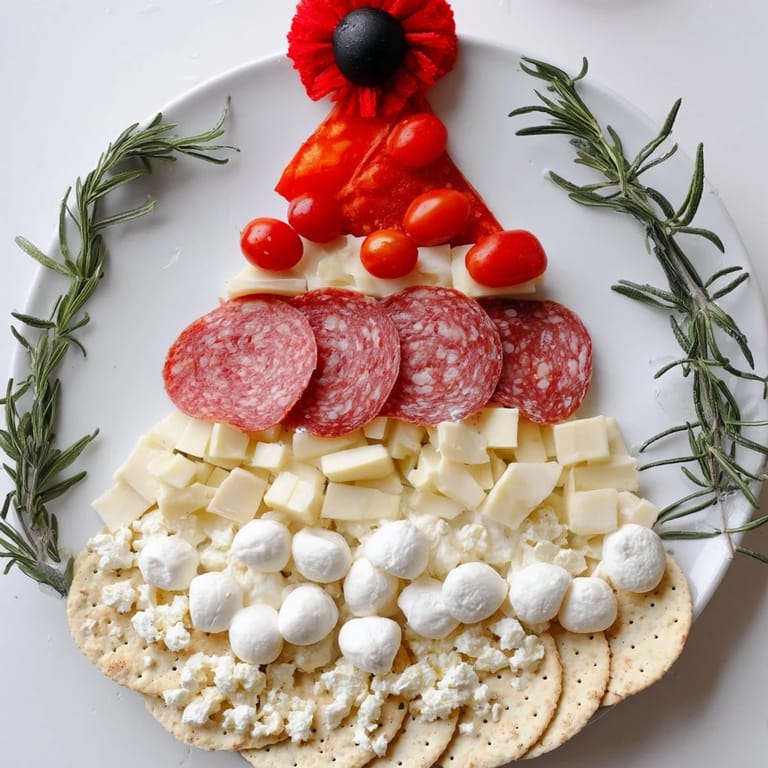
- This is where the magic happens. Start arranging your white cheeses in that bottom section—lay down brie slices in soft, overlapping layers. Scatter goat cheese crumbles generously between them. Add cheddar cubes in little clusters, then nestle those mozzarella halves throughout like pearls. Tuck cream cheese balls into gaps and crevices. As you work, step back occasionally. You're not just placing cheese; you're creating texture and depth. The beard should look fluffy, inviting, like something you want to reach into immediately.
- Create the cracker foundation:
- Now arrange your white crackers around the base and sides of the beard section. They're not just functional—they frame the cheese and add architectural interest. I think of them as the surface where everything sits, so choose spots that feel balanced and leave room for people to actually grab things.
- Construct the hat with drama:
- Move to that triangle space at the top. Layer your salami slices and pepperoni so they overlap slightly, creating that rich, red gradient effect. Think of it like shingles on a roof, or scales on a fish—each piece overlapping the one below it. Add your rolled prosciutto in between, letting it create gentle folds. Arrange red pepper strips for color variation and texture. Work slowly here; this is the showpiece.
- Add the finishing brightness:
- Scatter cherry tomatoes and mini red peppers along the hat and at the tip, especially. These little pops of color are what make someone across the room notice the board and want to come closer.
- Frame with rosemary:
- Now take those fresh rosemary sprigs and outline the edges of the hat and the top of the beard. It creates definition, adds that forest-green contrast, and fills your kitchen with the most wonderful holiday smell. This is the step that transforms a nice board into one that looks intentional and festive.
- Crown it with the final touch:
- Place that single black olive at the tip of the hat. Step back. That tiny detail—that's what makes someone laugh and understand the whole concept immediately. It's the signature on your artwork.
- Serve with generosity:
- Bring it to your gathering ready to eat, with small cheese knives nearby and serving tongs for the meats. As the evening goes on and people graze, you'll find yourself rearranging slightly, filling in gaps, freshening up touched-down areas. That's not a failure—that's the board living and doing exactly what it's meant to do.
 Save
Save There was a moment during one holiday party when my brother—who usually just eats and leaves—actually stood and told the whole room that this board was genius. His kids were huddled around it, picking carefully, making it a game to find different cheeses. It shifted from being just appetizer into being entertainment, a centerpiece, a memory. That's when I realized this simple board had become something bigger than food—it was a moment we'd all remember together.
Why This Board Works for Any Occasion
The beauty of this Santa board is that it's not actually about Christmas dinner expertise. It's about confidence in arrangement, in understanding that simple ingredients look extraordinary when they're thoughtfully placed. I've brought versions of this board to holiday parties, to New Year's celebrations, even to a casual family gathering in early December when everyone needed a little festive mood-lifting. Every single time, it becomes the focal point, not because of complicated technique, but because it delights the eye and immediately signals that you care about making the gathering special.
Making It Your Own
I've learned that the most successful versions of this board are the ones where people make it their own. One friend swapped in herbed goat cheese because that's what her family loves. Another used smoked salmon instead of prosciutto and added capers for color—it worked brilliantly. The vegetarian version my sister makes uses Red Leicester cheese for the hat instead of meats, and somehow it feels just as festive. The structure is strong enough to hold dozens of variations, and the magic is that you can adapt it to what's in your kitchen and what your people actually want to eat.
The Pairing That Elevates Everything
I've discovered that what you serve alongside this board matters almost as much as the board itself. A light sparkling wine cuts through the richness of the cheeses beautifully—it cleanses your palate and makes you want another bite. Cranberry spritzers are perfect if you're serving people who prefer non-alcoholic options, and they echo the red and white color scheme of the board itself. I even have a friend who swears by pairing it with a sharp apple cider, which adds that crisp, seasonal element. The board doesn't need much—it's already a complete experience—but the right drink alongside it transforms the whole gathering into something that feels more intentional and celebratory.
- Sparkling wine works because its bubbles and acidity complement both creamy cheeses and salty cured meats
- Have cranberry spritzers on hand even if you're serving wine—they're festive and inclusive
- Keep drinks cold and ready to pour when guests arrive, so you're not stuck in the kitchen while everyone's gathered around your beautiful board
 Save
Save Every time I make this board, I'm reminded that entertaining doesn't have to be complicated to be meaningful. Gather good people, arrange beautiful ingredients, and watch the magic happen naturally.
Recipe Questions
- → What cheeses work best for the beard section?
Soft and semi-soft cheeses like brie, goat cheese, white cheddar, mozzarella balls, and cream cheese provide varied textures and rich flavors that mimic a fluffy beard.
- → How can I make the board vegetarian-friendly?
Replace cured meats with roasted red peppers, sun-dried tomatoes, and red-hued cheeses such as Red Leicester to keep the vibrant colors and festive feel.
- → What garnishes enhance the board's presentation?
Fresh rosemary sprigs add a festive look and aroma, while a black olive at the hat’s tip serves as a delightful finishing touch.
- → Can I prepare this board ahead of time?
Prepare the cheeses and cured meats separately and assemble shortly before serving to maintain freshness and texture.
- → What drink pairings complement this board?
Light sparkling wines or cranberry spritzers brighten the palate and pair wonderfully with the creamy cheeses and savory meats.