 Save
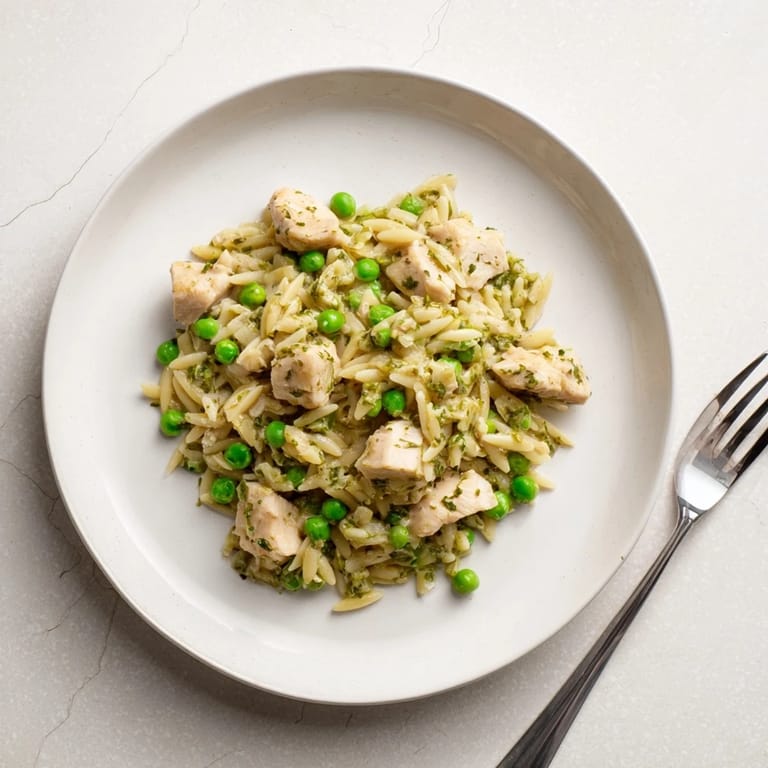
Save I used to think one-pan dinners were just a clever cleanup trick until I made this on a humid April evening when I was too tired to deal with multiple pots. The way the orzo soaked up all that lemony broth while the chicken stayed tender completely changed how I thought about weeknight cooking. My kitchen smelled like a Mediterranean garden, and I kept sneaking bites straight from the skillet before plating. It wasn't fancy, but it felt like I'd traveled somewhere sunny without leaving my stove. Now it's my go-to when I want something nourishing that doesn't require much mental energy.
The first time I served this to friends, I'd doubled the recipe and worried the skillet wouldn't be big enough. We ended up eating straight from the pan at the table, passing around forks and laughing about how the peas kept rolling away. Someone poured more lemon juice over their portion, and suddenly everyone was doing it. That night taught me that the best meals aren't always plated perfectly, they're the ones where people lean in and help themselves to seconds without asking.
Ingredients
- Boneless, skinless chicken thighs: Thighs stay juicy even if you overcook them slightly, unlike breasts which can turn dry and stringy in a skillet.
- Orzo pasta: These little rice-shaped grains absorb flavor like tiny sponges and create a creamy texture as they release their starch into the broth.
- Frozen green peas: They add a pop of sweetness and color without any prep work, just toss them in straight from the freezer near the end.
- Yellow onion: A medium onion gives you that sweet, mellow base that doesn't overpower the lemon or herbs.
- Garlic: Two cloves minced fine will perfume the whole dish without making it taste sharp or bitter.
- Lemon zest and juice: The zest brings floral brightness while the juice adds tanginess, use a large lemon so you get enough of both.
- Low-sodium chicken broth: This is what turns the orzo creamy and flavorful, low-sodium lets you control the salt yourself.
- Fresh parsley and dill: These herbs make the dish taste alive and springy, dried dill works in a pinch but fresh parsley is worth it.
- Dried oregano: Just a teaspoon gives you that warm Mediterranean backbone without needing fresh.
- Olive oil: Use a good everyday olive oil for sauteing, it coats the orzo and helps the onions soften beautifully.
Tired of Takeout? 🥡
Get 10 meals you can make faster than delivery arrives. Seriously.
One email. No spam. Unsubscribe anytime.
Instructions
- Sear the chicken:
- Heat the olive oil until it shimmers, then add the chicken in a single layer and let it sit undisturbed for a couple minutes so it gets golden. You're not cooking it through yet, just building flavor.
- Soften the aromatics:
- Cook the onion until it's translucent and sweet, then add the garlic and stir constantly for just one minute so it doesn't burn. The pan will smell incredible.
- Toast the orzo:
- Stir the dry orzo into the oil and aromatics for a minute or two until some grains start to turn golden. This step deepens the nutty flavor.
- Add the broth and simmer:
- Pour in the broth along with the oregano, lemon zest, and half the herbs, then bring it to a gentle simmer. Nestle the chicken back in with any juices from the plate.
- Cook covered:
- Cover the skillet and let everything simmer together for about 10 minutes, stirring once or twice. The orzo will start to soften and the chicken will finish cooking.
- Finish with peas and lemon:
- Stir in the peas and lemon juice, then cook uncovered for another 5 to 8 minutes, stirring often. The liquid will reduce and the orzo will turn creamy and tender.
- Garnish and serve:
- Pull the skillet off the heat, taste and adjust the salt if needed, then sprinkle the remaining fresh herbs over the top. Serve it warm straight from the pan.
 Save
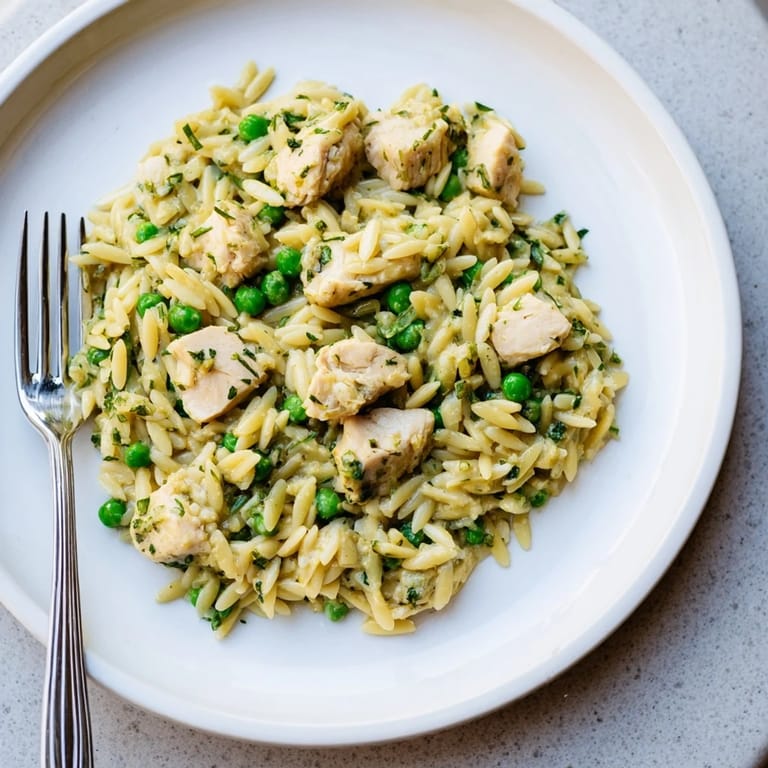
Save One rainy Saturday, I made this for lunch and ate it curled up on the couch with a blanket and a book. The leftovers sat in the fridge, and I reheated a bowl the next morning for breakfast, which sounds strange but tasted perfect. There's something about the lemony warmth and the little peas that makes this dish feel like a hug, no matter what time of day you eat it. It's become my comfort food when I need something easy but don't want to compromise on flavor.
Swapping Proteins and Vegetables
You can use chicken breasts instead of thighs, but cut them smaller and watch the timing closely since they dry out faster. I've also made this with shrimp, adding them in the last 5 minutes so they don't get rubbery. For vegetables, baby spinach or chopped asparagus stir in beautifully during the last few minutes, wilting into the orzo and adding more color. Zucchini works too if you dice it small and add it with the peas. The beauty of this skillet is that it's forgiving and adaptable to whatever you have on hand.
Pairing and Serving Suggestions
This dish is bright and tangy, so it pairs wonderfully with a crisp white wine like Sauvignon Blanc or Pinot Grigio. If you're not drinking wine, sparkling water with a lemon wedge echoes the citrus notes perfectly. I like to serve it with a simple side salad dressed in olive oil and vinegar, or some crusty bread to soak up any extra broth. It's complete enough on its own that you don't need much else, but the bread is always a good idea.
Storage and Reheating
Leftovers keep in an airtight container in the fridge for up to 3 days, and the orzo soaks up even more flavor as it sits. When you reheat it, add a splash of broth or water and warm it gently on the stovetop or in the microwave, stirring halfway through. The orzo might thicken up, but a little extra liquid brings it back to life.
- Store in shallow containers so it cools quickly and reheats evenly.
- If you're meal prepping, divide it into individual portions before refrigerating for easy grab-and-go lunches.
- Don't freeze this dish, the orzo and peas don't hold up well after thawing and the texture turns mushy.
 Save
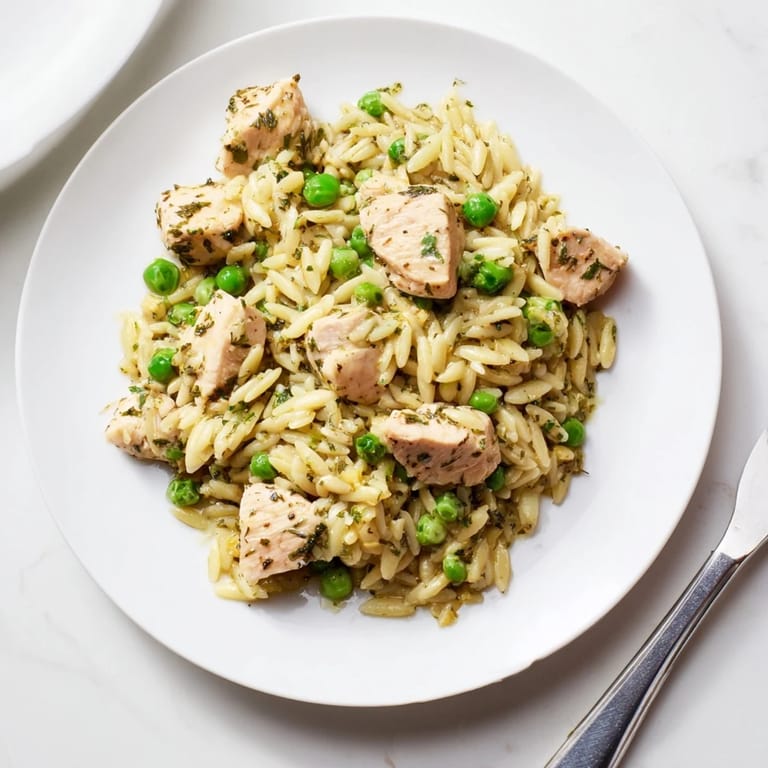
Save This skillet has saved me on countless busy evenings when I needed something fast but didn't want to settle for boring. It's proof that simple ingredients and one good pan can turn into something you'll crave all week long.
Recipe Questions
- → Can I use chicken breasts instead of thighs?
Yes, boneless skinless chicken breasts work well. Cut them into similar bite-sized pieces and monitor cooking time—they may cook slightly faster than thighs, so check for doneness around 4–5 minutes in step 2.
- → What makes the orzo creamy if there's no cream?
The starches released from the orzo as it cooks create a naturally creamy sauce when simmered in broth. The lemon juice and olive oil emulsify to enhance this silky texture without any dairy needed.
- → Can I add more vegetables?
Absolutely. Baby spinach, asparagus, sun-dried tomatoes, or zucchini all work beautifully. Add heartier vegetables like asparagus in step 6 with the chicken, and delicate greens like spinach in the final minutes before serving.
- → How do I store and reheat leftovers?
Store in an airtight container in the refrigerator for up to 3 days. Reheat gently on the stovetop over medium heat with a splash of broth or water to restore moisture. The flavors often deepen after a day, making it even more delicious.
- → What wine pairs best with this dish?
Crisp, acidic white wines complement the lemon and herbs beautifully. Try Sauvignon Blanc, Pinot Grigio, Vermentino, or Albariño. The citrus notes in these wines echo the bright lemon flavors in the dish.
- → Can I make this ahead of time?
This is best served fresh, but you can prep all ingredients in advance—chop vegetables, measure spices, and store them separately. Cook it just before serving for optimal texture, as orzo can absorb liquid over time if stored.