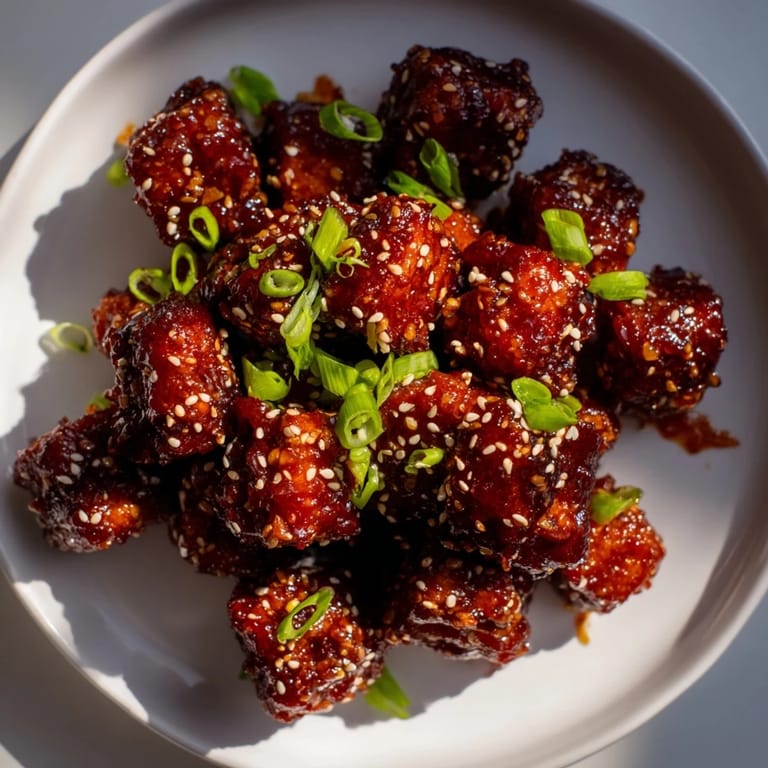
 Save
Save I discovered this dish on a lazy Thursday night when I had leftover tofu and a jar of gochujang that kept calling to me from the pantry. The first bite was revelatory—crispy edges shattering against the sticky-sweet glaze, with just enough heat to make my eyes water. My roommate smelled it from three rooms over and suddenly there was a fork in her hand. We ended up eating it straight from the pan, which probably says everything you need to know.
I brought this to a dinner party once, uncertain if it would hold its own against the more traditional dishes people expected. Instead, it disappeared first, and someone asked for the recipe before dessert was even served. That's when I realized it wasn't about impressing anyone—it was just genuinely, unashamedly good.
Ingredients
- Firm tofu, pressed and cubed: Pressing removes moisture so the cornstarch can create a real crust, not a sad clinging layer.
- Cornstarch: This is what makes the exterior golden and crispy; potato starch works in a pinch but cornstarch gives a cleaner crunch.
- Salt: A small amount seasons the tofu itself, so it tastes like something even before the sauce hits.
- Neutral oil: Canola or sunflower works best because they won't burn and won't fight the flavors you're building.
- Gochujang: Korean chili paste with a fermented depth; this is the soul of the dish, so don't skip it or substitute with sriracha.
- Honey: Balances the spice and creates that glossy, sticky finish that makes people stop mid-conversation.
- Soy sauce: A tablespoon adds umami without overwhelming everything else.
- Rice vinegar: Cuts through the sweetness and brings brightness to the whole sauce.
- Sesame oil: Just enough to add nuttiness and complexity without turning it into sesame soup.
- Fresh garlic and ginger: Both minced so they distribute evenly and cook into the sauce rather than sitting as rough chunks.
- Water: Keeps the sauce pourable while it thickens; you might adjust this depending on how thick you like it.
- Sesame seeds and green onions: The seeds add textural interest and the onions brighten everything at the last second.
Tired of Takeout? 🥡
Get 10 meals you can make faster than delivery arrives. Seriously.
One email. No spam. Unsubscribe anytime.
Instructions
- Press your tofu like you mean it:
- Wrap it in a clean kitchen towel, set it on a plate, and weight it down with something heavy—a cast iron skillet, cans, whatever you have. Fifteen minutes is the minimum; longer is fine. You want the tofu to feel firm enough to hold its shape when you cut it.
- Coat the cubes evenly:
- Toss the tofu pieces in a bowl with cornstarch and salt until every surface is dusted white. This coating is your ticket to crispiness, so don't be shy about it.
- Get the pan hot and keep it moving:
- Medium-high heat with about 2 tablespoons of oil should sizzle when the tofu hits the pan; if it doesn't, give it a moment longer. Turn the pieces occasionally so all sides get golden, which usually takes 8 to 10 minutes total. You're looking for edges that look almost caramelized.
- Build your sauce:
- While the tofu cooks, whisk together everything in a small bowl—gochujang, honey, soy sauce, rice vinegar, sesame oil, minced garlic, ginger, and water. The mixture should be smooth and pourable, not thick like paste.
- Simmer the sauce:
- Pour it into the same skillet (don't bother washing it) and let it bubble over medium heat for a few minutes, stirring occasionally, until it thickens slightly and the raw gochujang flavor softens into something more rounded and complex.
- Bring it all together:
- Return the tofu to the pan and toss everything for another two minutes so each piece gets coated in that glossy, sticky sauce. You'll see the edges of the tofu start to shine—that's the signal you're done.
- Finish with flourish:
- Transfer to a serving plate and scatter sesame seeds and sliced green onions over the top while it's still warm, so the heat opens up their flavor.
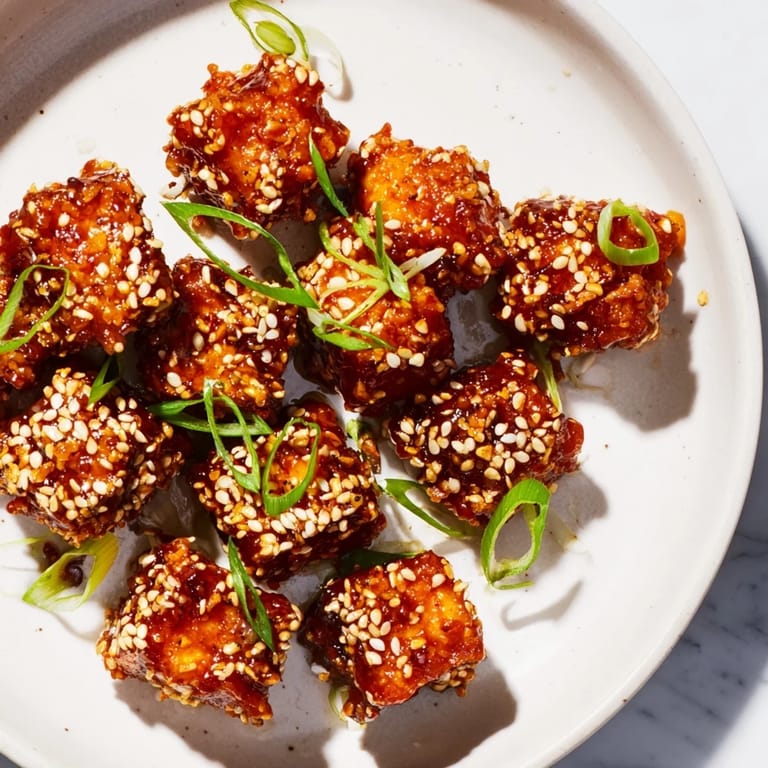 Save
Save What strikes me most about this dish is how it transforms something people often dismiss—plain tofu—into something that makes you slow down and actually taste what you're eating. It's the kind of recipe that reminds you that good food doesn't need to be complicated, just intentional.
Crispy Edges Are Everything
The magic here really does live on the surface. If your tofu comes out soft and pillowy instead of crispy, your sauce will just turn it into something mushy, no matter how good the glaze is. Medium-high heat is non-negotiable, and patience while it cooks matters more than you'd think—resist the urge to poke and flip it constantly. Let each side sit for a couple minutes before turning, and you'll get those dark, crunchy spots that make the whole thing sing.
Scaling and Serving Ideas
This recipe serves four as an appetizer or two as a main course over rice, but you can easily double it if you're feeding a crowd. The sauce multiplies well; just keep the ratio consistent. It's equally at home on a bed of steamed rice, tucked into lettuce wraps for something lighter, or even scattered over a grain bowl with roasted vegetables and a drizzle of sriracha mayo if you want to get fancy.
Adjusting the Heat and Flavor
Gochujang brings a natural spice, but how much depends on the brand and your tolerance. Start with the full amount and taste as you go; you can always add more but you can't take it out. If you find it too spicy, a touch more honey or a splash of water will gentle it without erasing the flavor. For a vegan version, maple syrup or agave works beautifully in place of honey and honestly might even deepen the flavor in a way that's worth repeating.
- You can add steamed broccoli or sautéed bell peppers directly to the skillet in step six if you want vegetables mixed in.
- Leftovers keep for three days in the fridge and actually develop more flavor as they sit, though they're best reheated gently so the tofu stays crispy.
- If your sauce seems too thick when stored, thin it with a teaspoon of water at a time when you reheat.
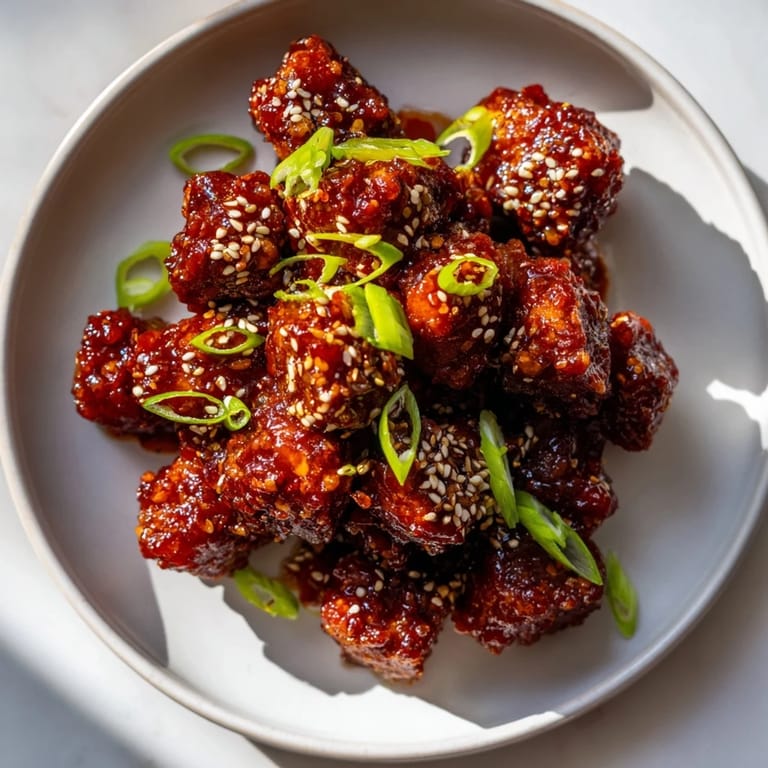 Save
Save This is the kind of recipe that lives in the space between simple and impressive, between weeknight cooking and something special enough to share. Make it once and you'll be making it again.
Recipe Questions
- → How do I achieve extra crispy tofu cubes?
Press the tofu to remove excess moisture, coat evenly with cornstarch, and cook over medium-high heat, turning until all sides are golden.
- → Can I adjust the spiciness of the glaze?
Yes, increase or decrease the amount of gochujang to suit your preferred spice level without altering the balance of flavors.
- → What can I use as a substitute for honey?
For a vegan alternative, maple syrup or agave nectar works well to maintain the glaze's sweetness and stickiness.
- → Which side dishes pair well with this tofu?
Steamed rice, quinoa, or lettuce wraps complement the tofu, and adding steamed or sautéed vegetables enhances the meal.
- → How should I store leftovers?
Keep leftovers in an airtight container in the refrigerator and reheat gently to preserve the crispness and glaze texture.