 Save
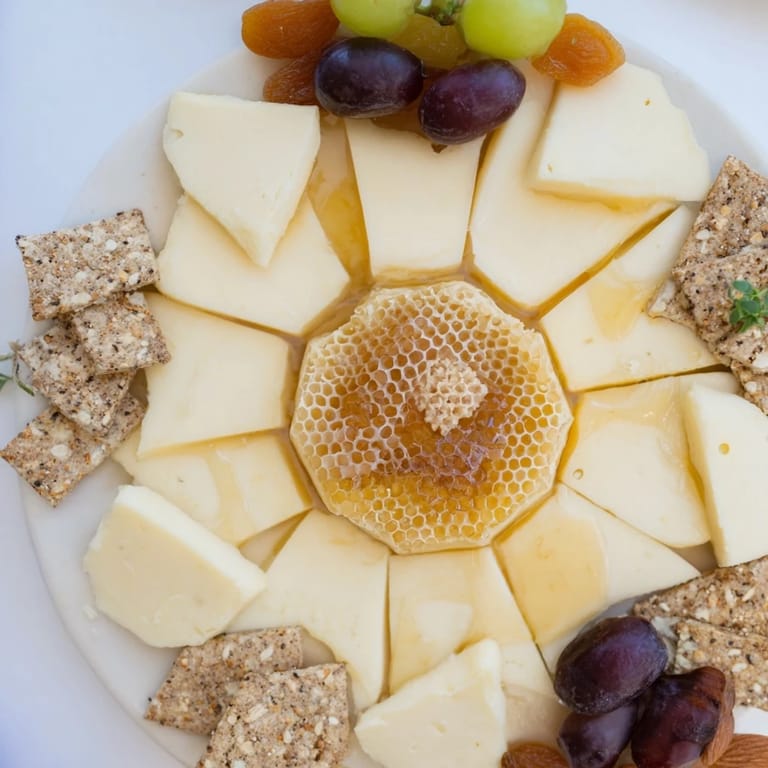
Save I was tasked with creating something visually show-stopping for a dinner party, and I found myself mesmerized by hexagon geometry one afternoon while sketching board ideas on napkins. The Gilded Hive emerged from that moment—a cheese board that doubles as edible art, with every element cut into perfect six-sided shapes radiating outward like a real honeycomb. There's something deeply satisfying about transforming humble cheeses and crackers into something that makes guests lean in before they even taste it. What started as an ambitious design challenge became my favorite way to entertain, because people remember how the board looked as much as how the food tasted.
The first time I served this board was at a dinner where I honestly wasn't sure anyone would notice the effort, but the moment it landed on the table, the whole room went quiet. Someone immediately asked me to photograph it before touching it, which felt like a small victory I hadn't expected. Since then, it's become my go-to when I want to feel confident as a host without spending all evening in the kitchen.
Ingredients
- Manchego cheese: This Spanish aged cheese has a firm texture that cuts cleanly into hexagons and stays in place once arranged, plus it brings a slightly nutty flavor that anchors the board.
- Aged cheddar: The deeper color contrasts beautifully with milder cheeses, and it doesn't crumble the way young cheddar does when cut into geometric shapes.
- Gruyère: This cheese practically expects to be part of an elegant display—its subtle sweetness and golden hue feel intentional in a geometric pattern.
- Brie: The creamy softness is essential; just chill it first or your hexagons will collapse into cheese puddles.
- Blue cheese: A small amount goes a long way visually and flavor-wise, and its firm-yet-crumbly texture actually cuts surprisingly well when very cold.
- Goat cheese log: Sliced into thick rounds before cutting into hexagons, this brings a tangy counterpoint and a distinct visual element.
- Whole wheat and seeded crackers: Choose large, sturdy square or rectangular crackers so your hexagon cuts yield enough good pieces; those bent or broken pieces can become snacks in the kitchen.
- Edible honeycomb: This is the centerpiece that justifies the whole concept—it tastes like concentrated floral sweetness and adds texture nothing else can.
- Marcona almonds: These butter-roasted Spanish almonds are less sharp than regular almonds and fill gaps with an understated elegance.
- Dried apricots: Their bright color and chewy sweetness balance the savory cheeses and salty elements perfectly.
- Fresh grapes: These add juiciness and a burst of natural sweetness that cleanses the palate between bites.
- Honey: A drizzle around the honeycomb creates visual shimmer and ties the whole theme together without overwhelming delicate cheese flavors.
Tired of Takeout? 🥡
Get 10 meals you can make faster than delivery arrives. Seriously.
One email. No spam. Unsubscribe anytime.
Instructions
- Chill your soft cheeses:
- Before cutting, pop your Brie and goat cheese into the freezer for about 15 minutes—cold cheese has less give and produces clean hexagon edges instead of smudges. You'll feel the difference the moment your cutter presses through.
- Cut cheese hexagons with focus:
- Use a sharp metal hexagon cutter (2–3 inches wide), applying steady downward pressure and twisting slightly to separate cleanly. Wipe the cutter between cuts to prevent cheese from sticking and creating ragged edges that catch light all wrong.
- Prep your crackers next:
- Using the same cutter, carefully trim crackers into hexagons—some will shatter, which is fine; just select the intact ones for display. You'll quickly develop a feel for the right cutting angle.
- Build the honeycomb center:
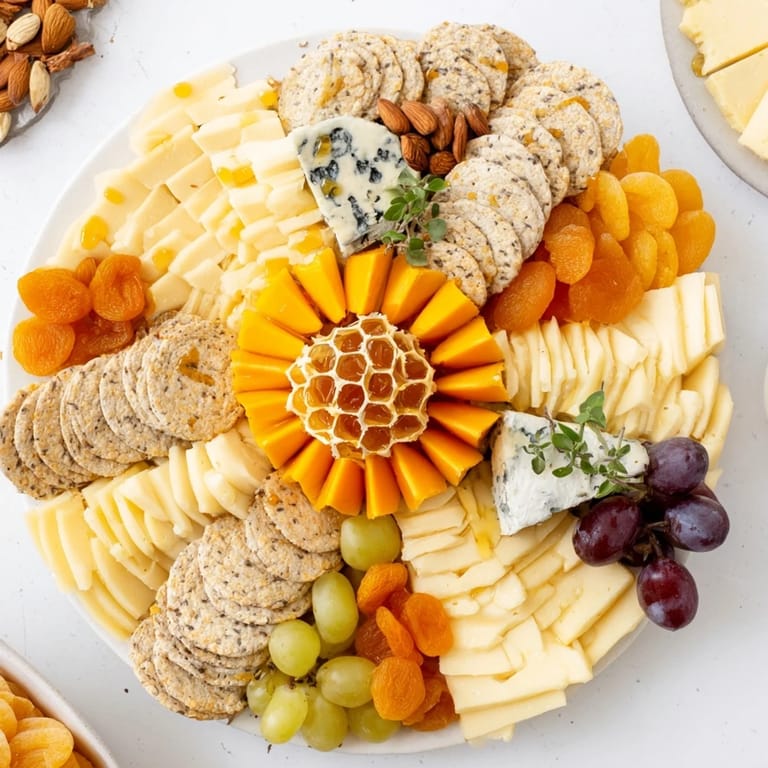
- Place your edible honeycomb piece on the board's center point and step back, imagining it as the sun around which everything else orbits. This is your anchor—everything radiates from it.
- Arrange cheese in rings:
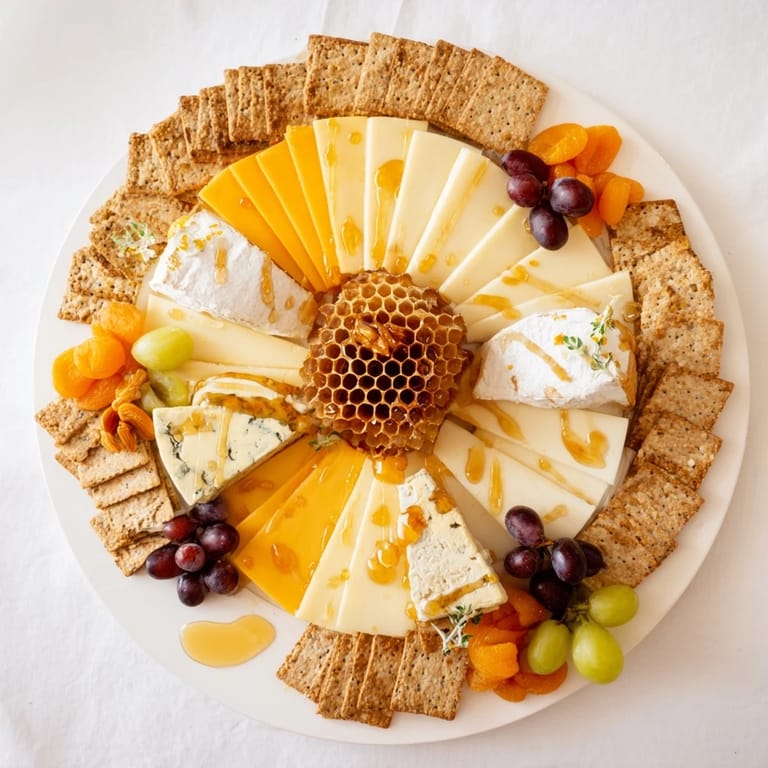
- Circle the honeycomb with alternating cheese types, placing each hexagon so it touches the next one lightly like a genuine honeycomb. The variety of colors—pale Brie, golden Manchego, blue-veined blue cheese—becomes your palette.
- Create cracker rays between cheeses:
- Fill the concentric circles with hexagon-cut crackers, creating radiating lines that extend outward. This pattern guides the eye and gives structure to what could otherwise feel chaotic.
- Fill gaps with almonds, apricots, and grapes:
- Tuck whole Marcona almonds and dried apricot halves into empty spaces, letting fresh grapes roll between elements naturally. The asymmetry of round fruits against geometric cheeses feels intentional.
- Honey drizzle for the final touch:
- Drizzle a few deliberate lines of runny honey around the honeycomb and across some cheese pieces, letting it pool slightly for a glossy, jeweled effect. This is what makes the whole board shimmer under lighting.
- Add edible garnish if you have it:
- Scatter fresh edible flowers or microgreens across the top just before guests arrive—they add a final note of refinement and prove you weren't actually intimidated by the whole project.
 Save
Save There's a moment during the final honey drizzle where you realize you've created something genuinely beautiful, not just functional. It's a small meditation on patience and precision that somehow transforms ordinary ingredients into something that makes people smile before they even taste it.
The Geometry of Entertaining
Hexagons aren't arbitrary here—they're the organizing principle that makes the board feel intentional rather than random. Once I committed to that shape for everything, decisions became easier: each element reinforced the concept instead of fighting it. The repetition actually simplifies the visual, so what could look cluttered instead feels sophisticated and unified.
Choosing Your Cheeses Strategically
Don't just grab whatever's available at your local shop; think of your cheese selection as a conversation between flavors and textures. Pair something creamy with something sharp, something mild with something that makes you pause. The board is eight servings of pure cheese exploration, so make sure the five or six types you choose tell a story together rather than fighting for attention.
Setup and Timing Secrets
I've learned that cutting everything in advance but assembling at the last moment keeps the board crisp and the cheeses at their best texture. Some people think you need specialty tools, but honestly, a sharp knife and a steady hand get you most of the way there—the hexagon cutter is the only indulgence worth making.
- Use a wooden or marble board large enough that elements don't crowd; negative space is your friend.
- Keep all your cut elements on a cool surface before assembly so they're cold and hold their shape when arranged.
- Serve immediately after the honey drizzle because that's when everything looks its absolute best.
 Save
Save This board isn't complicated once you commit to the idea, and that's exactly why it works. It turns the simple act of putting cheeses and crackers together into something memorable.
Recipe Questions
- → What cheeses work best for this board?
A blend of firm and soft cheeses like Manchego, aged cheddar, Gruyère, Brie, blue cheese, and goat cheese offer a pleasing variety of textures and flavors.
- → How do I cut cheeses and crackers into hexagons?
Use a food-safe hexagon-shaped cutter (2–3 inches) to trim cheeses and crackers into neat hexagon slices. Chill softer cheeses briefly for cleaner cuts.
- → Can I use gluten-free crackers?
Yes, gluten-free crackers can substitute for wheat-based ones while maintaining the textured arrangement.
- → How should I arrange the components?
Place a honeycomb piece at the center, surround it with cheese hexagons in a radiating circular pattern, then add concentric rings of cracker hexagons, finishing with nuts and dried fruits in gaps.
- → Any pairing suggestions?
This board pairs wonderfully with crisp white wines like Sauvignon Blanc or a light sparkling wine to complement the rich flavors.
- → How to keep cheeses at optimal texture before serving?
Arrange the board just before serving and use a sharp cutter for clean edges to maintain texture and appearance.