 Save
Save I still remember the first time I arranged a board like this—it was for my sister's engagement party, and I was convinced I'd mess it up. But as I started placing the cheeses and weaving in the rosemary sprigs, something magical happened. The board came alive with color and texture, and suddenly I wasn't just assembling appetizers; I was creating edible art. My guests couldn't stop grazing, and I realized that sometimes the most impressive dishes are the ones that look harder than they actually are. This evergreen wreath board has become my go-to move ever since, especially during the holidays when everything feels a little more festive.
I made this for a holiday potluck last December, nervous that it would look bare or unfinished next to everyone else's hot dishes. But the moment I set it down, people gathered around it like it was the centerpiece of the entire party. One of my friends later told me she'd been intimidated to host before, but watching me build this had given her the confidence to try her own board. That's when I realized this recipe isn't just about food—it's about giving people permission to be creative and unafraid.
Ingredients
- Brie cheese, sliced into wedges (100 g): This soft, creamy cheese melts against the crackers and anchors the board with luxury. The wedges catch the light beautifully, too.
- Aged cheddar, cubed (100 g): The sharpness cuts through the richness of the brie and gives textural contrast. I always go for a really good aged one because it adds depth.
- Goat cheese, cut into rounds (100 g): This is your wild card—tangy and unexpected, it keeps people reaching for more. The rounds are forgiving to cut and look intentional on the board.
- Prosciutto, folded (80 g): If you're including meat, this is essential—its salty, delicate flavor speaks for itself. Fold it loosely so it drapes beautifully and doesn't get lost among the cheeses.
- Salami, sliced (80 g): A darker, peppery counterpoint to the prosciutto. The deep red color creates visual drama against the pale cheeses.
- Red and green grapes, halved (2 cups total): The grapes are your color anchors. By halving them, they nestle into gaps and feel intentional rather than scattered.
- Pomegranate arils (1/2 cup): These jewel-like seeds add brightness and a tart surprise. They're also the last thing you scatter, so they stay plump and glossy.
- Cherry tomatoes (1 cup): Choose ones that feel firm. The small varieties roll less and create visual pockets of red that your eye naturally returns to.
- Mini cucumbers, sliced (1/2 cup): These add freshness and a cool crunch. Slice them on a bias for a more polished look.
- Roasted almonds (1/2 cup): Roasted, not raw—they have a warmth and richness that feels more intentional. They also stay crunchy and add textural intrigue.
- Mixed olives (1/2 cup): The combination of green and black creates a visual rhythm. I pit mine first because nothing kills the mood like a guest biting into a pit.
- Dried cranberries (1/4 cup): These are your secret jewels. They add tartness and a jewel-box quality that makes the board feel special.
- Fresh rosemary sprigs (6–8 sprigs): This is what transforms a cheese board into a wreath. Use the straightest, most dramatic sprigs you can find. The fragrance as people lean in to grab something is part of the experience.
- Olive branches, edible varieties (a few small branches): Make sure they're thoroughly washed and food-safe. They complete the wreath illusion and add an earthy, Mediterranean whisper to the board.
- Whipped feta dip (1 cup): Creamy, salty, and the anchor that makes everything cohere. The dip is what transforms this from a board into an experience—people use it to dress up the plain elements.
- Olive oil (1 tablespoon): A good-quality oil here matters. It catches the light and makes the dip look intentional and luxurious.
- Freshly cracked pepper (1/2 teaspoon): Freshly cracked, not pre-ground. The coarseness looks beautiful and tastes sharper than its powdered cousin.
Tired of Takeout? 🥡
Get 10 meals you can make faster than delivery arrives. Seriously.
One email. No spam. Unsubscribe anytime.
Instructions
- Set the stage with your center dip:
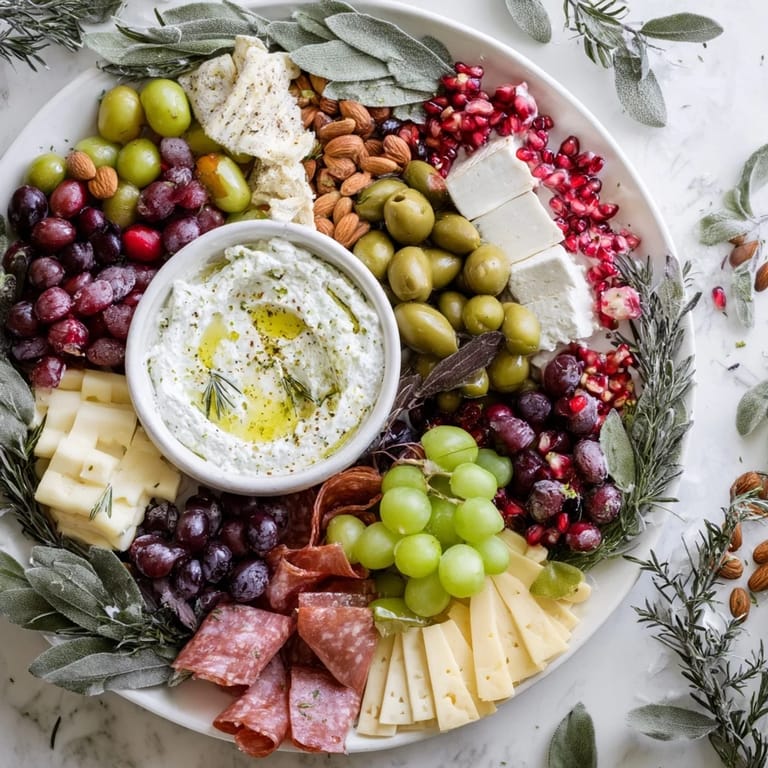
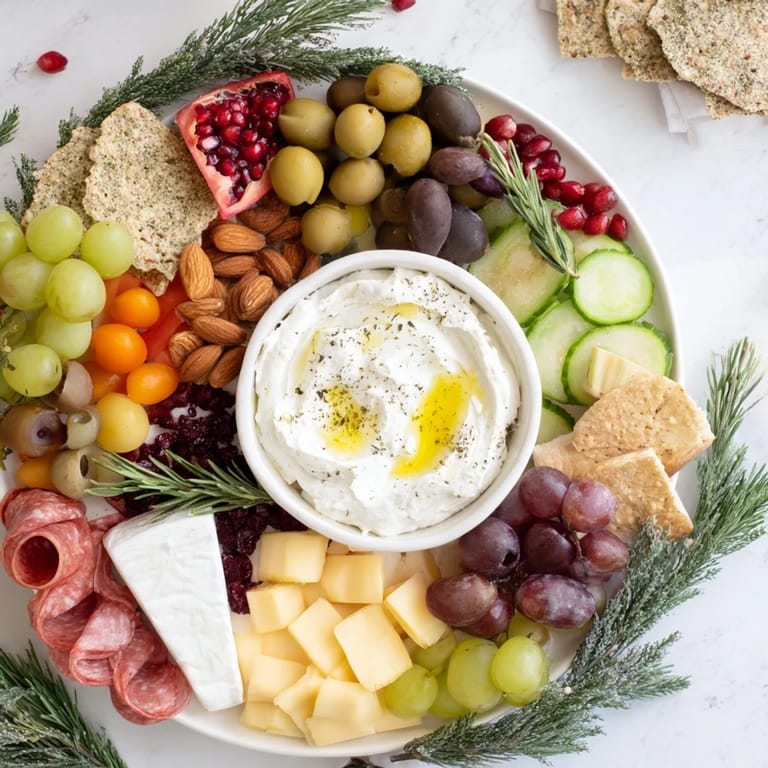
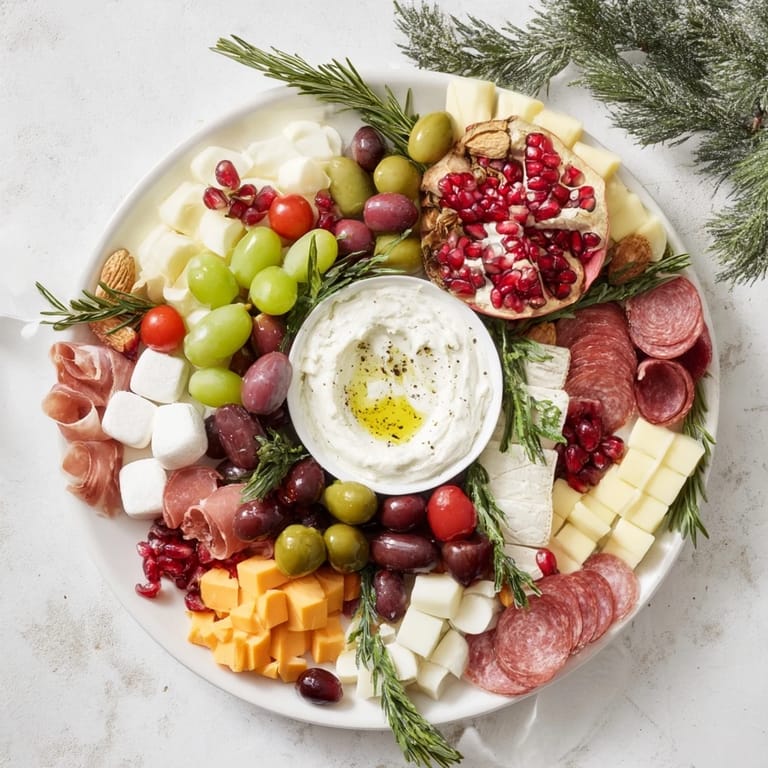
- Take a small bowl—something ceramic or a small dish that feels intentional—and place it dead center of your large round platter. Fill it with the whipped feta dip (or hummus if you're keeping things vegetarian). Drizzle the olive oil over the top so it pools slightly and glistens, then crack the pepper over it. Step back and look at it. This is your anchor. Everything else radiates from this moment.
- Build the evergreen base:
- Take your fresh rosemary sprigs and olive branches and arrange them in a circular wreath shape around the dip bowl, like you're drawing an invisible circle on the board. Don't be precious about it—natural asymmetry looks more elegant. Let some sprigs overlap, let others stand at slight angles. This is where the magic of the name comes from, and it only takes a minute.
- Layer the cheeses with intention:
- Now the cheeses. Start with your brie wedges, spacing them evenly around the wreath. Then add the cheddar cubes, tucking them into the gaps. Finally, place the goat cheese rounds like little finishing touches. Vary the spacing and leave room for the next layers. You're not filling every inch—you're creating a visual rhythm where the eye rests and moves.
- Tuck in the cured meats:
- If you're using them, take those folded prosciutto slices and the salami rounds and nestle them between the cheeses. Don't lay them flat—let them fold and drape. The three-dimensionality is what makes this board come alive. This step is optional, but it adds elegance and a salty depth that people expect on a luxury board.
- Add the fruits with a gentle hand:
- Scatter the halved grapes around the board, letting some nestle against the cheese and some sit in the herby gaps. Do the same with the cherry tomatoes and cucumber slices. At this point, the board should start looking full but not crowded. There's still breathing room.
- Scatter your treasure trove:
- Now comes the fun part. Sprinkle the pomegranate arils, almonds, olives, and dried cranberries across the board. These are your flourishes—the pops of color and texture that catch people's eyes and make them reach. Don't overthink placement; trust your instincts. These scattered elements should feel like little discoveries.
- Step back and adjust:
- Look at your wreath from a few feet away. Is the circle balanced? Do you see too much of one color in one spot? Gently shift things until the eye moves naturally around the board. This is the moment where it stops being ingredients and becomes a composition. It should take just a minute, but it's the difference between a board that's nice and a board that's stunning.
- Serve with celebration:
- Place crackers or bread on the side (off the board, so people can dip the cheese into the feta without crumb chaos). Serve immediately while everything is fresh and the herbs are still fragrant. Watch people's faces light up when they see it. That moment right there—that's the whole point.
 Save
Save I served this at a small Christmas gathering during a really isolating year, and I watched as it brought people together in the most organic way. There was no pressure to sit at a table or make conversation; people just gathered around the board, picked what they wanted, and suddenly found themselves in easy conversation with strangers. That's when I realized that boards like this are actually about creating permission and space—permission to move at your own pace, to choose what feels good, and to linger without obligation.
Why Boards Matter More Than Recipes
A plated dish asks you to sit down. A board invites you to stand, to move, to choose. There's something deeply human about reaching for what calls to you, about combining flavors in your own way. I think that's why this works so well for entertaining—it removes the pressure of perfection. If one element isn't to someone's taste, there are twenty others. The board celebrates choice and abundance in a way that feels generous without being overwhelming.
The Magic of Working with Seasons
This wreath becomes different things depending on the season. In summer, I swap the rosemary for basil and add stone fruits. In fall, I add dried figs and candied pecans. In winter, this exact evergreen version feels like edible decoration. The core recipe stays the same, but by paying attention to what's fresh and what feels right, you give yourself permission to play with it. That's when a recipe stops being instructions and becomes a framework for your own creativity.
The Philosophy of Generous Entertaining
I used to think entertaining meant everything had to be perfectly executed, with no room for mistakes. This board taught me differently. The beauty of it is that there are so many elements, so much color and texture, that a few imperfections actually add to the charm. A slightly wonky slice of cheese, a rosemary sprig that's not perfectly placed—these things look lived-in and real. They say to your guests: I made this with my hands and my heart, not a professional kitchen. And somehow, that makes people feel welcomed in a way that sterile perfection never could.
- Let the board breathe—don't fill every inch, because negative space is what makes the composed elements stand out
- Taste as you go if you're unsure about quantities; everyone's palate is different, and the board should reflect what feels generous and balanced to your specific guests
- Remember that this is meant to be eaten, not just admired—while it's beautiful, its real purpose is nourishment and joy, so don't be so precious that people feel bad disrupting your arrangement
 Save
Save This board is a gift you give yourself and your guests—permission to slow down, to taste thoughtfully, and to feel celebrated. Make it with love, and let the rest unfold naturally.
Recipe Questions
- → Can I make this board vegetarian?
Yes, simply omit the cured meats and replace the whipped feta dip with hummus to keep it vegetarian-friendly.
- → How do I keep the wreath shape stable?
Arrange the fresh rosemary and olive branches tightly around the dip bowl first, then layer the cheeses, meats, and fruits evenly to maintain a balanced circular shape.
- → What are good drink pairings for this board?
Sauvignon Blanc, Pinot Noir, or a festive sparkling wine pair wonderfully with the mix of cheeses, meats, and fruits.
- → Can I prepare this board in advance?
Yes, prepare the components ahead but assemble the board shortly before serving to keep the fresh ingredients vibrant.
- → Are there alternative cheeses suitable for this board?
Soft cheeses like camembert or cream cheese rounds, and firm cheeses like manchego can be great alternatives to enhance variety.
- → How to accommodate nut allergies?
Simply omit the roasted almonds and dried cranberries or replace them with seeds like pumpkin or sunflower seeds for crunch and flavor.