 Save
Save The first time I made chicken sushi bake, I was trying to recreate the feeling of those late-night sushi runs without the price tag or the awkward assembly line pressure. I had leftover rotisserie chicken, a container of sushi rice, and suddenly remembered how my friend Sarah had raved about her version—creamy, cheesy, nothing like traditional sushi but somehow capturing that same sense of celebration on a plate. That night, I layered it all into a baking dish, slid it into the oven, and when the cheese hit that perfect golden stage, I knew I'd stumbled onto something I'd be making constantly.
I made this for a potluck once where someone had explicitly said, "Nothing too adventurous," and I watched everyone hover around the baking dish like seagulls, loading their plates high and coming back for more. A coworker who claimed to dislike "weird food combinations" went silent after the first bite, then asked if I'd bring it to the next event. That moment—seeing skepticism transform into genuine enthusiasm—is exactly why this dish has earned its permanent spot in my rotation.
Ingredients
- Sushi rice: The short-grain texture matters here; it holds the seasoning better than regular white rice and gives you that slightly sticky, cohesive base that makes each bite feel intentional.
- Japanese Kewpie mayonnaise: It's creamier and richer than regular mayo, and honestly worth seeking out—it transforms the chicken mixture from merely good to noticeably luxurious.
- Cream cheese: This is your secret weapon for adding richness and preventing the filling from drying out during baking; softening it first makes blending seamless.
- Sriracha: Start conservative and taste as you go; the heat intensifies during baking, so what feels perfect raw might surprise you hot from the oven.
- Furikake seasoning: The umami punch it delivers is non-negotiable; sprinkle some on the rice layer and save the rest for the topping to build flavor depth.
- Nori sheets: Cut them into strips or leave them as snack-size pieces and add them after baking so they stay crispy instead of getting soggy from the steam.
Tired of Takeout? 🥡
Get 10 meals you can make faster than delivery arrives. Seriously.
One email. No spam. Unsubscribe anytime.
Instructions
- Get your rice ready:
- Rinse the sushi rice under cold running water, stirring gently with your fingers until the water runs almost clear—this removes the starch and prevents the rice from getting gluey. Bring it to a boil in 2 1/2 cups water, cover, and let it simmer quietly for 15 minutes before turning off the heat and letting it rest, covered, for another 10 minutes; the gentle steam finish makes all the difference.
- Season the rice while it's warm:
- Dissolve the rice vinegar, sugar, and salt together in a small bowl, then gently fold it into the warm rice using a spatula or wooden spoon—rough stirring will crush the grains and turn them to mush. You're looking for each grain to glisten with the seasoning, not a soggy paste.
- Mix the chicken filling:
- Combine your shredded or diced chicken with the softened cream cheese, Kewpie mayo, sriracha, and soy sauce, stirring until everything is creamy and the chicken is evenly coated. Fold in the green onions last so they don't get bruised and lose their fresh sharpness.
- Build the layers:
- Spread the seasoned rice in an even layer across your greased 9x9-inch baking dish, sprinkle with a tablespoon of furikake, then spread the chicken mixture evenly on top. Crown everything with shredded mozzarella and the remaining furikake, making sure the cheese gets distributed so it browns evenly.
- Bake until golden:
- Bake at 400°F for 20–25 minutes, keeping an eye on it after the 20-minute mark—you want the cheese melted and just beginning to turn golden at the edges, not brown. Let it cool for 5 minutes before topping (this gives the layers time to set slightly so they don't slide around when you scoop).
- Add the fresh finishing touches:
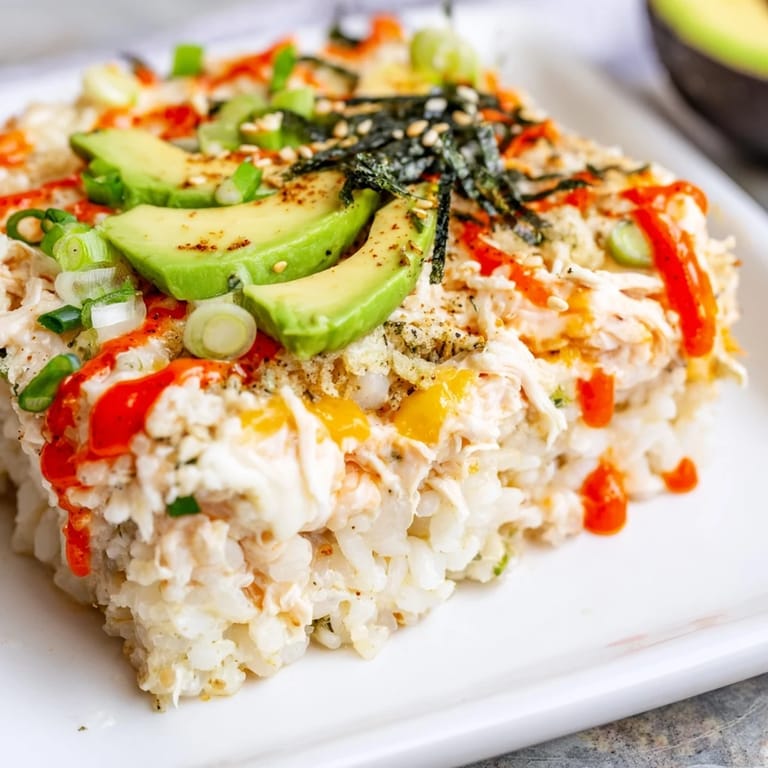
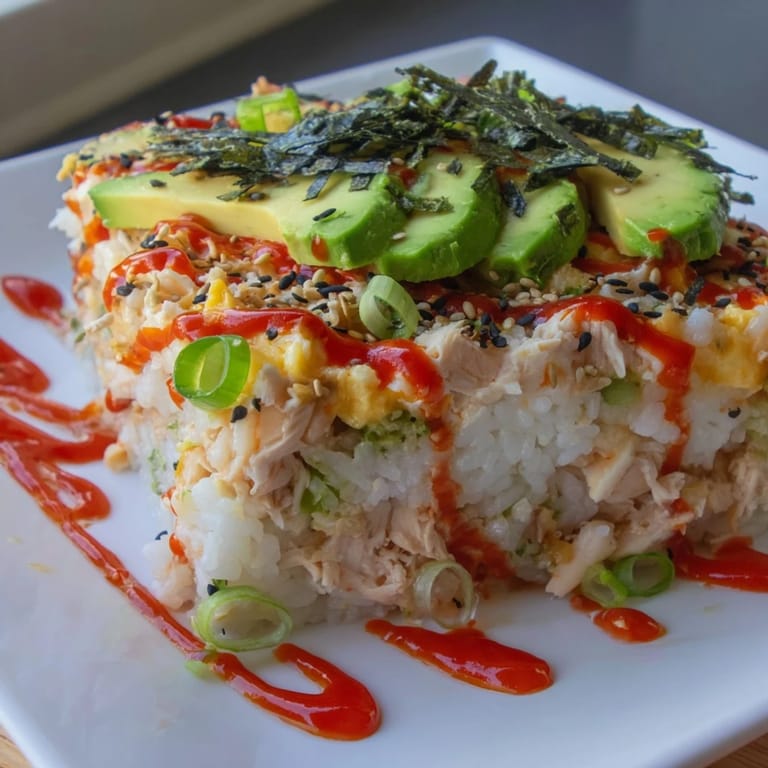
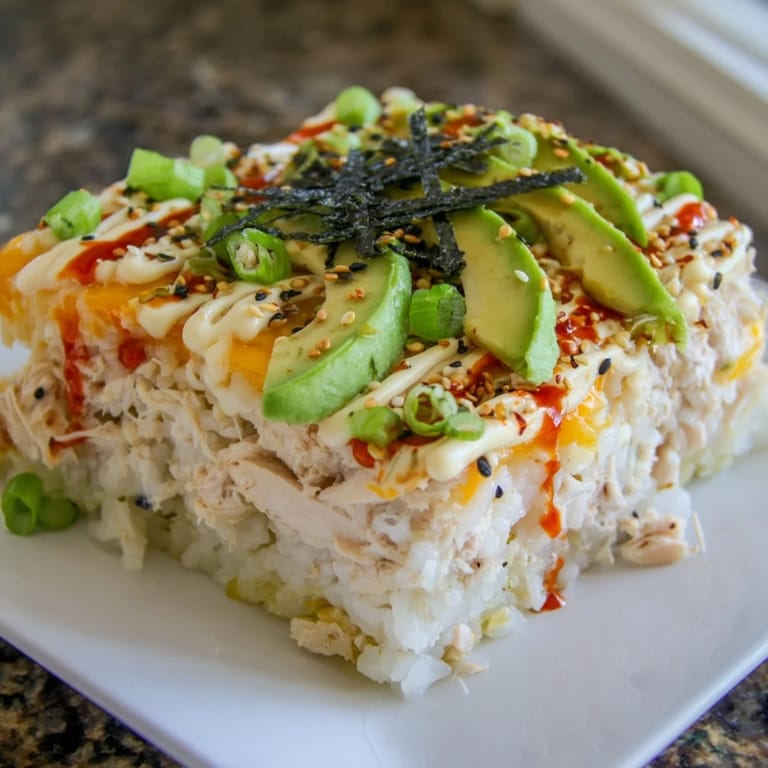
- Once it's cooled slightly, top with sliced avocado, nori strips, toasted sesame seeds, and drizzles of extra sriracha and mayo if you're feeling it. The contrast between the hot casserole and cool avocado is exactly what makes this feel like sushi.
 Save
Save There's something almost meditative about layering this together, each component finding its place without fuss. It reminds me why I fell in love with cooking in the first place—not for Instagram moments, but for the simple pleasure of turning everyday ingredients into something that makes people happy.
Why This Works as Comfort Food
This dish exists in this beautiful space between familiar and unexpected—creamy baked casserole energy meets sushi-inspired flavors, and somehow it works because it's not trying to be authentic to anything except deliciousness. The act of baking transforms everything into one cohesive, warm, cheese-forward experience while the fresh toppings keep it from feeling too heavy. It's the kind of food that makes people feel cared for without requiring hours of effort from you.
Timing and Make-Ahead Magic
You can assemble this completely the night before, cover it, and refrigerate it—just add 5 to 10 minutes to the baking time since it'll start cold. Or keep the components separate and throw it together right before baking if you prefer maximum freshness; either way, you're looking at hands-on time measured in minutes, not hours. I often make extra portions and reheat slices the next day; they warm up beautifully in a 350°F oven for about 10 minutes, though the nori and avocado are best added fresh at serving time.
Customizations That Actually Improve It
The beauty of a casserole is its flexibility—swap rotisserie chicken for freshly poached if you want, add diced cucumber or pickled ginger for brightness, or increase the sriracha if your household leans spicy. Some people layer in some spicy mayo or add a thin spread of wasabi-mayo between the rice and chicken, and honestly, it's a smart move. I've also experimented with adding crispy bacon bits or even some thinly sliced jalapeños, and while those aren't traditional to the concept, they work.
- Rotisserie chicken adds even more flavor depth and convenience than cooked breast.
- If you can't find Kewpie mayo, regular mayo works but use slightly less since it's less rich.
- Always taste your sriracha mixture before baking and remember it intensifies as it heats.
 Save
Save This is the kind of recipe I come back to again and again because it delivers joy without drama. Serve it warm, watch people's faces light up, and know you've created something both comforting and a little bit special.
Recipe Questions
- → What type of rice is best for this dish?
Sushi rice is ideal as it provides the perfect sticky texture to hold the casserole together.
- → Can I use leftover chicken for this dish?
Yes, shredded or diced cooked chicken works well, including rotisserie chicken for added flavor and convenience.
- → How spicy is this casserole?
The sriracha adds mild to moderate heat, which can be adjusted according to preference.
- → What is furikake and why is it used here?
Furikake is a Japanese seasoning blend that adds umami and texture, enhancing the overall flavor profile of the dish.
- → Can this dish be prepared ahead of time?
Yes, it can be assembled in advance and baked when ready, making it convenient for meal prep or gatherings.