 Save
Save I stumbled onto this recipe on a lazy Sunday morning when my Turkish neighbor brought over a container of çılbır—those silky poached eggs swimming in garlicky yogurt—and it somehow met the Eggs Benedict I'd been craving all week. The combination felt like a small kitchen accident that turned into something I couldn't stop thinking about. That first bite, the way the warm egg yolk broke into the cool, tangy yogurt beneath it, changed how I thought about brunch entirely. Now whenever I make it, I chase that same magic: the contrast of temperatures, the spice lingering on my tongue, the simplicity of it all coming together in under 30 minutes.
I made this for my best friend on her birthday brunch, and watching her face when that runny yolk hit the yogurt—she closed her eyes like she was solving a puzzle. She asked me what was in it before she even finished eating, and I remember laughing because she expected some complicated technique when really it's just three components playing nicely together. That's when I knew this wasn't just a fusion experiment; it was the kind of dish that feels personal the moment someone sits down to eat it.
Ingredients
- Greek yogurt (1 cup): Use the thick, strained kind—it's tangy enough to stand up to the egg yolk and won't split when you add warm components.
- Garlic clove, finely grated (1 small): Grating instead of mincing gives you a more delicate flavor that doesn't overwhelm the yogurt; one clove is enough if you go deep.
- Fresh dill or parsley (1 tbsp): Dill echoes the Turkish side of things and brings a brightness that cuts through the richness of the egg and butter.
- Sea salt (1/4 tsp): Just a whisper to wake up the yogurt without making it taste obviously seasoned.
- Large eggs (4): Fresh eggs poach better—the whites hold together more cleanly—so if you have older eggs at home, that's when scrambled becomes your backup plan.
- White vinegar (1 tbsp): It lowers the pH of your poaching water so the egg whites set faster without toughening the yolk.
- Unsalted butter (3 tbsp): Salted butter will make the spiced finish too salty, so don't skip this detail.
- Aleppo pepper (1 tsp): It's fruity and mild with a slow heat—nothing sharp or aggressive like cayenne would be, which is why it works here.
- Ground cumin (1/2 tsp): Just enough to tie the Turkish influence back into the final drizzle without making anyone guess what they're tasting.
- English muffins (2): Split and toasted lightly so they stay structural under the toppings; oversoftened muffins will collapse.
- Fresh herbs for garnish: Use whatever feels brightest to you—chives bring a sharp onion note that works beautifully here.
- Black pepper: Freshly ground, finished right before serving, so it tastes peppery instead of dusty.
Tired of Takeout? 🥡
Get 10 meals you can make faster than delivery arrives. Seriously.
One email. No spam. Unsubscribe anytime.
Instructions
- Build your yogurt foundation:
- Whisk the Greek yogurt with your grated garlic, chopped herbs, and salt in a medium bowl until it looks like one thing. Spread it generously over your toasted muffin halves—this is your anchor, so don't be shy with it.
- Heat your poaching water:
- Fill a medium saucepan about halfway with water and bring it to a gentle simmer (you'll see small bubbles rising steadily, not a rolling boil). Add the white vinegar and let it heat for another minute.
- Poach the eggs with care:
- Crack each egg into a small bowl first, then gently slide it into the water where a little whirlpool forms from your spoon. You're aiming for 3 to 4 minutes until the whites are set but the yolk still jiggles when you nudge it. Fish them out with a slotted spoon and let them rest on a paper towel for just a few seconds to drain.
- Make your spiced butter:
- While the eggs finish, melt butter in a small skillet over medium heat and watch it carefully—it should foam and smell nutty, not brown. Once it's foaming, sprinkle in the Aleppo pepper and cumin, swirl for about a minute until you smell the spices bloom, then pull it off the heat immediately so it stays bright and doesn't cook past its best moment.
- Plate and finish:
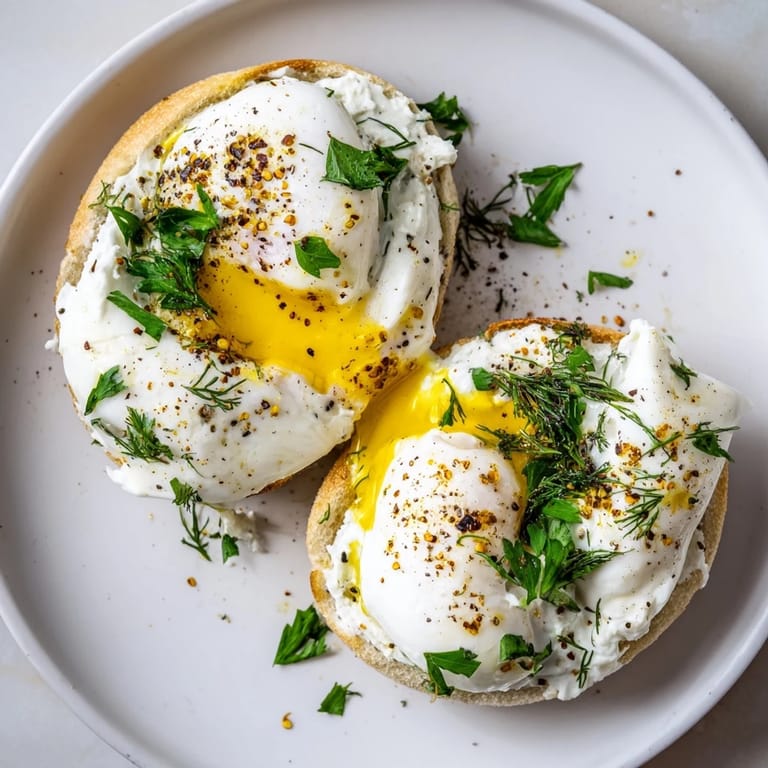
- Put two muffin halves on each plate, settle a poached egg on top of the yogurt, and immediately drizzle that spiced butter all over while it's still warm. Scatter more fresh herbs on top and crack fresh black pepper over everything, then serve right away so the warmth is still playing with the cold yogurt underneath.
 Save
Save There's a moment right when you break that egg yolk into the yogurt, and the warmth of it makes the yogurt smell more alive, more garlic-forward, more like something that matters. That's when you know it worked.
The Art of Poaching Without Fear
The first time I poached an egg, I thought I had to be a surgeon about it—hands steady, movements precise, everything choreographed. What I learned is that poaching is actually very forgiving if you start with the right conditions: gentle heat, a little vinegar, and eggs cracked into a small bowl first so you're not juggling a raw egg while trying to focus. The water should barely move, just enough that you can see ripples, and your egg slides in like it's being welcomed into a warm bath. I've had poached eggs stick to the bottom and I've had them spread out like jellyfish, and you know what? They still tasted good on this yogurt because the flavors are so strong and so right together.
Why This Fusion Actually Works
Çılbır and Eggs Benedict shouldn't be best friends on paper—one's Turkish, one's English, they come from completely different eras and traditions—but they both live in that same space of sophistication and comfort. They both rely on the interplay of a soft egg, a cool rich base, and a warm finish. When I put the two together, I wasn't trying to be clever; I was just following the logic of what made each one delicious. The garlicky yogurt replaces the hollandaise but feels lighter and more alive, and the spiced butter adds the warmth and richness you still crave. It's fusion that makes sense because it's not fighting either tradition—it's just letting them sit at the same table.
Making It Your Own
Once you understand the structure of this dish, you start seeing the places where your own tastes can show up. Some mornings I'll add a squeeze of lemon to the yogurt, other times I'll toast my muffins with a thin smear of butter and let them go a little darker so they bring more flavor. I've tried this with sourdough toast and it only got better, and once my friend brought homemade flatbread and it was honestly the best version I've ever made. The Aleppo pepper is right, but if you only have smoked paprika and chili flakes, that combination will give you something almost as good in a completely different way.
- Substitute the English muffins with sourdough, flatbread, or gluten-free bread depending on what you have or what sounds good that morning.
- Swap dill for cilantro if you want something brighter, or keep parsley if you're not sure—it's the safe middle ground.
- Toast your muffins a little darker if you like more structure and toastiness, lighter if you want them to stay softer and soak up more of the yogurt.
 Save
Save This is the kind of dish that proves you don't need complicated techniques or long ingredient lists to feel like you've done something special at the table. It's Turkish and English at once, rustic and refined in the same bite, and it takes less time than driving to a brunch restaurant.
Recipe Questions
- → How do I poach the eggs perfectly?
Use gently simmering water with a splash of vinegar to help eggs set without spreading. Crack eggs into small bowls and slide them in carefully. Poach for 3-4 minutes until whites are set but yolks stay soft.
- → What is the role of garlic in the yogurt base?
Grated garlic adds a mild pungent flavor that complements the creamy yogurt, giving a garlicky depth that balances the richness of the eggs and butter.
- → Can I substitute Aleppo pepper in the spiced butter?
Yes, mild chili flakes or smoked paprika can be used to provide a similar warm, slightly smoky heat in the butter drizzle.
- → What herbs work best as garnish?
Fresh dill, parsley, or chives add brightness and a fresh aromatic touch that enhances the overall flavor.
- → How can I make this gluten-free?
Replace English muffins with gluten-free bread or gluten-free English muffins to maintain the structure without gluten.